EN
 English
 中文简体
 русский
 Deutsch
 日本語
 한국어


Magnetic powder is not a single material. It is the milled form of a magnetic alloy, and what it is made of depends entirely on which magnet family it belongs to. Ferrite powder is mostly iron oxide with barium or strontium carbonate. NdFeB powder is neodymium, iron and boron, usually with a few percent of dysprosium, cobalt, copper, aluminium or gallium. Samarium-cobalt powder is a rare-earth cobalt alloy. Soft magnetic powders are iron-based alloys such as iron-silicon, iron-silicon-aluminium or iron-nickel, with every particle insulated from its neighbours.
Particle size runs from about 1 µm for ferrite up to roughly 200 µm for some soft magnetic grades. Composition plus particle size distribution decide almost everything about how the powder behaves: how it fills a die, how it aligns in a magnetic field, how much coercivity survives sintering, and how much oxygen it will pick up before it reaches the press.
The Four Families of Magnetic Powder
Almost every industrial magnetic powder falls into one of four families, and each family has a recipe that has stayed remarkably stable for decades.
| Powder family | Main constituents by weight | Typical particle size | Typical use |
|---|---|---|---|
| Ferrite (hard) | Iron oxide 80–90%, barium or strontium carbonate 10–15% | 1–5 µm | Bonded ferrite magnets, sensor rings, low-cost motor arcs |
| NdFeB (hard) | Neodymium 29–32%, iron 64–68%, boron 1–1.2%, plus Dy, Tb, Co, Cu, Al, Ga | 2–5 µm sintered; 50–150 µm bonded | Motors, speakers, wind generators, actuators, sensors |
| SmCo (hard) | Samarium 23–26%, cobalt balance, small iron, copper and zirconium additions | 5–10 µm | High-temperature aerospace parts, pump couplings |
| Soft magnetic | Iron, Fe-3Si, Fe-Si-Al, Fe-50Ni, nickel-molybdenum permalloy | 45–200 µm | Powder cores, inductors, soft magnetic composites |
Two practical points follow. First, the difference between a hard and a soft powder is metallurgical, not cosmetic: hard powders hold their magnetization after the field is removed, while soft powders are designed to reverse easily and burn as little energy as possible. Second, the size ranges barely overlap, so a sieve analysis is often the fastest way to identify what an unknown sample actually is.
Ferrite Powder Is Mostly Iron Oxide
Roughly 80–90% of a ferrite powder's mass is iron oxide, with barium or strontium carbonate making up most of the remainder.
The two raw materials are blended, then calcined at around 1200–1300 °C so that the carbonate reacts with the oxide to form a hexagonal M-type hexaferrite. The fired clinker is crushed and milled down to about 1 µm, because ferrite has a large magnetocrystalline anisotropy and needs fine particles to reach its full coercivity. The result is a powder with remanence near 0.4 T and a maximum service temperature around 250 °C, which is modest but comes with two advantages that matter in purchasing: very low raw material cost and excellent corrosion resistance without any coating.
That combination keeps ferrite powder in bonded magnets, sensor rings and low-cost motor arcs even where stronger materials exist.
NdFeB Powder: Neodymium, Iron, Boron and Small Additions
The magnetic phase in NdFeB powder is Nd2Fe14B, which in pure form is about 26.7% neodymium, 72.3% iron and 1.0% boron by weight.
Commercial alloys deliberately sit neodymium-rich, typically 29–32%, so that a thin rare-earth grain-boundary phase forms between the hard grains. Dysprosium and terbium partially substitute for neodymium and raise coercivity at the cost of remanence and price. Cobalt substitutes for iron and lifts the Curie temperature and corrosion resistance. Copper, aluminium and gallium modify the grain-boundary phase and improve densification during sintering, while zirconium and niobium help control grain growth.
Impurities matter as much as the deliberate additions. Oxygen is usually held below roughly 2500 ppm in sintered-grade powder, and each additional 1000 ppm costs coercivity because oxygen ties up rare earth in non-magnetic oxides. Carbon from binders and lubricants acts in a similar way.
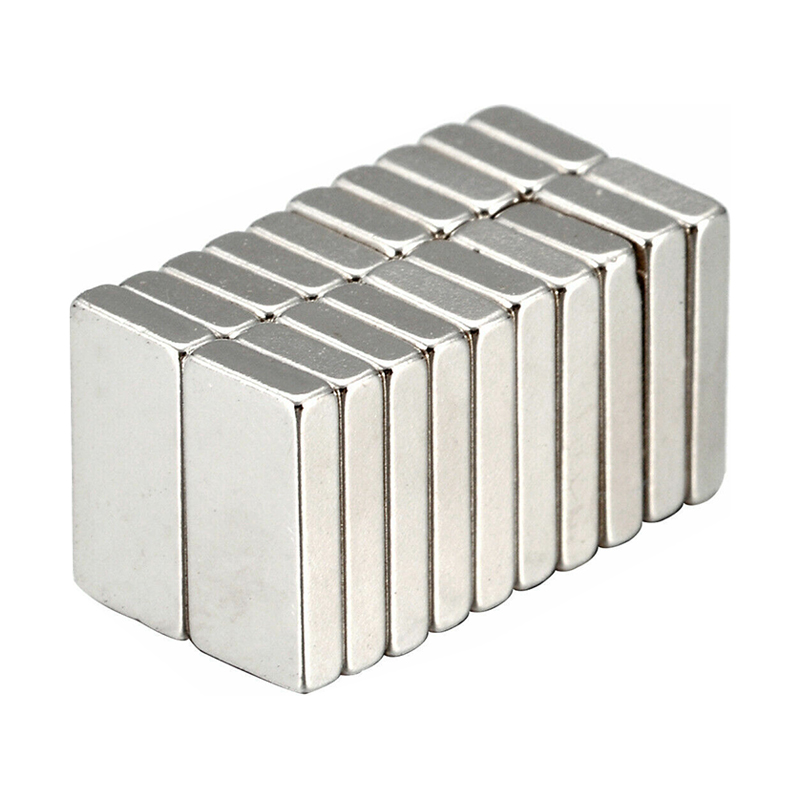 Block Sintered NdFeB Permanent MagnetsCustomizable rectangular sintered NdFeB magnets with selectable grades, coatings and magnetization directions for compact, stable magnetic circuits and assemblies.View Product →
Sintered grades are jet milled to 2–5 µm under nitrogen. Below about 1 µm the powder oxidizes faster than most plants can handle; above about 6 µm coercivity falls away. Bonded NdFeB follows a different route: rapidly quenched or HDDR powder keeps sub-micron grains inside each 50–150 µm particle, so the material can be mixed with 8–12% resin and moulded or extruded.
Soft Magnetic Powder Is Iron Alloy With an Insulating Skin
Soft magnetic powders are iron-based alloys chosen for low coercivity, and each particle carries a thin insulating layer so a compacted part does not conduct eddy currents.
Pure iron gives the highest saturation, close to 2.1 T. A 3% silicon addition cuts losses and magnetostriction. Iron-silicon-aluminium (sendust) trades some saturation for very low loss, iron-50 nickel delivers high permeability for signal-level components, and nickel-molybdenum permalloy gives the stable inductance wanted in filter cores. The insulating skin is usually a phosphate conversion coating or a silane/silicone layer tens of nanometres thick, applied before compaction at 600–1500 MPa and a stress-relief anneal.
Compacted densities land around 7.2–7.5 g/cm³ against 7.6 g/cm³ for wrought steel, which is why soft magnetic composites suit three-dimensional magnetic paths that laminated steel cannot build at all.
What Else Goes Into the Powder
Finished magnetic powder is rarely a pure alloy. Most grades carry a few tenths of a percent to a few percent of additives that make the material processable.
- Lubricants such as zinc stearate or ethylene bis-stearamide, at 0.2–0.5%, reduce die friction and ejection force.
- Binders such as epoxy, phenolic, polyamide or PPS, at 2–12%, hold bonded magnets and soft magnetic composites together.
- Surface passivation and coupling agents, typically silanes, improve coating adhesion and reduce oxidation during storage.
- Heavy rare earths can be applied after sintering by grain-boundary diffusion rather than melted into the alloy, which raises coercivity with far less dysprosium.
How the Powder Is Made
Every magnetic powder follows the same broad sequence, with one branch for cast-and-mill alloys and another for reacted oxides.
- Alloying: melting neodymium, iron and boron into a strip-cast flake, or reacting iron oxide with barium or strontium carbonate in a rotary kiln.
- Coarse crushing: jaw crushing or hammer milling down to a few millimetres.
- Hydrogen decrepitation: NdFeB absorbs hydrogen and cracks along grain boundaries, which is far cheaper than milling the strip directly.
- Jet milling: nitrogen jets reduce the powder to 2–5 µm while keeping oxygen pickup under control.
- Classification and blending: sieving to trim the coarse and fine tails, then adding lubricant, antioxidant or binder and homogenizing.
- Packing: nitrogen or argon blanketing with a moisture barrier, because a drum of fine NdFeB powder will degrade in humid air within weeks.
How Composition Shifts Performance
A few tenths of a percent of the right element can move coercivity or temperature rating further than a full step in particle size.
| Addition | Typical amount | Effect |
|---|---|---|
| Dysprosium, terbium | 0.5–5% | Raises coercivity and maximum operating temperature, lowers remanence and raises cost |
| Cobalt | 0.5–3% | Lifts Curie temperature and corrosion resistance, slightly reduces coercivity |
| Copper, aluminium, gallium | 0.1–0.5% | Improve the grain-boundary phase and densification during sintering |
| Oxygen | Keep under about 2500 ppm | Every extra 1000 ppm removes magnetic material and cuts coercivity |
| Binder in bonded grades | 8–12% | Allows moulding of complex shapes but removes roughly a tenth of the magnetic volume |
Powder Composition Also Sets the Part Geometry
The powder route decides which shapes are economical, because a part that cannot be pressed and ejected cannot be made at a sensible price.
Sintered powder is compacted in a die under an aligning field, so the geometry is limited to what the die can eject: blocks, discs, rings, arcs and trapezoids, with slicing or grinding for final tolerances. The full range of sintered NdFeB shapes follows that rule, and dimensional accuracy in the pressing direction is always looser than in the radial direction because of shrinkage during sintering. Bonded and soft magnetic composites, by contrast, can be injection moulded or warm compacted into thin walls and multi-level parts.
Where a drawing falls outside the standard families, the shape has to be designed around pressing direction, shrinkage and grain orientation from the start.
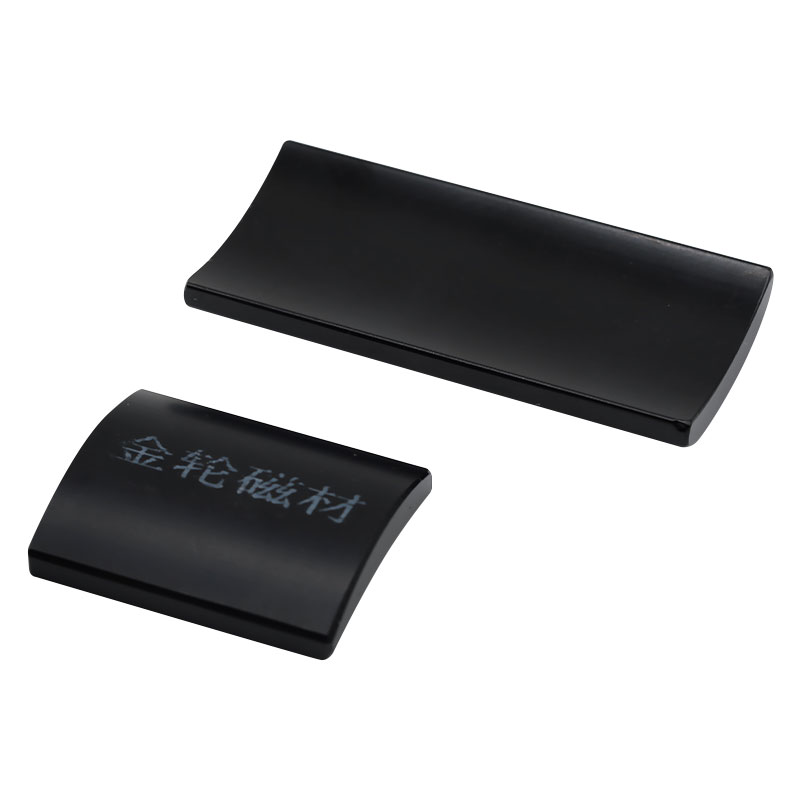 Custom Shape Sintered NdFeB MagnetsCustom-machined sintered NdFeB magnets in discs, rings, blocks, arcs and complex geometries, with customizable grade, magnetization and coating for precision devices.View Product →
What Buyers Should Verify Before Ordering
A certificate of analysis is not enough on its own; five numbers predict how a powder will actually run on your line.
- Particle size distribution: D50 identifies the grade, while a high D90 points to coarse particles that create weak spots and poor alignment.
- Oxygen and carbon content: the two impurities that quietly consume coercivity and cause lot-to-lot drift.
- Magnetic data on a test press: remanence, intrinsic coercivity and energy product measured after the same compaction cycle you will use.
- Apparent density, tap density and Hall flow: these control die fill consistency and therefore weight spread across a production run.
- Coating or binder uniformity: uneven insulation shows up later as excessive core loss or low green strength.
Published product parameters define the grade, but the powder data sheet is what governs your yield, so ask for ten consecutive lots of history rather than a single certificate.
Where Magnetic Powder Ends Up
Motor applications absorb most of the NdFeB powder produced worldwide, and that demand shapes the grades that are readily available.
Traction motors in electric vehicles, fan and pump motors, wind turbine generators, loudspeakers, magnetic couplings and sensor assemblies all begin as powder. Automotive and wind applications push toward higher coercivity and better temperature stability, consumer electronics pushes toward thin walls and tight tolerances, and aerospace pushes toward samarium-cobalt where operating temperatures exceed what NdFeB can hold.
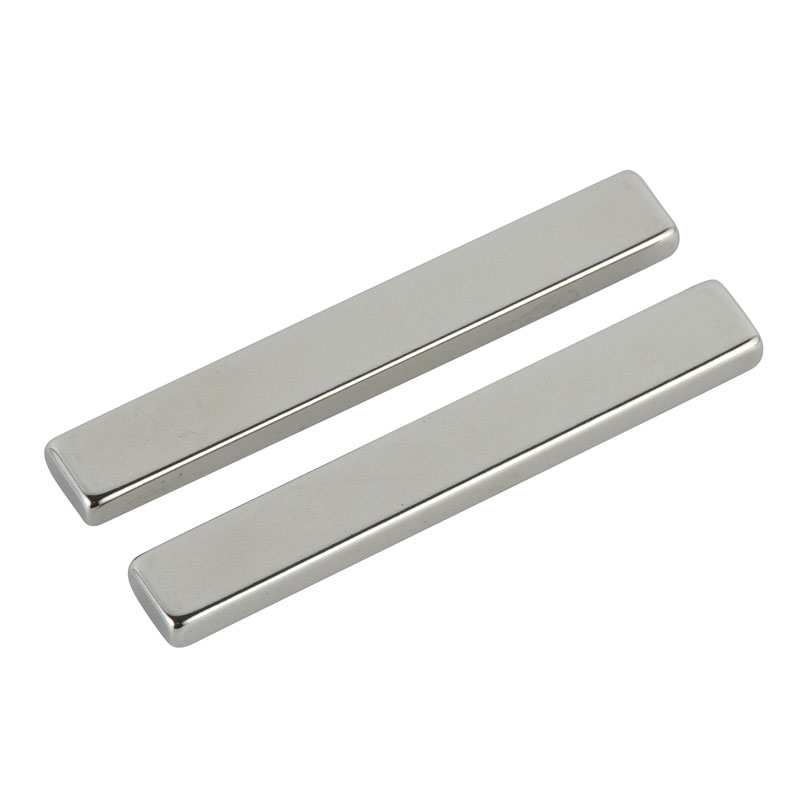 Sintered NdFeB Magnets for Synchronous MotorsMotor-magnet category covering customized sintered NdFeB grades and shapes for high-torque synchronous motors in EV, industrial, wind and appliance applications.View Product →
Frequently Asked Questions
Is magnetic powder a natural material?
No. All commercial magnetic powders are manufactured, either by melting and milling an alloy or by reacting oxides at high temperature. Naturally occurring magnetite is magnetic, but it is not used as an engineering powder because its coercivity and consistency are far too low.
Is NdFeB powder dangerous?
The fine fraction is pyrophoric in air, so it is handled under nitrogen or argon and kept away from open flames and static discharge. Finished, fully dense magnets are inert in normal use; the risk sits in machining swarf and dust, which is why wet cutting and dust extraction are standard practice.
Can magnetic powder be made from recycled magnets?
Yes. End-of-life magnets and production scrap can be hydrogen-decrepitated and re-milled into usable powder, but oxygen pickup and residual coating contamination usually limit the recycled content in high-coercivity grades. Recycled material is more common in bonded and ferrite products than in sintered high-grade NdFeB.
What is the difference between magnetic powder and a finished magnet?
Powder has the same crystal structure as the finished magnet but almost no net magnetization, because the particles point in random directions. Alignment in a magnetic field and densification by sintering or bonding are what turn powder into a magnet with useful remanence.
Composition is the starting point, not the whole story. Two powders with identical chemistry can behave differently on the same press because of particle size distribution, oxygen level and coating quality. When you specify a magnetic powder, describe the application first: operating temperature, required coercivity, part geometry and annual volume. Those four inputs narrow the family, the grade and the additive package faster than any catalogue search.