EN
 English
 中文简体
 русский
 Deutsch
 日本語
 한국어


What Is a Bonded NdFeB Magnet?
A bonded NdFeB magnet is a composite magnet made from NdFeB powder and a polymer binder, formed into a near-net shape rather than sintered into a dense metallurgical body. The binder, often nylon, PPS, or epoxy depending on the process, holds the magnetic powder in place and allows injection molding, compression molding, or calendering.
The practical answer is simple: choose bonded NdFeB when geometry, tolerance, volume, or eddy-current behavior matter more than maximum magnetic strength. It is not a drop-in replacement for every sintered NdFeB grade, and it should not be selected from a grade name alone.
- Best fit: compact motor components, sensor assemblies, thin rings, arcs, and complex shapes produced in volume.
- Magnetic level: lower than sintered NdFeB, so the magnetic circuit must be designed around the available flux.
- Thermal limit: binder selection and grade determine continuous operating temperature; many commercial grades sit in the 90–140 °C band.
- Design advantage: molded features can reduce machining, part count, and assembly variation.
Bonded vs Sintered NdFeB: Match the Constraint
Choose bonded NdFeB when shape freedom, near-net tolerances, lower eddy-current loss, or high-volume molding dominate; choose sintered NdFeB when maximum energy product, high coercivity, and severe thermal margins dominate.
| Consideration | Bonded NdFeB | Sintered NdFeB |
|---|---|---|
| Typical (BH)max | About 2–11 MGOe, depending on powder loading and grade | Commonly 35–52 MGOe |
| Forming | Molded or calendered near-net shapes | Pressed and sintered, usually followed by machining |
| Tolerance strategy | Molded features can avoid some secondary operations | Tight tolerances often require grinding or slicing |
| Eddy-current loss | Polymer binder helps break electrical paths between particles | Dense metal body needs segmentation or lamination strategies |
| Temperature | Binder-limited; verify continuous and peak conditions | Higher grades available for demanding thermal duty |
| Corrosion | Binder can help, but exposed powder and edges still need evaluation | Usually requires coating such as nickel, epoxy, or zinc systems |
The comparison is not a quality ranking. A bonded magnet can be the more reliable choice when the design needs a thin arc with molded mounting features and the motor can tolerate lower flux. A sintered magnet can be the better choice when the same envelope must produce higher torque density or survive a harsher thermal cycle.
How Bonded NdFeB Magnets Are Made
Process choice determines shape freedom, tooling cost, magnetic orientation, and the inspection plan more than the magnet grade label alone.
- Powder selection: rapid-solidified NdFeB powder is chosen for particle size, stability, and magnetic response.
- Compounding: powder is mixed with a binder system; the mix must be uniform to avoid weak zones and variation.
- Forming: injection molding suits complex 3D parts, compression molding suits higher loading, and calendering suits thin sheets.
- Curing: temperature and time control binder cross-linking and final mechanical strength.
- Finishing: secondary operations, coating, or assembly features are added only where the process and tolerance justify them.
- Magnetization: the fixture and saturation level must match the final pole pattern, not just the material grade.
If the magnetic circuit needs more flux than a bonded grade can provide, compare custom-shape sintered NdFeB options before changing the whole housing design.
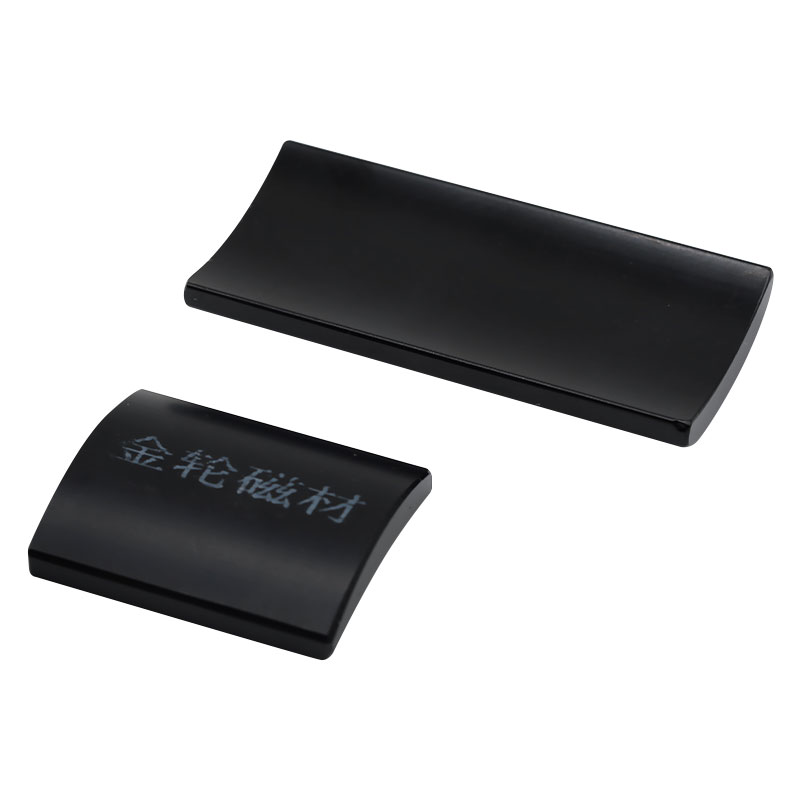 Custom Shape Sintered NdFeB MagnetsCompare custom sintered NdFeB shapes when bonded grades cannot supply enough flux, then select a grade with margin for worst-case operating conditions.View Product →
Grade and Temperature Selection
Start with the worst-case operating point, not the grade chart: calculate flux at maximum temperature, account for demagnetizing fields, and then select a grade with margin.
| Grade band | Typical (BH)max | Typical Br | Typical continuous use | Best fit |
|---|---|---|---|---|
| Low-energy | 2–5 MGOe | 2–5 kG | About 90–120 °C | Small sensors, light-duty positioning, low-flux bias |
| Mid-energy | 5–8 MGOe | 5–7 kG | About 120 °C | Compact motors, thin rings, high-volume assemblies |
| Higher-energy | 8–11 MGOe | 6–8 kG | About 120–140 °C | Space-constrained motor parts with moderate thermal margin |
Temperature margin is not only about the binder. The coercivity grade, permeance coefficient, and expected demagnetizing current all interact. A bonded magnet that looks acceptable on a room-temperature datasheet can still lose output if the rotor sees a hot stall condition or a strong opposing field.
Motor designers often compare bonded ring or arc concepts against our synchronous motor magnet options when torque density rises.
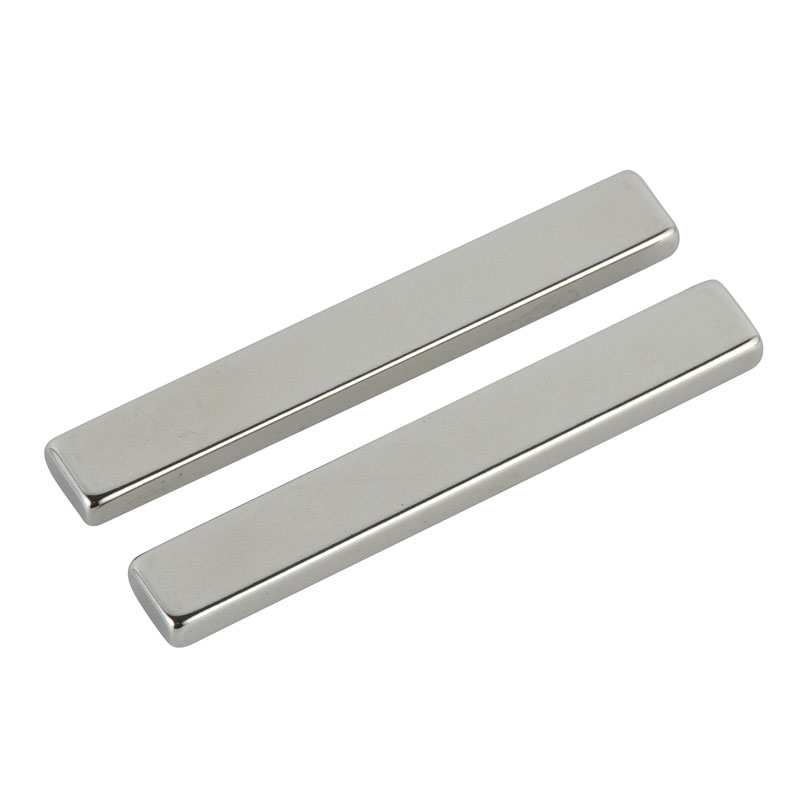 Sintered NdFeB Magnets for Synchronous Motor ManufacturersSintered NdFeB Magnets for Synchronous Motor are high-performance permanent magnets specifically designed to meet the requirements of synchronous motor applications. T...View Product →
Design Checks: Tolerances, Magnetization, and Assembly Risks
Most bonded NdFeB problems appear in tolerance stack-up, magnetization pattern, and assembly stress rather than in the powder itself.
Tolerance stack-up
Molded parts can reduce machining, but the drawing must distinguish critical magnetic features from cosmetic or mounting features. A tight tolerance on a non-critical edge adds cost without improving air-gap consistency.
Magnetization pattern
Specify the pole count, orientation, and saturation requirement before quoting. A multipole ring that is magnetized with the wrong fixture may pass a simple flux check but produce unacceptable cogging or sensor error in the assembly.
Assembly stress
Press fits, thermal expansion, and fastener loads can crack thin sections or relax the binder over time. Bonded magnets are generally less brittle than sintered parts, but they are still composite parts with direction-dependent strength and temperature limits.
Corrosion and environmental exposure
Evaluate humidity, salt spray, oil, and cleaning agents as a system. The binder may protect particles in one environment but still need a coating or housing seal in another.
Inspection plan
Agree on magnetic measurements, dimensional checks, and lot sampling before production. For motor or automotive programs, include process capability, change control, and traceability in the supplier review.
Sourcing Checklist for Bonded NdFeB Magnet Projects
A reliable quote starts with a complete magnetic, mechanical, and environmental specification; a drawing alone rarely gives the supplier enough information to control risk.
- Operating temperature range, including stall, peak, and cold-start conditions.
- Required flux, pole pattern, and maximum allowable demagnetization under fault current.
- Critical dimensions, datums, and which tolerances actually affect motor performance.
- Expected annual volume and ramp curve, because tooling and process choice depend on volume.
- Coating, potting, or housing requirements and any cleaning chemicals used before assembly.
- Magnetic test method, fixture, acceptance limits, and sample size.
- Mechanical loads from press fits, fasteners, vibration, and thermal cycling.
- Supply continuity plan for NdFeB powder and binder materials.
You can review our product portfolio for related magnet families and application pages before narrowing the specification.
FAQ: Bonded NdFeB Magnet Selection
Are bonded NdFeB magnets weaker than sintered NdFeB magnets?
Yes, in general. Bonded grades typically reach a small fraction of the energy product of sintered grades, so they suit designs where shape, tolerance, volume, or eddy-current behavior outweigh maximum flux.
Can bonded NdFeB magnets be made in complex shapes?
Yes. Injection molding and compression molding can produce rings, arcs, thin walls, and mounting features that would be costly or impractical to machine from sintered blanks.
What temperature can a bonded NdFeB magnet handle?
Many commercial grades are used around 90–140 °C continuous, but the real limit depends on binder, grade, permeance, and demagnetizing field. Verify the specific grade at the worst-case operating point.
When should I choose sintered NdFeB instead?
Choose sintered NdFeB when the design needs maximum energy product, higher coercivity, or stronger thermal margins. If the bonded concept is close but lacks flux, compare a sintered custom shape before changing the magnetic circuit.