EN
EN English
 中文简体
中文简体 русский
 Deutsch
 日本語
日本語 한국어
한국어

Curie temperature (Tc) is the temperature above which a ferromagnetic material loses its ordered magnetic state and becomes paramagnetic. For permanent magnets, this is the absolute thermal limit: above Tc, the magnet cannot generate a useful magnetic field. However, a sintered NdFeB rotor can lose a significant portion of its flux at 150°C, long before it reaches a typical Tc near 340°C. The practical operating limit is therefore given by the maximum operating temperature, not by the Curie point. This article explains what Curie temperature is, how it differs from operating temperature, and how to use both values to select magnets for motors, generators, and other high-heat systems.
What Is Curie Temperature?
Curie temperature is the exact boundary between ferromagnetic and paramagnetic behavior in magnetic materials such as iron, cobalt, nickel, and most rare-earth magnets.
Below Tc, the magnetic moments in a material remain aligned within magnetic domains, which creates a net magnetic field. As temperature increases, atomic vibrations become stronger. At the Curie point, thermal energy overcomes the exchange interaction that keeps the moments aligned, and the material becomes paramagnetic. The transition is thermally reversible: cooling the material below Tc restores ferromagnetic ordering, but the original domain structure and magnetization direction may not return perfectly.
The name comes from Pierre Curie, who systematically studied these magnetic transitions in the late 19th century.
Curie Temperature vs. Maximum Operating Temperature
Curie temperature is an intrinsic physical property, but maximum operating temperature (Tm) is the practical engineering limit, and the two should never be treated as interchangeable.
For a permanent magnet, Tm is the highest continuous temperature at which the magnet retains a specified portion of its magnetic flux over time. Above Tm, irreversible flux loss may occur, even though the magnet has not reached Tc. In many NdFeB grades, Tm can be 150°C or more below Tc, which is why relying on Curie temperature alone is a common specification error.
| Parameter | Curie Temperature | Maximum Operating Temperature |
|---|---|---|
| Definition | Temperature at which ferromagnetic material becomes paramagnetic | Highest continuous temperature at which the magnet retains specified flux |
| Magnetic effect | Complete loss of ordered magnetism; reversible on cooling in theory | Partial and often irreversible flux loss |
| Role in design | Absolute physical limit; rarely used as a design limit | Practical design limit for continuous operation |
| Typical sintered NdFeB value | 310–350°C depending on grade | 80–200°C depending on grade |
Curie Temperatures of Common Permanent Magnet Materials
Permanent magnet families have widely different Curie temperatures, so material choice is often decided by the thermal budget of the application.
| Material family | Curie temperature | Typical maximum operating temperature | Notes |
|---|---|---|---|
| Ferrite (ceramic) | 450–460°C | ~250°C | Low cost, corrosion resistant, low energy product |
| Alnico | 800–860°C | ~525°C | Very high Tc, high remanence, easy to demagnetize |
| Samarium cobalt | 700–800°C | 250–350°C | Good thermal stability, high strength, higher cost |
| Sintered NdFeB | 310–350°C | 80–200°C | Highest room-temperature energy product, more temperature-sensitive |
The Curie temperature of NdFeB is not fixed because the alloy composition, especially heavy rare-earth content, can shift both Tc and the temperature coefficient of coercivity.
Why Curie Temperature Matters in Real Applications
Thermal failure in magnets usually appears as gradual flux loss well before the Curie point, so application designers need to combine Tc data with demagnetization curves and operating temperature ratings.
Synchronous motors and servomotors
Motor rotors are exposed to heat from copper windings and magnetic losses. Without enough thermal margin, a motor magnet can lose flux after repeated load cycles. Engineers choose NdFeB grades with high intrinsic coercivity and check the working point on the demagnetization curve. For motor prototyping, many specifiers start with synchronous motor magnet assemblies that are designed for a defined temperature class.
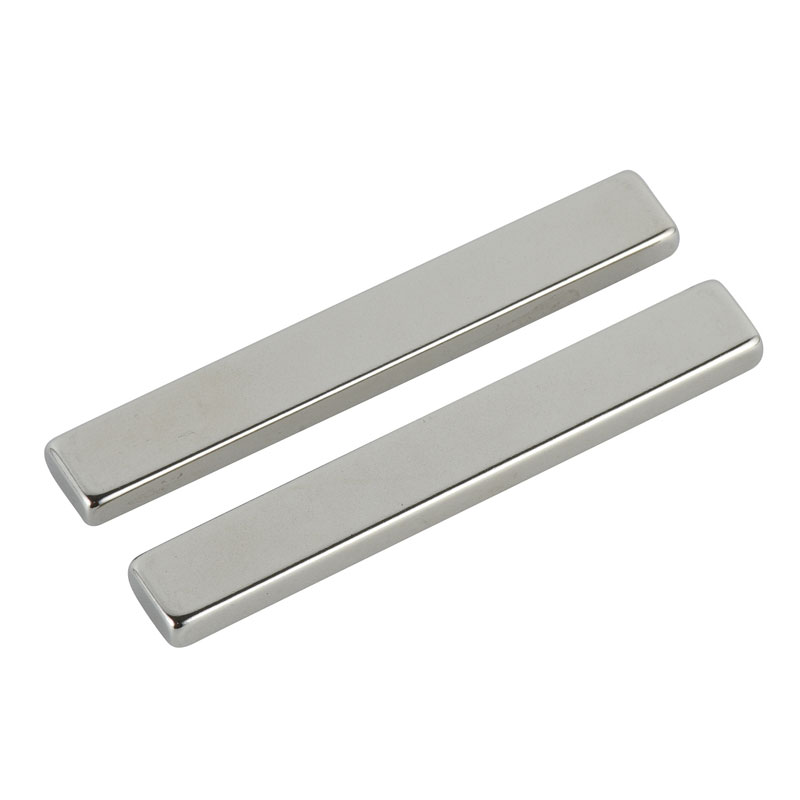 Sintered NdFeB Magnets for Synchronous Motor Manufacturers, FactoryAs a leading China sintered NdFeB magnets for synchronous motors manufacturers and custom sintered NdFeB magnets for synchronous motors m...View Product →
Wind turbine generators
Direct-drive wind generators use large permanent-magnet rotors that retain heat. Long thermal exposure at high load can cause irreversible loss if the grade is chosen with insufficient margin. For large rotors, a safe approach is to compare the worst-case winding temperature with the demagnetization curve and keep a headroom of at least 30°C below the maximum operating temperature. Dedicated wind turbine generator magnets are available in high-coercivity grades for this reason.
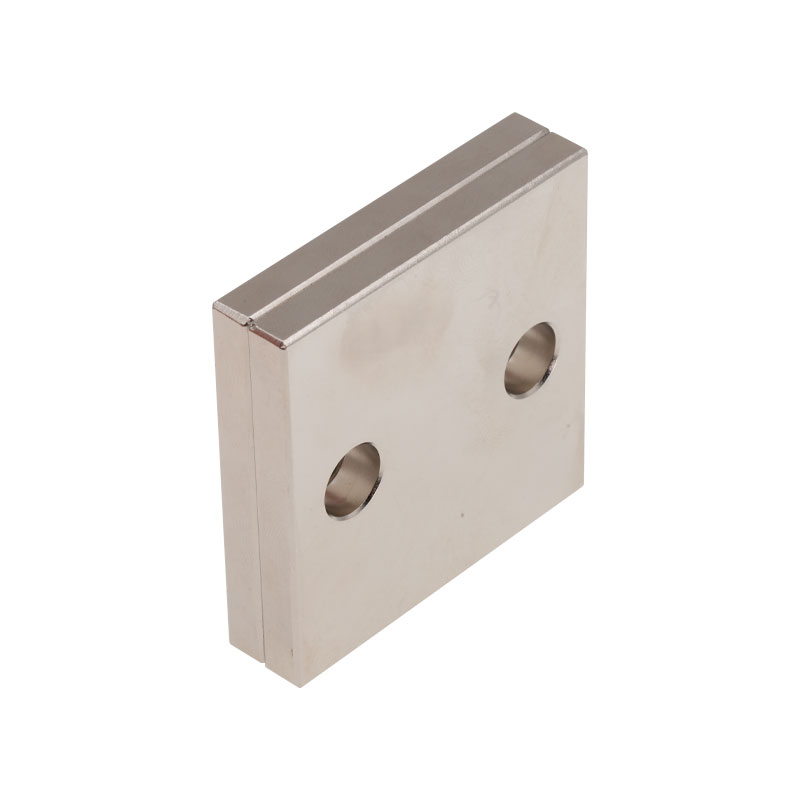 Sintered NdFeB Magnets for Wind Power Manufacturers, FactoryAs a leading China sintered NdFeB magnets for wind power manufacturers and custom sintered NdFeB magnets for wind power manufacturers fac...View Product →
Automotive and industrial systems
Under-hood environments, brake systems, and industrial sensors add heat and vibration to the magnetic circuit. The temperature coefficient of magnetic flux, the knee point, and the coating all affect reliability. In these cases, the Curie temperature is a useful first check, but the actual operating data at elevated temperatures is what determines whether a grade will survive the duty cycle.
How to Select a Magnet Grade for High Heat
Selecting a magnet for a hot environment starts with the continuous operating temperature, not with the Curie temperature, and the key input is the demagnetization curve at the expected temperature.
- Define the worst-case continuous temperature and the short-term peak temperature for the application.
- Set an allowable irreversible flux loss over the product lifetime, usually a percentage of the original magnetic flux.
- Compare candidate grades using demagnetization curves of sintered NdFeB at the target temperature.
- Select a grade whose knee point remains above the worst-case load line at the maximum operating temperature.
- Confirm the thermal limits with the magnet manufacturer, especially for special geometry, coating, and magnetization direction.
Because sintered NdFeB grades with higher coercivity usually have higher operating limits, but also different Curie temperatures, the manufacturer's datasheet should list both Tc and Tm. If you are reviewing a new grade, the practical specification to ask for is the working temperature of sintered NdFeB magnets, not just the Curie temperature.
Geometry also contributes to thermal behavior. A thin magnet cools faster, while a thick block may retain heat longer. If the application requires a non-standard geometry, the magnetic grade and coating must be validated together. Many engineers choose custom-shaped sintered NdFeB magnets to optimize both flux density and thermal management.
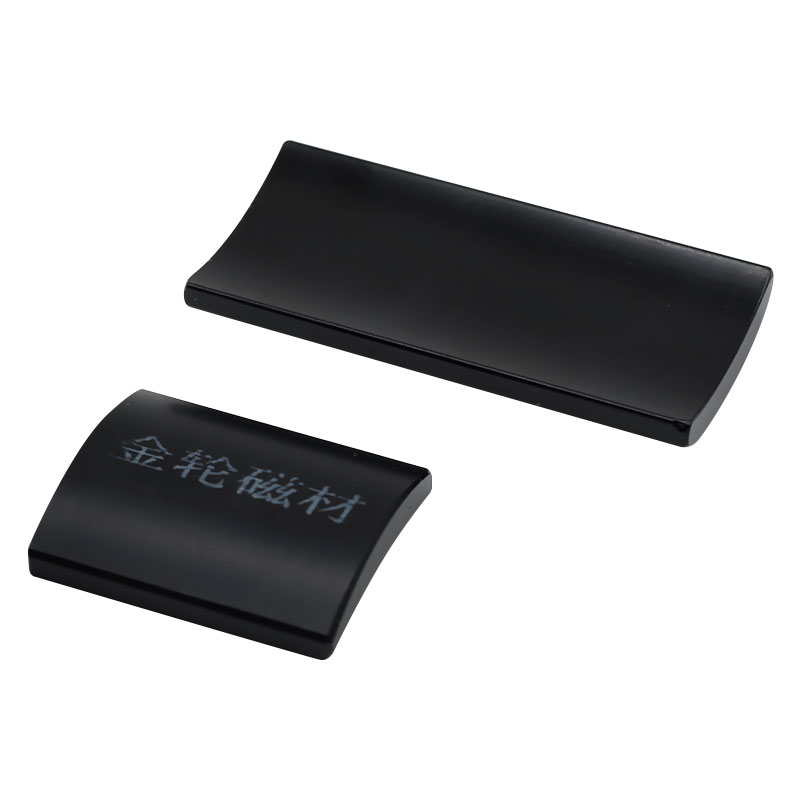 Custom Shape Sintered NdFeB Supplier, ManufacturersAs a China Custom Shape Sintered NdFeB manufacturers and custom Custom Shape Sintered NdFeB manufacturers factory, Ningbo Jinlun Magnet s...View Product →
Frequently Asked Questions
The practical answer to most Curie temperature questions is that maximum operating temperature, not the Curie point itself, should be the first number on the magnet specification sheet.
At what temperature do neodymium magnets lose their magnetism?
Neodymium magnets begin to lose a measurable amount of magnetic flux well below their Curie temperature. Typical sintered NdFeB grades have a Curie temperature around 310–350°C, but continuous operation above 80°C, 120°C, 150°C, or 200°C (depending on grade) can cause irreversible losses. The magnet may not become completely non-magnetic until Tc, but its useful strength can be gone much earlier.
Can a magnet recover after being heated past the Curie temperature?
On an atomic scale, ferromagnetic order can reappear when the material cools below Tc. However, the domain structure, grain boundaries, and net magnetization will generally not return to their original state. In practical terms, a magnet overheated to the Curie point should be treated as damaged and re-evaluated by an engineer.
Is a higher Curie temperature always better?
Not necessarily. Samarium cobalt has a much higher Curie temperature than NdFeB, but NdFeB provides higher magnetic output at room temperature and lower system cost for many applications. The right choice depends on the full thermal range, required flux, available space, and budget.
Does the Curie temperature change with magnet grade?
Yes. Within sintered NdFeB, variations in heavy rare-earth content can change intrinsic coercivity, the temperature coefficient, and the precise Curie temperature. Always use the grade-specific datasheet rather than an average value from memory.
Specifying a permanent magnet for a hot environment is a combination of physics, application data, and manufacturing experience. The Curie temperature defines the fundamental physical limit, while maximum operating temperature and demagnetization curves define the safe operating area. For motor, generator, and industrial projects with tight thermal margins, work with a sintered NdFeB manufacturer who can supply verified technical data, custom geometry support, and reproducible process control.