EN
EN English
 中文简体
中文简体 русский
 Deutsch
 日本語
日本語 한국어
한국어

The Curie temperature of a neodymium magnet lies between 310°C and 400°C, depending on the exact grade and rare-earth composition. That is the temperature at which the material completely loses its permanent magnetic field and behaves like a piece of ordinary paramagnetic metal. However, most commercial NdFeB magnets begin to lose magnetic strength permanently at far lower temperatures—standard N-series grades start suffering irreversible demagnetization above 80°C. This gap between the Curie temperature and the maximum operating temperature is the single most misunderstood factor when engineers and purchasing teams select magnets for motors, generators, and other heat-exposed assemblies.
What Is the Curie Temperature of a Neodymium Magnet?
The Curie temperature, denoted Tc, is the physical point at which a ferromagnetic material loses its spontaneous magnetization and becomes paramagnetic. For the NdFeB magnet alloy—whose main magnetic phase is Nd2Fe14B—the intrinsic Curie temperature is approximately 585 K, or about 312°C. Commercial sintered neodymium magnets typically show Curie values of 310°C to 400°C because manufacturers add dysprosium (Dy), terbium (Tb), and other alloying elements that shift the phase transition point.
What Happens at the Curie Temperature?
Below Tc, the magnetic moments of the Nd2Fe14B crystal lattice align in a common direction, producing a net magnetic field. At Tc, thermal vibration overcomes the exchange coupling between adjacent atomic moments. The moments randomize, and the net magnetization drops to zero. When the magnet cools back below Tc, it can regain ferromagnetic behavior—but only if the microstructure has not been oxidized or thermally damaged. In practice, exceeding the Curie temperature without protective atmosphere or coating destroys the sintered structure through oxidation and grain-boundary diffusion, so the magnetism cannot be recovered.
Curie Temperature vs. Maximum Operating Temperature
These two values are not interchangeable, and confusing them causes real specification failures. The Curie temperature is a material physics property. The maximum operating temperature is an engineering limit: the highest continuous temperature at which a specific grade retains acceptable magnetic performance over a long lifetime.
Neodymium magnets lose magnetic flux steadily as temperature rises. At 100°C, an N42 magnet can lose roughly 8% to 10% of its room-temperature flux. At 150°C, the loss may reach 20%. This reversible loss is expected and normally allowed for in the design. The critical difference is that after exceeding the maximum operating temperature, a fraction of the loss becomes permanent: the magnet does not return to its original strength when cooled. This is caused by the partial reversal of alignment in the sintered grain structure, not by reaching the Curie point.
- Curie temperature: total loss of magnetization; both permanent and structural failure in most real-world NdFeB parts.
- Maximum operating temperature: threshold above which irreversible flux loss begins; depends on the coercivity grade, not on the Curie point.
- Reversible flux loss: temporary strength reduction that recovers when temperature returns to normal.
- Irreversible flux loss: permanent reduction in strength caused by thermal aging above Tmax.
For selecting a magnet, the maximum operating temperature is the value that matters. The Curie temperature mainly tells you the theoretical ceiling of the alloy system, which you should never approach in service.
Curie Temperature and Operating Limits by NdFeB Grade
NdFeB grades are classified by intrinsic coercivity, and this classification directly determines the maximum operating temperature. Higher-coercivity grades (H, SH, UH, EH, AH) contain elevated levels of heavy rare-earth elements, which raise the thermal stability but also lower the remanence and energy product.
| Grade Family | Maximum Operating Temp. (°C) | Curie Temp. (°C) | Typical Br (kG) |
|---|---|---|---|
| N35–N52 | 80 | 310–320 | 11.7–14.5 |
| N35M–N52M | 100 | 320–330 | 11.7–14.5 |
| N35H–N48H | 120 | 340–350 | 11.7–13.8 |
| N35SH–N45SH | 150 | 350–360 | 11.7–13.2 |
| N30UH–N42UH | 180 | 360–370 | 10.8–13.2 |
| N28EH–N38EH | 200 | 370–380 | 10.4–12.4 |
| N28AH–N35AH | 230 | 380–400 | 10.4–11.7 |
Two trends stand out when comparing grades. First, the Curie temperature shifts only about 10–20°C from one coercivity family to the next. Second, the maximum operating temperature jumps by roughly 20–40°C between families. This is why coercivity selection, not Curie temperature, dominates engineering practice: adding heavy rare earths raises the coercive force far more than it moves the intrinsic Curie point.
What Raises the Curie Temperature of NdFeB Magnets?
Alloying is the only practical way to raise the thermal limits of sintered NdFeB. Adding dysprosium or terbium increases the anisotropy field and coercivity, which enables the magnet to withstand higher temperatures before irreversible loss begins. In parallel, substituting elements such as cobalt, gallium, or aluminum into the Nd2Fe14B structure can modestly raise the Curie temperature itself.
The Trade-Off Most Buyers Miss
Higher thermal tolerance has a cost. Heavy rare-earth additions occupy iron and neodymium lattice sites that contribute to the saturation magnetization, so Br and (BH)max decrease as coercivity increases. That is why an N52 grade has the highest flux density but only an 80°C operating limit, while an N35AH grade handles 230°C but outputs roughly 25% less magnetic flux. When a motor design demands both high torque density and high temperature resistance, the choice of grade becomes a compromise between output and reliability.
Why the Curie Temperature Matters in Real Applications
In practical devices, the magnet is rarely the hottest component. The winding, the bearing, and the housing all absorb heat, and the magnet may be exposed to both ambient temperature and localized heating from eddy currents. Understanding where a magnet sits relative to its thermal limits helps engineers avoid two failure modes: sudden demagnetization after a thermal excursion, and gradual, invisible flux decay over thousands of operating hours.
Synchronous Motors
Interior permanent magnet synchronous motors used in electric vehicles and industrial servo drives commonly operate between 90°C and 180°C at the rotor. Because the rotor is difficult to cool, engineers specify SH or UH grades for EV traction motors. If the motor is pushed into overload, the magnet temperature can briefly spike above 180°C. A grade with a higher maximum operating temperature provides the safety margin needed to prevent irreversible demagnetization. For this reason, our synchronous motor magnets are available in SH, UH, and EH coercivity families to match the actual thermal profile of the motor.
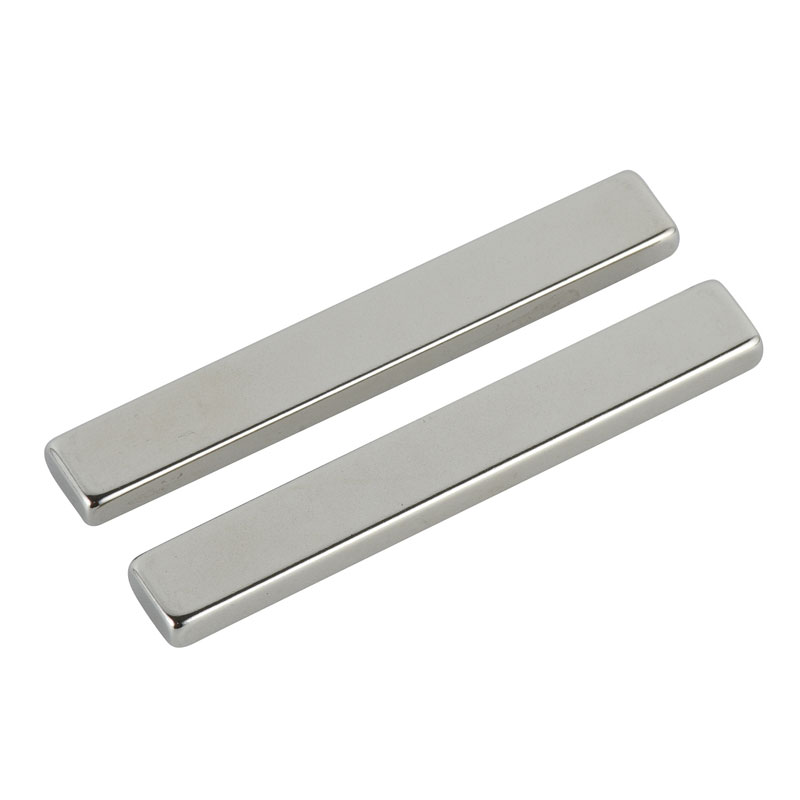 Sintered NdFeB Magnets for Synchronous Motor Manufacturers, FactoryAs a leading China sintered NdFeB magnets for synchronous motors manufacturers and custom sintered NdFeB magnets for synchronous motors m...View Product →
Wind Turbine Generators
Direct-drive wind turbine generators use large-diameter NdFeB segments that are exposed to ambient extremes plus load-generated heat. Offshore turbines in particular can face wide temperature swings, and the generator enclosure traps heat near the magnets. Grade selection must therefore account for both continuous operating temperature and thermal cycling. Because replacing a magnet in a large generator is costly, most wind turbine specifications require at least H or SH grade magnets. Our wind power application magnets are manufactured with higher coercivity targets to handle these demanding thermal cycles.
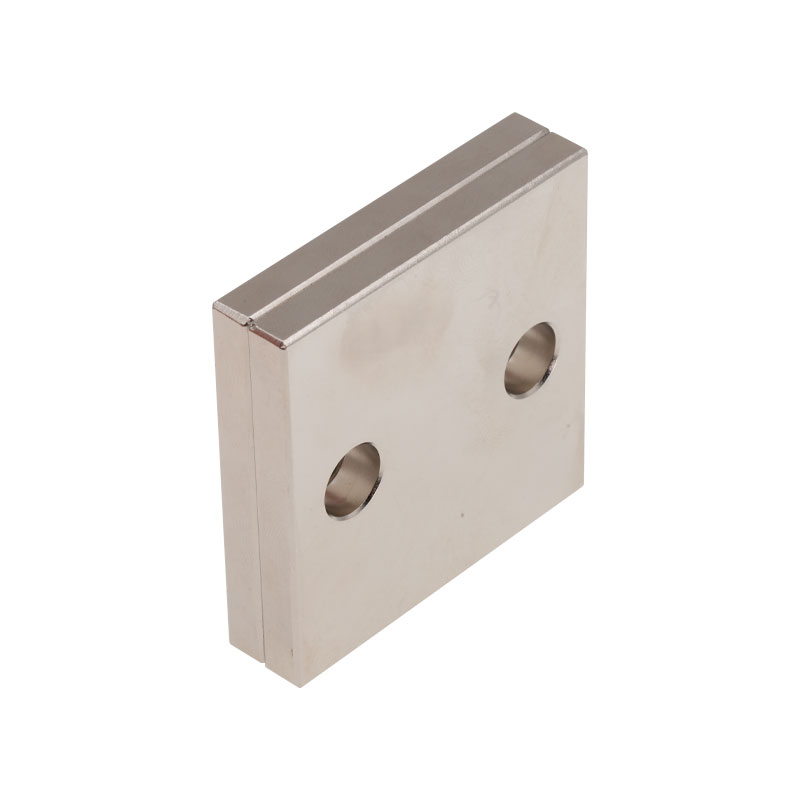 Sintered NdFeB Magnets for Wind Power Manufacturers, FactoryAs a leading China sintered NdFeB magnets for wind power manufacturers and custom sintered NdFeB magnets for wind power manufacturers fac...View Product →
Custom Magnet Assemblies
Custom-shaped magnets—arc segments, trapezoids, and multi-pole rings—add a further consideration: mechanical tolerances combine with thermal expansion. A magnet that expands differently from its steel housing may develop internal stress, which accelerates flux loss. If your design uses a custom shape sintered NdFeB magnet, the heat treatment and coating schedule must be matched to the final operating temperature range, not just the room-temperature magnetic performance.
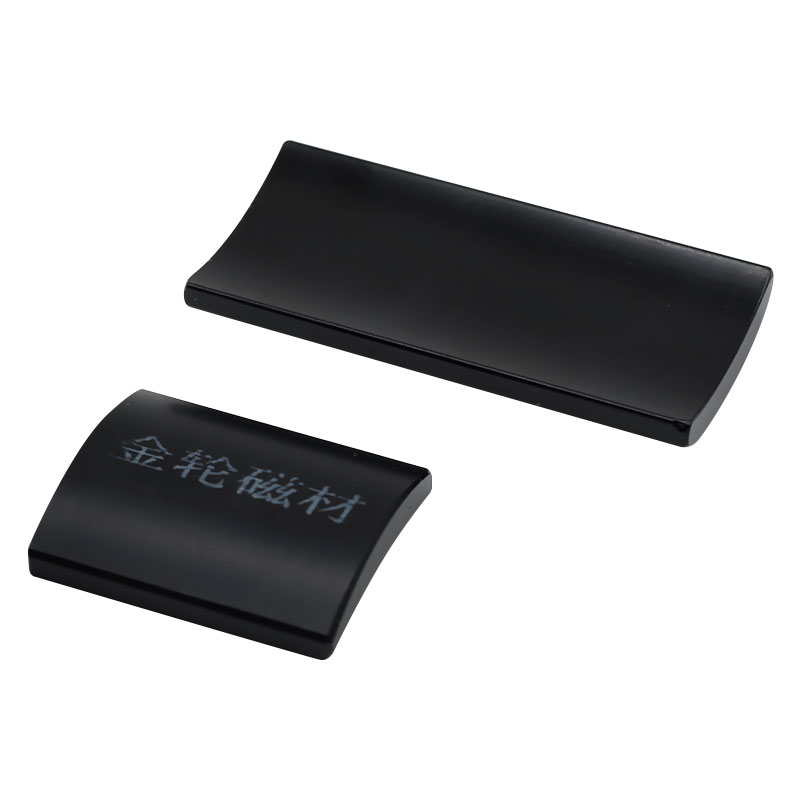 Custom Shape Sintered NdFeB Supplier, ManufacturersAs a China Custom Shape Sintered NdFeB manufacturers and custom Custom Shape Sintered NdFeB manufacturers factory, Ningbo Jinlun Magnet s...View Product →
How to Choose the Right NdFeB Grade for High-Temperature Service
Selecting the correct magnet grade is a straightforward engineering decision when you know your worst-case magnet temperature. Start with the maximum magnet temperature—not the ambient air temperature—then add a safety margin of 20–30°C. Compare that value against the maximum operating temperature of the grade, and choose the lowest coercivity family that exceeds your margin. If room-temperature magnetic performance is insufficient at that grade, the magnet shape or the motor design must change instead.
- Define the worst-case continuous temperature. Review the thermal simulation or prototype data for the magnet location.
- Add a thermal margin. A 20–30°C buffer covers sensor error and batch-to-batch variation.
- Select the coercivity family. Use the grade table above; pick the family whose operating temperature exceeds the margin-corrected value.
- Verify with demagnetization curves. Check the knee point at the operating temperature—not just at room temperature—before finalizing the design.
For a complete comparison of B, H, and energy-product values across all families, refer to the product parameter tables and the detailed discussion of sintered NdFeB working temperature in our technical library.
Frequently Asked Questions
Is the Curie temperature the same as the maximum working temperature?
No. The Curie temperature is the point where magnetism is completely lost, while the maximum working temperature is the limit above which irreversible demagnetization starts. For NdFeB magnets, the maximum working temperature is usually 100–200°C below the Curie temperature.
Can a neodymium magnet recover after exceeding its Curie temperature?
In theory, a ferromagnetic material can regain magnetism after cooling below Tc. In practice, a sintered neodymium magnet heated above 310–400°C will oxidize severely and suffer microstructural damage, so the original magnetic performance cannot be restored.
Which NdFeB grade has the highest Curie temperature?
Among standard commercial grades, the AH family (N28AH–N35AH) has the highest Curie temperature, typically 380–400°C, with a maximum operating temperature of 230°C.
Why do N-grade magnets lose strength at temperatures far below their Curie temperature?
Because irreversible flux loss is governed by coercivity, not by the Curie point. The coercive field decreases as temperature rises, and once the operating demagnetizing field exceeds the thermal stability of the grain structure, magnetization flips permanently. Heavy rare-earth elements raise coercivity and therefore raise the practical operating temperature.
Does a higher Curie temperature always mean a better magnet?
Not necessarily. A higher Curie temperature usually comes with lower remanence and a lower energy product. For applications that stay cool, a standard N-grade magnet may give better magnetic performance and lower cost. The best grade is the one matched to your real temperature profile.
To summarize: the Curie temperature of neodymium magnets tells you where the material fundamentally stops being magnetic, but your engineering limit is the maximum operating temperature. Standard grades fail above 80°C, while AH grades can run continuously at 230°C. When you review magnet specifications, look at the coercivity class, the demagnetization curve at your expected hot temperature, and the operating-life data—not just the Curie point. That simple habit prevents the most common specification failures in magnetic assemblies.