EN
EN English
 中文简体
中文简体 русский
 Deutsch
 日本語
日本語 한국어
한국어

A neodymium magnet motor is a high-efficiency permanent magnet synchronous motor (PMSM) or brushless DC motor (BLDC) that uses powerful neodymium-iron-boron (NdFeB) rare earth magnets embedded in or mounted on the rotor to generate the magnetic field required for rotation. Unlike traditional induction motors that consume electrical energy to create a magnetic field in the rotor, a neodymium magnet motor derives its rotor flux from permanent magnets with an energy product reaching 50 megagauss-oersteds (MGOe) or higher, eliminating rotor copper losses entirely and enabling efficiency levels that routinely exceed 95%. According to the International Energy Agency (IEA), electric motor-driven systems account for approximately 45% of global electricity consumption, and the ongoing shift from induction motors to neodymium-based permanent magnet designs in electric vehicles, industrial automation, and HVAC systems represents one of the most impactful energy-saving transitions underway in the global economy.
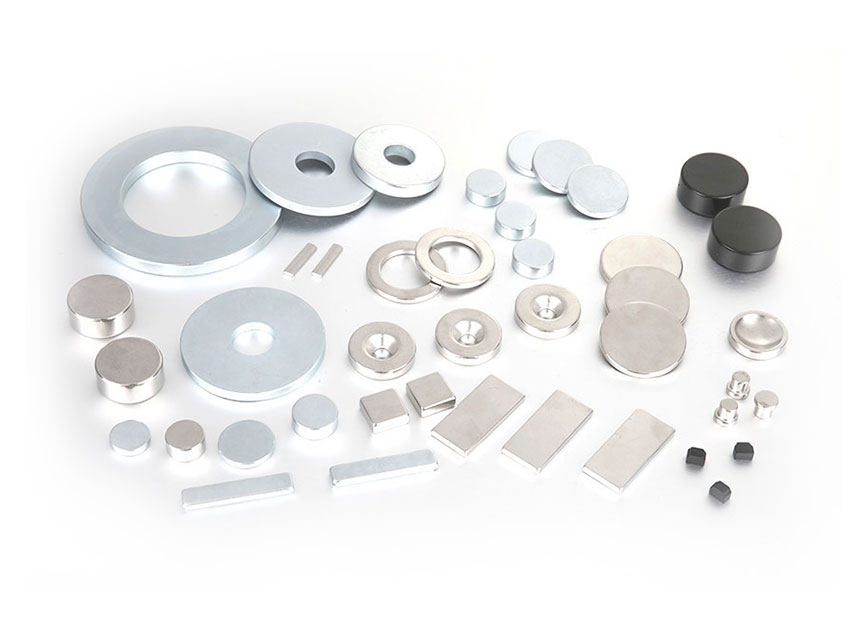
Explore Key Applications of Magnetic Materials
What Is a Neodymium Magnet Motor and How Does It Work?
A neodymium magnet motor is an electric motor in which the rotor's magnetic field is produced by sintered neodymium-iron-boron permanent magnets rather than by electromagnets, and rotation is achieved by electronically commutating the stator windings to create a rotating electromagnetic field that the rotor follows in precise synchronism. The fundamental operating principle involves the interaction between the rotating magnetic field generated by the stator coils and the fixed magnetic poles embedded in the rotor. Neodymium magnets are chosen because they possess the highest magnetic remanence (Br) and coercivity (Hc) of any commercially available permanent magnet material. A typical N52-grade neodymium magnet exhibits a remanence of approximately 1.44 to 1.48 tesla and an intrinsic coercivity exceeding 11,000 oersteds. When these magnets are arranged in a Halbach array or a conventional surface-mounted configuration on the rotor, they produce an intense, stable magnetic flux that interacts with the stator's alternating poles. The motor controller, which receives position feedback from Hall effect sensors or a resolver, energizes the stator phases in a carefully timed sequence that maintains an optimal torque angle between the stator and rotor fields. Because the rotor magnets produce their own flux, no magnetizing current needs to be supplied to the rotor, and the only losses occur in the stator windings, the magnetic steel laminations, and the bearings. This elegant operating principle is what enables a neodymium magnet motor to deliver more mechanical power per unit of electrical input than any other commercially viable motor topology.
The Material Science Behind Neodymium Permanent Magnets
The performance of a neodymium magnet motor is directly attributable to the extraordinary magnetic properties of the neodymium-iron-boron compound, which was discovered in 1984 and has since been refined into the strongest permanent magnet material available at any price. The key magnetic metrics that distinguish NdFeB magnets from their predecessors—ferrite (ceramic) magnets and samarium-cobalt magnets—are summarized below:
- Maximum energy product (BHmax): Neodymium magnets achieve BHmax values of 30 to 52 MGOe, compared to only 1 to 5 MGOe for ferrite magnets and 15 to 30 MGOe for samarium-cobalt. This means a neodymium rotor can generate the same magnetic flux as a ferrite rotor that is physically four to ten times larger, enabling the dramatic reductions in motor size and weight that characterize modern neodymium magnet motor designs.
- Magnetic remanence (Br): N52-grade NdFeB retains a flux density of 1.44 to 1.48 tesla after magnetization. The cross-sectional area of magnet material required to achieve a given air-gap flux density is inversely proportional to the remanence, so high-Br magnets allow narrower, lighter rotors.
- Intrinsic coercivity (Hci): High-coercivity grades designed for motor applications, often designated with an "H" suffix such as N45SH or N48UH, can resist demagnetization from the stator field and from elevated temperatures up to 150 to 220 degrees Celsius. According to research published in the Journal of Applied Physics, the addition of dysprosium or terbium to the NdFeB grain boundaries increases coercivity by pinning magnetic domain walls, though at the cost of a modest reduction in remanence.
A critical consideration in neodymium magnet motor design is the temperature coefficient of the magnets. The remanence of NdFeB decreases at a rate of approximately 0.10% to 0.12% per degree Celsius of temperature rise, and the coercivity drops even more sharply. At 120 degrees Celsius, a standard N-grade magnet can lose 20% to 30% of its room-temperature coercivity. This is why motor manufacturers select high-temperature grades and carefully model the thermal behavior of the rotor to ensure that the magnets remain within their safe operating window across the entire speed and load range.
Comparing Neodymium Magnet Motors to Other Motor Technologies
When engineers evaluate a neodymium magnet motor against an induction motor, a switched reluctance motor, or a ferrite permanent magnet motor, the neodymium design consistently delivers superior power density and efficiency, though at a higher material cost and with supply chain implications tied to rare earth element production. The table below provides a quantitative comparison of the key performance parameters that influence the selection of motor technology for traction and industrial applications.
| Motor Type | Peak Efficiency | Power Density (kW/kg) | Rotor Losses | Cost per kW | Typical Applications |
|---|---|---|---|---|---|
| Neodymium Magnet Motor (NdFeB PMSM) | 94–97% | 3.0–5.5 | Negligible (eddy current only) | High | EV traction, servo drives, aerospace actuators |
| Induction Motor (IM) | 88–93% | 1.5–2.5 | Moderate (rotor bars and core) | Low | Industrial pumps, fans, conveyors, older EVs |
| Ferrite Magnet Motor (PMSM) | 90–94% | 1.8–3.0 | Negligible | Low to moderate | Home appliances, light-duty commercial EVs, e-bikes |
| Switched Reluctance Motor (SRM) | 88–92% | 2.0–3.5 | Moderate to high | Low (no magnets) | Emerging EV designs, mining machinery, vacuum cleaners |
Where Are Neodymium Magnet Motors Used Today?
The neodymium magnet motor has become the dominant propulsion technology in the electric vehicle industry, the preferred choice for high-performance industrial servo systems, and an enabling component in the electrification of aircraft and marine vessels. The specific sectors where these motors are making the greatest impact include:
- Electric vehicle traction motors: The vast majority of battery electric vehicles and plug-in hybrid vehicles sold globally use a neodymium magnet motor as their primary drive unit. A typical passenger EV traction motor contains between 1.0 and 2.5 kilograms of neodymium magnets, with the exact amount depending on the motor power rating and the specific rotor topology. According to a 2023 market analysis by Adamas Intelligence, the global electric vehicle sector consumed approximately 20,000 tonnes of neodymium-iron-boron magnets in 2022, a figure that is projected to more than double by 2030 as EV production accelerates. The NEDC or WLTP driving range of a modern EV is directly influenced by motor efficiency: each percentage point of efficiency gain translates to approximately 2% to 3% additional range from the same battery capacity, which is why automakers invest heavily in optimizing their permanent magnet motor designs.
- Industrial automation and robotics: High-precision servo motors that position robotic arms, CNC machine tool axes, and semiconductor manufacturing equipment almost universally use neodymium rotors. The high torque-to-inertia ratio of a neodymium magnet motor enables acceleration rates of 10,000 revolutions per minute per second or more, allowing a pick-and-place robot to complete a cycle in a fraction of a second. The zero-backlash, high-stiffness response of these motors is essential for the sub-micron positioning accuracy required in wafer steppers and optical alignment systems.
- Wind turbine generators: Direct-drive permanent magnet generators for multi-megawatt wind turbines eliminate the gearbox, which is the most maintenance-intensive and failure-prone component in a conventional wind turbine. A 6-megawatt direct-drive offshore wind generator can contain over 600 kilograms of neodymium magnets arranged in a large-diameter rotor that rotates at the same low speed as the turbine blades. The efficiency gain from removing the gearbox losses more than compensates for the higher magnet cost over the turbine's 25-year design life.
- Aerospace and defense: The more-electric aircraft initiative and emerging electric vertical takeoff and landing (eVTOL) urban air mobility vehicles demand motors with the highest possible power-to-weight ratio. A neodymium magnet motor designed for aerospace applications can achieve a continuous power density exceeding 5 kilowatts per kilogram, which is roughly double that of an induction motor of equivalent power rating. This weight savings is paramount in an aircraft, where every kilogram of motor mass reduces payload capacity or range.
- Consumer electronics and home appliances: The brushless DC motors in cordless vacuum cleaners, hair dryers, computer cooling fans, and drone propulsion systems all depend on miniature neodymium magnets to deliver the required torque from an extremely compact form factor. A high-end cordless vacuum motor spins at over 100,000 rpm and fits in the palm of a hand, a feat only possible because of the flux density provided by the neodymium rotor.
Manufacturing a Neodymium Magnet Motor: Key Process Steps
The production of a high-performance neodymium magnet motor requires precise integration of the sintered magnet blocks into the rotor lamination stack, followed by magnetization, dynamic balancing, and rigorous end-of-line testing to verify efficiency and thermal performance. The critical manufacturing stages are as follows:
- Stator core assembly: Thin-gauge electrical steel laminations, typically 0.20 to 0.35 millimeters thick, are punched or laser-cut, stacked, and welded or interlocked. The stator slots are insulated, and pre-formed copper coils are inserted using automated winding machines. For high-power-density traction motors, hairpin windings made from rectangular copper wire are increasingly used because they achieve a higher slot fill factor—up to 70% to 75% compared to 45% to 55% for round-wire windings—which reduces resistance and improves cooling.
- Rotor magnet insertion: The neodymium magnet blocks, which have been machined to precise dimensions and coated with nickel, epoxy, or aluminum to prevent corrosion, are inserted into slots in the rotor lamination stack. In interior permanent magnet (IPM) designs, the magnets are buried in V-shaped or delta-shaped cavities that create magnetic reluctance torque in addition to the permanent magnet torque. The magnets may be secured with high-temperature epoxy, kevlar wrapping, or a retaining sleeve depending on the surface speed of the rotor.
- Magnetization: Once assembled, the rotor is placed in a high-field magnetizing fixture that generates a pulsed magnetic field exceeding 30,000 oersteds, saturating the neodymium material in the desired pole pattern. In-situ magnetization of the fully assembled motor is also common, as it eliminates the handling of strongly magnetized rotors during assembly.
- Dynamic balancing: Because the rotor of a neodymium magnet motor often operates at speeds exceeding 15,000 rpm in EV applications, it must be balanced to a very tight grade, typically G2.5 or G1.0 per ISO 1940-1. Unbalance forces increase with the square of the rotational speed, so even a few gram-millimeters of residual unbalance can generate unacceptable vibration and bearing loads at top speed.
- Final assembly and testing: The stator and rotor are mated, the bearings are seated, and the end shields are secured. Every production motor undergoes a series of automated tests, including winding resistance, insulation resistance, back-EMF waveform analysis, no-load current, and full-load efficiency mapping. A neodymium magnet motor destined for automotive traction must also pass thermal shock cycling and vibration tests that simulate 15 years of on-vehicle service.
Challenges and Future Developments in Neodymium Magnet Motor Technology
Despite their performance advantages, neodymium magnet motors face three significant challenges: rare earth supply chain concentration, price volatility, and the risk of permanent demagnetization at elevated temperatures. The rare earth elements neodymium, praseodymium, dysprosium, and terbium are mined and processed predominantly in a single geographic region, and the separation of these chemically similar elements requires environmentally intensive solvent extraction. In response, motor designers are pursuing two complementary strategies. The first is grain boundary diffusion technology, which applies a thin layer of dysprosium or terbium only to the surfaces of the neodymium grains within the magnet, reducing heavy rare earth consumption by 30% to 50% while achieving equivalent coercivity. The second is the development of rare-earth-free or rare-earth-reduced motor topologies that use ferrite magnets or switched reluctance principles for applications where absolute maximum power density is not the overriding requirement. Research published by the Oak Ridge National Laboratory has demonstrated that a ferrite-based synchronous reluctance motor can achieve 85% to 90% of the power density of an equivalent neodymium motor at significantly lower cost, though the efficiency gap widens at high torque levels. The future of the neodymium magnet motor will likely involve a bifurcation: high-performance, high-cost NdFeB motors for premium EVs, aircraft, and precision servos, and lower-cost alternative motor technologies for price-sensitive applications where the extra few percent of efficiency does not justify the magnet expense.
Frequently Asked Questions About Neodymium Magnet Motors
Can a neodymium magnet motor lose its magnetism over time?
Under normal operating conditions within the specified temperature range, a neodymium magnet motor retains its magnetization for decades. The coercivity of properly selected grades is sufficient to resist demagnetization from the stator field and from vibration. However, sustained exposure to temperatures above the magnet's maximum operating limit—typically 150 to 180 degrees Celsius for high-temperature grades—can cause a partial and permanent loss of magnetism. This is why motor thermal management and the selection of the correct magnet grade for the expected hot-spot temperature are essential design considerations.
What happens to a neodymium magnet motor at the end of its life?
The neodymium magnets within the motor can be recovered through a recycling process that involves demagnetizing the rotor, removing the magnets, and either reusing them directly in a new motor or reprocessing them into new magnet powder. The European Union's Sustainable Critical Raw Materials Act and similar legislation in other regions are driving investment in magnet recycling infrastructure. Current hydrometallurgical and pyrometallurgical recycling routes can recover over 90% of the contained rare earth elements, though the cost of recycling remains competitive only when neodymium oxide prices are elevated.
How does the efficiency of a neodymium magnet motor vary with load?
A neodymium magnet motor maintains a relatively flat efficiency curve across a wide load range, typically staying above 90% from 25% to 120% of rated load. This contrasts favorably with induction motors, whose efficiency drops off significantly at light load because the magnetizing current remains constant regardless of output torque. The wide high-efficiency window is one of the reasons neodymium motors are favored for electric vehicles that operate across a broad speed and torque envelope during urban driving.
Is it possible to build a neodymium magnet motor without heavy rare earth elements?
Yes, heavy-rare-earth-free neodymium magnet motor designs are already in production for applications where the peak operating temperature remains below roughly 120 degrees Celsius. These motors use neodymium-iron-boron magnets with extremely fine grain size, typically less than 2 microns, which increases coercivity through grain boundary pinning without the need for dysprosium or terbium. For higher-temperature traction motors, grain boundary diffusion technology applies a thin dysprosium-rich shell around each magnet grain, achieving high coercivity with a total heavy rare earth content of less than 1% by weight.
The neodymium magnet motor represents a genuine step change in electromechanical energy conversion, delivering the highest torque density and efficiency of any commercially available motor technology. Its widespread adoption across the electric vehicle, industrial automation, renewable energy, and aerospace sectors is a direct consequence of the unmatched magnetic performance of neodymium-iron-boron permanent magnets. While concerns over rare earth supply chains and cost volatility continue to motivate research into alternative motor topologies, the measurable energy savings and carbon emission reductions enabled by these motors ensure that they will remain a cornerstone of the global electrification effort for decades to come.