EN
EN English
 中文简体
中文简体 русский
 Deutsch
 日本語
日本語 한국어
한국어

The Curie point of sintered neodymium magnets typically falls between 310-400°C (590-752°F), depending on the specific grade and composition. That figure sounds safely high until you realize that a standard N-grade NdFeB magnet can begin losing strength permanently at just 80°C. For engineers, procurement specialists, and product designers working with motors, sensors, or magnetic assemblies, the Curie point is the theoretical ceiling - but the maximum operating temperature is the number that determines whether your application survives in service.
This guide explains what the Curie point actually means for neodymium magnets, how it differs from maximum operating temperature, why NdFeB tolerates heat so much worse than other magnet families, and how to choose a grade that will not fail in a hot environment.
What Is the Curie Point of a Neodymium Magnet?
The Curie point (also called Curie temperature) is the temperature at which a ferromagnetic material becomes paramagnetic. Thermal energy overcomes the exchange coupling that keeps magnetic domains aligned, and the material can no longer maintain its own magnetic field. For sintered NdFeB, this phase transition occurs at roughly 310-370°C for most commercial grades, with some compositions containing heavy rare-earth elements reaching approximately 400°C.
At the Curie point, virtually all magnetic output is lost. When the magnet cools, it does not reliably return to its previous state, because the elevated temperature can disrupt the grain-boundary structure of the Nd2Fe14B phase on which sintered NdFeB depends. In practical terms, any magnet that approaches its Curie point should be treated as a failure: demagnetized components, seized sensors, or a motor that suddenly loses torque.
Curie Point vs. Maximum Operating Temperature
The answer is simple: maximum operating temperature is the limit that matters for real applications, while the Curie point describes total, catastrophic magnetic loss. Confusing the two is one of the most common causes of premature magnet failure in industry.
| Grade | Max Operating Temp | Curie Point (approx.) | Typical Use |
|---|---|---|---|
| N | 80°C | 310°C | General industrial, room-temperature use |
| M | 100°C | 320°C | Moderate heat, small motors |
| H | 120°C | 330°C | Common high-temperature general purpose |
| SH | 150°C | 340°C | Automotive sensors and drive motors |
| UH | 180°C | 350°C | Industrial motors and generators |
| EH | 200°C | 360°C | High-temperature processing equipment |
| AH | 230°C | 370°C | Extreme NdFeB operating conditions |
Notice that even the most thermally tolerant NdFeB grade operates far below its Curie point. For a deeper explanation of how sintered magnet temperature ratings are defined and measured, see our guide to the working temperature of sintered NdFeB.
Why Does NdFeB Have Such a Low Curie Point?
The dominant magnetic phase in a neodymium magnet is Nd2Fe14B, and its intrinsic Curie temperature is only about 310-330°C. The reason lies in the magnetic exchange coupling between the neodymium and iron sublattices: the iron sublattice couples strongly, but the neodymium sublattice loses ordered alignment at relatively low thermal energy. Substituting part of the neodymium with dysprosium or terbium raises the Curie point and improves coercivity at temperature, which is why high-temperature grades contain significant heavy rare-earth content - and why they cost noticeably more.
| Material | Curie Point (°C) | Key Trade-off |
|---|---|---|
| Sintered NdFeB | 310-400 | Highest magnetic strength, lowest heat tolerance |
| Samarium-cobalt (SmCo) | 700-800 | Excellent thermal stability, high cost |
| Alnico | 700-860 | Very high Curie point, low coercivity |
| Strontium ferrite | About 450 | Cheap and stable, much weaker magnetism |
The engineering trade-off is unavoidable: NdFeB produces the strongest magnetic field per unit volume of any permanent magnet, but its thermal ceiling sits far below that of SmCo or Alnico. If your operating temperature stays below roughly 200°C, NdFeB is usually the right call. Above that, you need to compare the cost and size penalty of alternative materials against the risk of thermal demagnetization.
Reversible and Irreversible Losses: What Heat Actually Does
Heat affects neodymium magnets through two distinct mechanisms, and understanding the difference is essential for reliable design.
Reversible Loss
As temperature rises, the magnetic output drops because magnetic moments fluctuate with thermal energy. This loss is predictable and temporary - when the magnet cools, it returns to its original strength. A motor that runs weaker when hot and recovers fully when cool is experiencing reversible loss.
Irreversible Loss
When the operating temperature exceeds a grade-specific threshold, well below the Curie point, the demagnetizing field inside the magnet can permanently flip magnetic domains. This is especially likely at edges, corners, and thin cross-sections. The magnet does not recover when cooled. The risk grows with external demagnetizing fields, low length-to-diameter ratios, and higher temperatures. Even a few minutes above the grade limit can permanently reduce the flux of an NdFeB magnet by several percent.
Manufacturers publish demagnetization curves at multiple temperatures precisely because the room-temperature BH curve is a poor predictor of hot behavior. As temperature rises, the knee of the curve moves upward and leftward; once the magnet's operating point crosses the knee, irreversible loss begins. A grade selected without checking its hot BH curve is a grade selected on hope.
How to Select a Grade for High-Temperature Applications
Grade selection starts with the worst-case magnet temperature, not the ambient temperature. A motor winding at 130°C can easily heat a rotor magnet to 150°C or more through conduction and eddy currents, so model or measure the magnet's own body temperature before choosing anything.
- Define the actual magnet temperature. Use thermal simulation, thermocouple measurements on prototypes, or both. Include worst-case load, stalled-rotor conditions, and hot-day scenarios.
- Check the demagnetization curve at that temperature. The operating point must remain above the knee of the BH curve with a safety margin of at least 20-30°C. If the operating point sits near the knee, choose the next grade up.
- Account for geometry and external fields. Thin magnets and large opposing fields lower the safe temperature considerably. A 2 mm-thick disc in a strong opposing field may need a UH or EH grade where an SH grade would survive in free space.
- Prototype-test before production. Run the assembled device at the worst-case temperature, cool it, and measure the flux again. If the magnet does not return to its original strength, irreversible loss has occurred.
For assemblies that must fit into confined, hot spaces, magnetic geometry plays a major role in thermal survival. A wider magnet with a higher permeance coefficient resists demagnetization better than a thin one of the same grade, and custom shapes can be designed to improve the heat path. Our custom sintered NdFeB capability covers this kind of application-specific engineering.
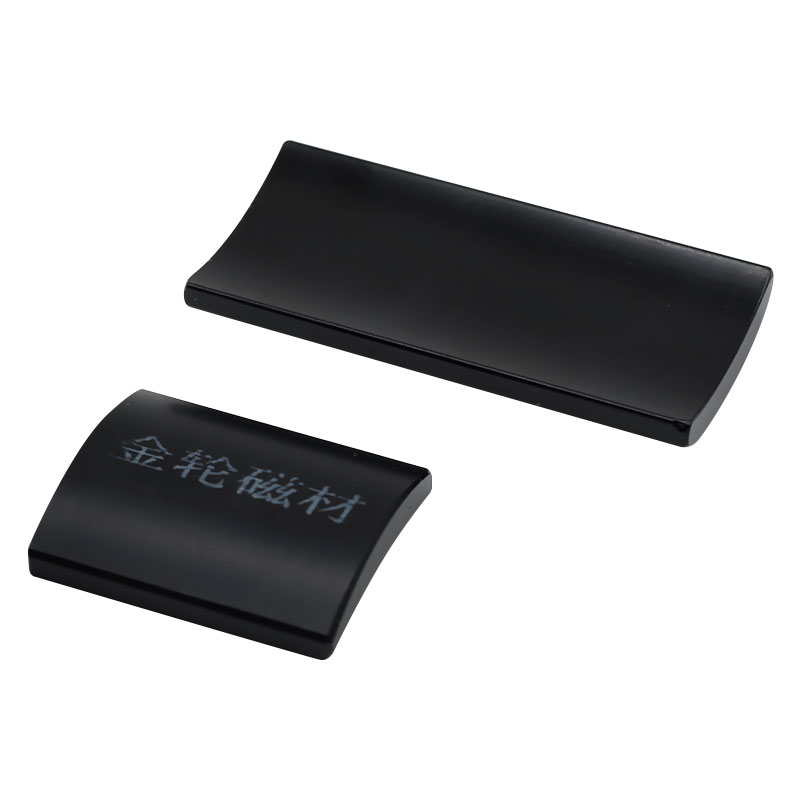 Custom Shape Sintered NdFeB Magnets for Confined Hot SpacesThis product line focuses on application-specific sintered neodymium magnet geometry, allowing designs with higher permeance coefficients and improved heat paths to resist demagnetization in compact, high-temperature assemblies.View Product →
For rotating machinery, the interaction between magnet grade, pole count, air gap, and operating temperature is complex. Motor designers typically work from manufacturer BH data and in-house thermal models, but the magnet supplier's experience with high-temperature motor grades matters just as much as the datasheet.
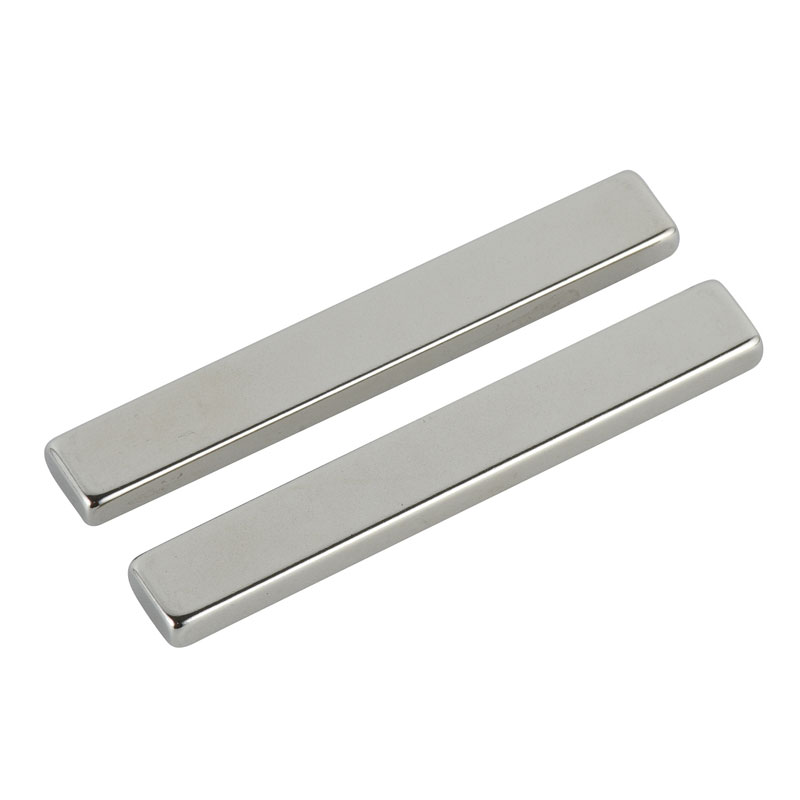 High-Thermal-Stability Sintered NdFeB Magnets for Synchronous MotorsThese magnets are engineered for synchronous motor demands, offering high remanence, coercivity, and thermal stability. They suit high-speed, high-efficiency, and high-torque systems, where supplier expertise in grade selection and thermal behavior is critical.View Product →
Practical Tips for Avoiding Heat Damage in NdFeB Magnets
These rules come up repeatedly in real production environments, and they prevent most temperature-related failures:
- Never specify by Curie point alone. Use the maximum operating temperature of the selected grade, with a 20-30°C safety margin.
- Protect thin sections. Edges and small cross-sections demagnetize first at temperature. If your part is thin, choose a higher grade than the bulk temperature suggests.
- Improve the thermal path. Airflow, heat sinks, and thermally conductive potting compounds can lower the magnet's operating temperature by dozens of degrees.
- Verify coating limits. Some epoxy coatings degrade above 120-150°C; nickel-copper-nickel and other metallic coatings behave differently. Make sure the coating and the magnet both survive the service temperature.
- Test with a prototype. Datasheet ratings assume ideal conditions. Your assembly, stray fields, and vibration profile can reduce the safe temperature significantly.
- Do not forget low-temperature behavior. NdFeB performs better at -40°C, but differential thermal contraction between the magnet and its housing can crack brittle sintered material in extreme cold.
Frequently Asked Questions
At what temperature does a neodymium magnet begin to lose strength?
Standard N-grade magnets can suffer irreversible loss above 80°C. For M, H, SH, UH, EH, and AH grades, the corresponding thresholds are roughly 100°C, 120°C, 150°C, 180°C, 200°C, and 230°C. Below these thresholds, the magnet still loses flux temporarily as it heats, but recovers fully when it cools.
Can a neodymium magnet recover after being heated above its Curie point?
No. Above roughly 310-400°C, the magnet loses almost its entire magnetic field. After cooling, it remains mostly demagnetized because the heat has damaged the grain-boundary structure that supports magnetization. A magnet that has seen Curie-range temperatures should be treated as permanently failed.
What is the difference between Curie point and maximum operating temperature?
The Curie point is the temperature of complete magnetic transition, where the material becomes paramagnetic. The maximum operating temperature is a practical engineering rating, much lower, beyond which a grade loses an unacceptable amount of flux permanently. Confusing the two leads directly to underspecified magnets and field failures.
Which neodymium grade should I choose for a 200°C environment?
Start with EH grade, which is rated at 200°C. If the magnet is thin, exposed to opposing fields, or your temperature estimate has any uncertainty, move to AH grade at 230°C. For continuous operation above 230°C, samarium-cobalt is a more robust alternative.
The Takeaway for Design and Procurement
The Curie point of neodymium magnets - around 310-400°C - receives far too much attention in casual discussion, because it is the maximum operating temperature that drives engineering decisions. Select the grade based on the magnet's own worst-case temperature, verify the hot demagnetization curve, and prototype-test before committing to production.
For electric-vehicle traction motors, wind-turbine generators, and industrial servo systems, heat is unavoidable and the margin between success and failure is measured in a few degrees of magnet temperature. Partnering with a sintered NdFeB manufacturer who understands thermal behavior, grades, and custom geometry is as important as the grade itself. Our automotive-field magnet range is one example of how application-specific design handles real thermal loads.
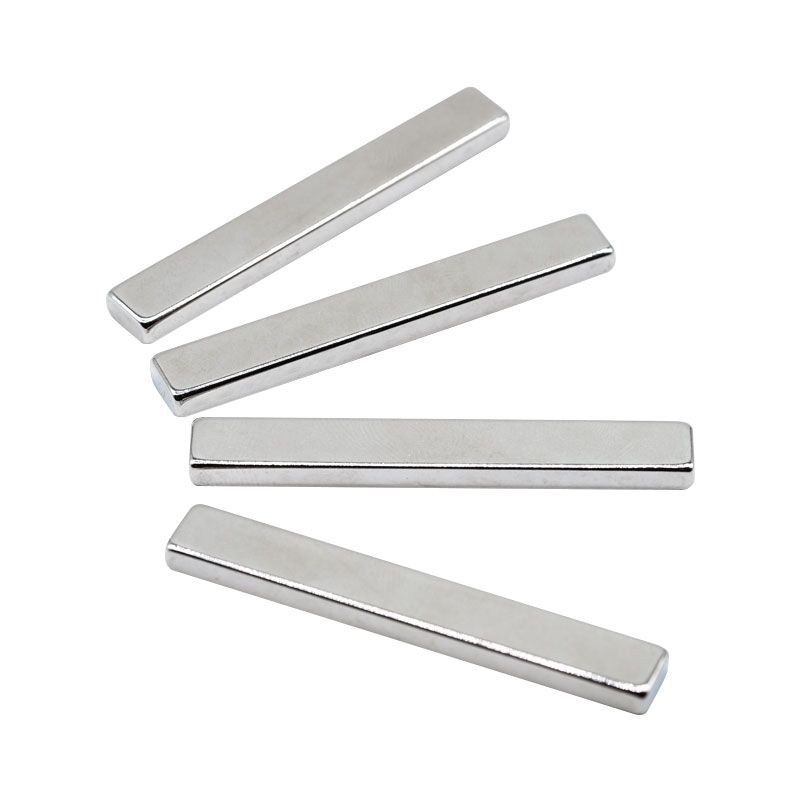 Automotive-Grade Sintered NdFeB Magnets for Motors and SensorsDesigned for automotive systems like wiper motors and window-lift motors, these magnets provide high remanence, coercivity, and dimensional precision. They handle dynamic thermal loads reliably in EVs, HEVs, and conventional vehicle electrical components.View Product →