 EN
EN English
 中文简体
中文简体 русский
 Deutsch
 日本語
日本語 한국어
한국어

Industry News
Aug 06,2026
Neodymium Magnet Curie Point: Temp Limits & Grade Selection Guide
What Is the Curie Point of a Neodymium Magnet?
When you heat a neodymium magnet past a specific temperature, it permanently loses its magnetism. That threshold is called the Curie point, or Curie temperature. Named after Pierre Curie, who discovered this phenomenon in 1895, the Curie point marks the temperature at which a ferromagnetic material undergoes a phase transition to a paramagnetic state. In simpler terms, the magnet stops being a magnet.
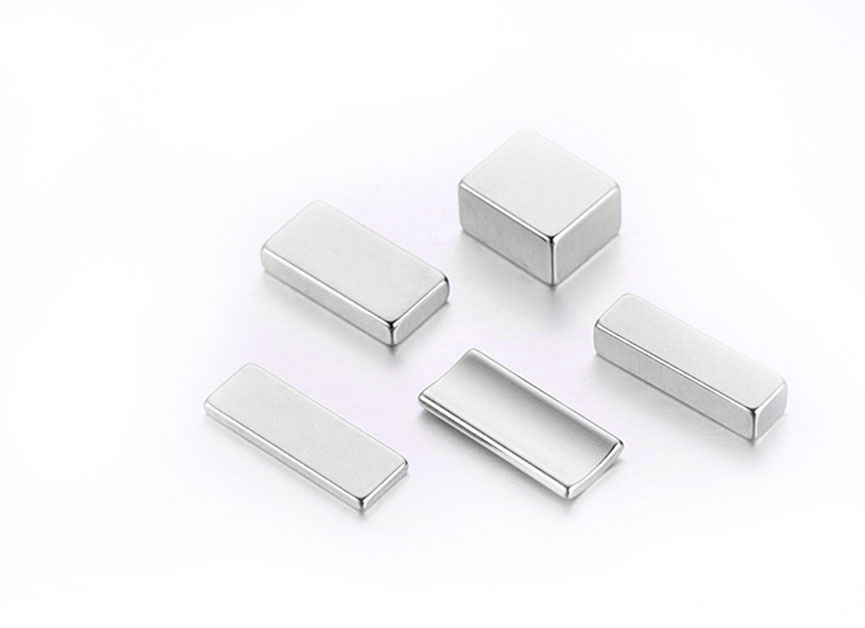
Explore Key Applications of Magnetic Materials
The physics behind this is straightforward. Inside a permanent magnet, atomic magnetic moments are locked in parallel alignment within regions called magnetic domains. This collective alignment produces the external magnetic field you rely on. As the temperature rises, thermal energy agitates the atoms. When the magnet reaches its Curie point, this thermal agitation overwhelms the exchange interaction that keeps the domains aligned. The domains collapse into random orientation, and the net magnetization drops to zero.
For standard sintered neodymium magnets, the Curie point typically falls between 310°C and 400°C. The exact number depends on the specific chemical composition of the grade. A basic N35 magnet might have a Curie point around 310°C, while grades with heavy rare earth additions can push closer to 380-400°C. This variation matters because it directly influences how you select a magnet for any application that generates or experiences heat.
It is critically important to understand that the Curie point represents total and permanent magnetic failure. You cannot simply cool the magnet back down and expect it to work again. Once the domains have randomized, restoring their alignment requires re-magnetization in a strong external field—and even then, only about 50% of the original magnetic properties are typically recoverable. The Curie point is not an operating limit; it is a destruction limit.
Neodymium Magnet Curie Point vs. Maximum Operating Temperature
This is where most selection mistakes begin. The Curie point and the maximum operating temperature are two entirely different specifications. Confusing them leads directly to field failures. The maximum operating temperature is the highest temperature a magnet can tolerate continuously before it begins to suffer irreversible magnetic losses. The Curie point is roughly double or triple that number, but by the time you reach it, the magnet is already destroyed.
Consider standard N-series grades. An N35 neodymium magnet has a maximum operating temperature of approximately 80°C. Its Curie point is around 310°C. If you expose that N35 magnet to 120°C—well below the Curie point—you will observe permanent demagnetization. Cooling it back to room temperature will not recover the lost flux. This happens because irreversible losses start accumulating once the operating temperature exceeds the safe threshold defined by the magnet's intrinsic coercivity (Hci) and its temperature coefficients.
To put numbers into perspective, here is how the common suffix letters correspond to practical temperature limits:
- N (No suffix): Maximum operating temperature ~80°C
- M (Medium): Maximum operating temperature ~100°C
- H (High): Maximum operating temperature ~120°C
- SH (Super High): Maximum operating temperature ~150°C
- EH (Extra High): Maximum operating temperature ~200°C
- AH (Advanced High): Maximum operating temperature ~220°C
We have written a more detailed guide specifically on the maximum operating temperature of sintered NdFeB, which explains how these limits are established and what factors influence them.
Reversible vs. Irreversible Losses
To use an engineer's analogy: think of a magnet like a spring. Within its elastic limit, you can stretch it and it returns to its original shape. That is a reversible loss. Exceed the elastic limit, and you get permanent deformation—an irreversible loss. In magnets, reversible losses occur within the safe operating temperature range. As the magnet heats up, the remanence (Br) drops temporarily. For a typical N-grade neodymium magnet, you might see a 5-10% flux reduction at the upper end of the safe range. Cool it back to ambient temperature, and that flux returns.
Irreversible losses begin the moment you push past the maximum operating temperature. The loss mechanism here is a permanent reduction in magnetization caused by partial domain randomization. These losses are cumulative. Each thermal excursion above the safe threshold shaves off a bit more performance. The rate of loss depends on how far above the limit you go and how long you stay there. The demagnetization curve—a graph of flux density (B) versus demagnetizing force (H)—is the tool engineers use to quantify this risk. If the magnet's operating point drops below the "knee" of the curve at the target temperature, you are entering irreversible loss territory. This is why we strongly recommend cross-referencing operating points against actual NdFeB demagnetization curve data during the design phase.
Why Is the NdFeB Curie Point Relatively Low?
Compared to other permanent magnet materials, the base Nd₂Fe₁₄B compound has a modest Curie point. Samarium cobalt magnets (SmCo) boast Curie points between 720°C and 800°C. AlNiCo magnets can range from 700°C to 860°C. Even low-cost ferrite magnets sit around 450°C. So why is the most powerful commercial magnet limited to roughly 312°C in its pure form? The answer lies in the crystal structure and the nature of the iron-iron exchange interactions within the Nd₂Fe₁₄B tetragonal phase.
The magnetic coupling between iron atoms in the Nd₂Fe₁₄B lattice is strong at room temperature but relatively sensitive to thermal disruption. The presence of neodymium atoms contributes to the enormous magnetocrystalline anisotropy that gives NdFeB its high coercivity, but the thermal stability of the overall structure is governed primarily by the iron sublattice. Simply put, the same atomic arrangement that enables record-breaking energy products also carries an inherent thermal vulnerability.
However, this does not mean NdFeB is unsuitable for high-temperature applications. The magnet industry has developed well-established methods to compensate. Adding cobalt (Co) directly elevates the Curie point by strengthening exchange interactions. Substituting a portion of the neodymium with heavy rare earth elements like dysprosium (Dy) or terbium (Tb) dramatically increases the intrinsic coercivity (Hci). This second strategy does not raise the Curie point significantly—an N35SH magnet might still have a Curie point near 330°C—but it greatly improves the magnet's ability to resist demagnetization at elevated temperatures. The knee of the demagnetization curve shifts to the right, which is what truly matters for real-world engineering. This is the key distinction: high-temperature neodymium grades deliver their performance through enhanced coercivity and improved temperature coefficients of Hci, not through a radical increase in the Curie point itself.
Neodymium Magnet Curie Point by Grade: A Practical Reference
The relationship between commercial grade designations, thermal performance, and typical Curie points is summarized below. Note that the Curie point values are approximate and depend on the precise elemental composition of each manufacturer's formulation. The maximum operating temperatures listed are guidelines for standard-shaped magnets; actual limits shift based on the magnet's geometry and the permeance coefficient of the magnetic circuit.
| Grade Family | Example Grades | Max Operating Temp. (°C) | Typical Curie Point (°C) |
|---|---|---|---|
| N (Standard) | N35, N42, N52 | 70 - 80 | 310 - 320 |
| M (Medium) | N35M, N42M | 100 | 320 - 330 |
| H (High) | N35H, N42H | 120 | 320 - 340 |
| SH (Super High) | N35SH, N38SH | 150 | 330 - 350 |
| EH (Extra High) | N30EH, N38EH | 200 | 340 - 370 |
| AH (Advanced High) | N28AH, N35AH | 220 | 350 - 400 |
Looking at this table, the pattern is clear. The step-change in usable temperature from N to SH or EH comes from a modest increase in the Curie point combined with a dramatic improvement in the coercivity's temperature stability. When you need precise, grade-by-grade coercivity and remanence values, refer to our detailed NdFeB product parameter tables for the full specifications.
How to Select the Right NdFeB Grade for High-Temperature Applications
A methodical approach prevents expensive field failures. When an engineer tells us, "My motor housing reaches 150°C, what grade do I need?", the answer is never a single letter suffix. It requires checking three things: the actual temperature of the magnet inside the assembly, the demagnetization curve at that temperature, and whether NdFeB remains the best material choice at all.
Step 1: Define the Actual Magnet Temperature
Ambient temperature is not magnet temperature. Inside a motor or actuator, the magnet is surrounded by copper windings and iron laminations that generate heat. The magnet itself may experience eddy current heating. As a rule of thumb, the magnet's internal temperature can be 20°C to 50°C higher than the coolant or ambient air temperature. For high-speed traction motors, that delta can be even larger. Measure or simulate the temperature at the magnet's location during worst-case continuous operation. Then add a safety margin—we recommend at least 20°C above the measured maximum. If calculations say the magnet reaches 135°C, plan for a grade rated to at least 155°C. That places you firmly in SH territory. We see this exact scenario regularly in NdFeB magnets for synchronous motors, where internal hotspot temperatures define the grade requirement.
Step 2: Check the Demagnetization Curve at Operating Temperature
Grade selection is not complete until you confirm the operating point on the demagnetization curve. At elevated temperatures, the knee of the B-H curve shifts. A magnet that operates safely at room temperature may fall below the knee at 150°C, causing partial irreversible demagnetization every thermal cycle. The intrinsic coercivity (Hci) must be high enough that, at maximum operating temperature, the load line of your magnetic circuit stays well above the knee. This verification is non-negotiable for designs where the magnet experiences a strong demagnetizing field, such as surface-mounted motor rotors or voice coil actuators. Always request the hot B-H curves for the specific grade you are evaluating.
Step 3: Compare with Alternative Materials When Needed
There are applications where even an AH-grade neodymium magnet is not the right answer. If the continuous magnet temperature exceeds 220°C, or if the thermal cycling is extreme, the discussion shifts to samarium cobalt. SmCo magnets offer Curie points of 720-800°C and can operate reliably up to 300-350°C. Their temperature coefficients are significantly flatter than those of NdFeB. The trade-off is lower remanence and higher material cost. Ferrite magnets, with a Curie point around 450°C, are another option for cost-sensitive, low-performance applications, but their coercivity actually increases with temperature, which gives them a unique advantage in certain sensor designs. The material decision matrix must balance magnetic output, thermal stability, mechanical requirements, and budget.
Practical Tips for Avoiding Heat Damage in NdFeB Magnets
Even with the correct grade selected, processing and assembly steps can introduce thermal damage before the magnet ever reaches the field. During manufacturing, avoid pressing or shrink-fitting operations that generate excessive frictional heat at the magnet surface. If your assembly process requires bake-out cycles for adhesives or potting compounds, verify the cure temperature against the magnet's maximum operating temperature. A common production pitfall is exposing SH-grade magnets to a 180°C curing oven for several hours, believing the magnet "should handle it" because the Curie point is over 300°C. The irreversible loss after such a cycle can be significant.
Surface coatings also have thermal limits. Standard nickel-copper-nickel plating tolerates operating temperatures up to approximately 200-250°C. Zinc coatings are typically limited to lower temperatures. If your process involves temperatures above 300°C for brazing or specialized coating, this requires communication during the ordering stage so that the magnet grade and the plating system are matched to the process. Beyond temperature alone, be aware of other causes of demagnetization in neodymium magnets. Opposing magnetic fields from adjacent windings, mechanical shock that disturbs domain structure, and radiation exposure in aerospace or medical environments can all compound thermal effects to accelerate performance loss.
The Curie Point Is a Design Limit, Not a Working Range
The Curie point of a neodymium magnet is a fundamental physical property, a material constant that tells you where the magnetic structure completely collapses. It is not a temperature you should ever approach in normal operation. Engineers who size magnets based on the Curie point alone set themselves up for failure. The safe, usable temperature range for a sintered NdFeB magnet is always defined by its maximum operating temperature—a value tied directly to the grade's coercivity and the magnetic circuit's permeance coefficient.
When your application pushes into the 120°C to 220°C range, skip the standard N-series. Move to the H, SH, EH, or AH families. Select the suffix letter based on a measured hot-spot temperature plus a margin, and then validate the choice against the hot demagnetization curve. This workflow converts a theoretical understanding of the Curie point into a reliable, long-lasting magnet specification. If your design involves non-standard shapes or demanding thermal environments, our engineering team can provide custom-shaped sintered NdFeB magnets with the exact temperature ratings and geometries your project requires.

Jinlun Magnet specialized in the research and development, production, and sales of high-performance rare-earth permanent magnet materials.
Quick Links
Contact Info.
-
 Sales00@jlmagnet.com
-
 +86-574-6321 2222
-
 No. 330 Xinxing 1st Road, Xinxing Industrial Park, Zonghan Street, Cixi City, Zhejiang Province, China
Mobile QR Code
Copyright © Ningbo Jinlun Magnet Technology Co., Ltd. All Rights Reserved.
China sintered NdFeB magnet manufacturer wholesale sintered NdFeB magnet factory

TOP

