 EN
EN English
 中文简体
中文简体 русский
 Deutsch
 日本語
日本語 한국어
한국어

Home / News / Industry News / Which Is Stronger: Neodymium vs Rare Earth Magnets — And What's the Real Difference?
Industry News
May 08,2026
Which Is Stronger: Neodymium vs Rare Earth Magnets — And What's the Real Difference?
Neodymium magnets are rare earth magnets — but not all rare earth magnets are neodymium. The term rare earth magnets refers to a broader category of magnets made from elements in the lanthanide series of the periodic table, while neodymium magnets (also called NdFeB magnets) are the most powerful and widely used type within that category. Understanding this distinction is essential for engineers, hobbyists, manufacturers, and anyone selecting magnets for a specific application.
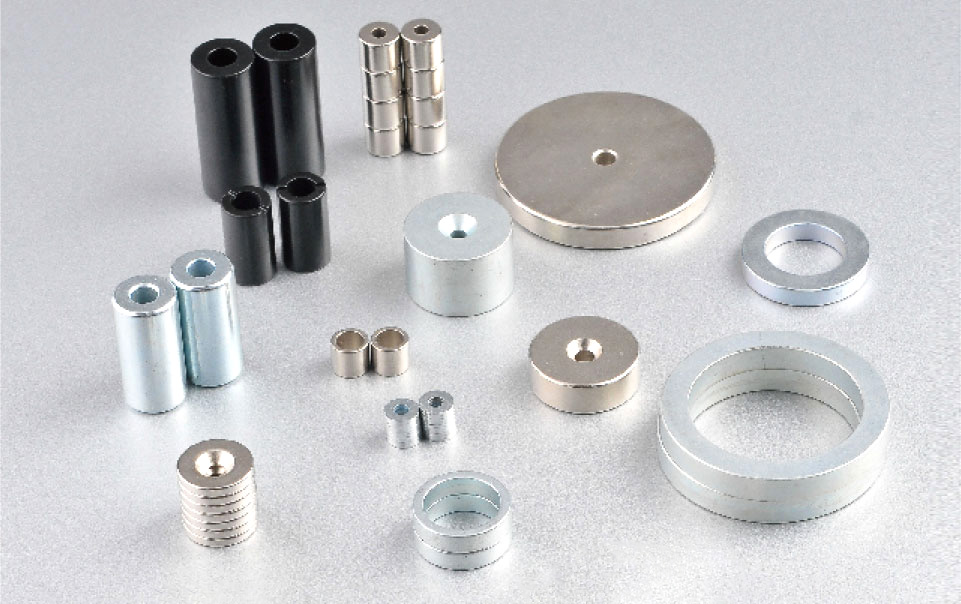
Click to visit our products:Sintered NdFeB Magnet
This guide breaks down everything you need to know about neodymium vs rare earth magnets — including their composition, magnetic strength, temperature tolerance, cost, and ideal use cases — so you can make an informed decision.
What Are Rare Earth Magnets?
Rare earth magnets are permanent magnets made from alloys of rare earth elements — a group of 17 metallic elements comprising the 15 lanthanides plus scandium and yttrium. Despite the name, most rare earth elements are not geologically rare; they are called "rare" because they are rarely found in concentrated, economically viable deposits.
The two commercially dominant types of rare earth magnets are:
- Neodymium magnets (NdFeB) — composed of neodymium, iron, and boron. First developed in 1982, they are the strongest type of permanent magnet available today.
- Samarium cobalt magnets (SmCo) — composed of samarium and cobalt. Developed in the 1970s, they offer excellent high-temperature performance and corrosion resistance but cost significantly more.
Both types dramatically outperform older magnet technologies like ferrite (ceramic) magnets and alnico magnets. A rare earth magnet can be up to 10 times stronger than a ferrite magnet of the same size, which is why they now dominate high-performance applications from consumer electronics to electric vehicles.
What Are Neodymium Magnets?
Neodymium magnets are the strongest type of rare earth magnet, made from an alloy of neodymium (Nd), iron (Fe), and boron (B) — giving them the chemical designation NdFeB. They were independently developed by General Motors and Sumitomo Special Metals in 1982 and have since become the most widely produced rare earth magnet in the world.
Neodymium magnets are graded by their maximum energy product — a measure of magnetic field strength — expressed in megagauss-oersteds (MGOe). Common grades range from N35 to N52, where higher numbers indicate greater magnetic strength. An N52-grade neodymium magnet has an energy product of approximately 52 MGOe, making it the most powerful commercially available permanent magnet.
They are produced in two forms:
- Sintered NdFeB: The most common form, produced by compacting and sintering neodymium alloy powder. Offers the highest magnetic performance but is brittle and prone to corrosion.
- Bonded NdFeB: Produced by mixing NdFeB powder with a polymer binder and molding. Less powerful than sintered versions but more flexible in shape and slightly more corrosion resistant.
Neodymium vs Rare Earth Magnets: Core Differences Explained
When people refer to "rare earth magnets" in contrast to neodymium, they are usually referring to samarium cobalt (SmCo) magnets — the only other major commercial rare earth magnet type. Here is a detailed comparison across all critical performance dimensions.
| Property | Neodymium (NdFeB) | Samarium Cobalt (SmCo) | Ferrite (for reference) |
| Max Energy Product | 26–52 MGOe | 16–32 MGOe | 1–5 MGOe |
| Max Operating Temp | 80°C–220°C (grade-dependent) | 250°C–350°C | up to 250°C |
| Corrosion Resistance | Poor (requires coating) | Excellent (no coating needed) | Excellent |
| Mechanical Strength | Brittle, chips easily | Brittle but harder | Brittle |
| Relative Cost | Low–Moderate | High (2–5× more expensive) | Very Low |
| Availability | Very widely available | Specialty suppliers | Widely available |
| Primary Applications | EVs, electronics, motors, tools | Aerospace, defense, medical | Speakers, refrigerator magnets |
Side-by-side comparison of neodymium, samarium cobalt, and ferrite magnets across key performance properties.
Magnetic Strength: How Neodymium Compares to Other Rare Earth Magnets
Neodymium magnets are consistently stronger than samarium cobalt magnets at equivalent sizes, achieving energy products up to 52 MGOe compared to SmCo's maximum of approximately 32 MGOe. This makes NdFeB the preferred choice whenever maximum magnetic force per unit volume is the primary design criterion.
Understanding Magnetic Grade Numbers
Neodymium magnets use an "N" grading system that directly indicates the maximum energy product in MGOe. Higher grades deliver more force but come with tradeoffs:
- N35–N42: Standard commercial grades. Good balance of strength, cost, and thermal tolerance. Used in most everyday applications.
- N45–N48: High-performance grades with significantly stronger pull force. Used in compact motors and high-efficiency generators.
- N50–N52: Ultra-high-performance grades. Maximum available magnetic strength but lowest thermal stability — suitable only for controlled-temperature environments.
Grade suffixes also indicate high-temperature variants: M (up to 100°C), H (up to 120°C), SH (up to 150°C), UH (up to 180°C), and EH (up to 200°C). For example, an N42SH magnet maintains stable magnetism in environments up to 150°C — significantly extending the usable range compared to a standard N42.
Temperature Performance: Where Samarium Cobalt Outperforms Neodymium
Samarium cobalt magnets maintain stable magnetic performance at temperatures up to 350°C, making them the clear winner in high-heat environments. Standard neodymium magnets begin losing magnetic strength (a process called demagnetization) at temperatures as low as 80°C, and will permanently lose magnetism if heated above their Curie temperature of approximately 310°C–340°C.
This thermal performance gap has direct implications for application selection:
- Jet engine components, downhole oil drilling tools, and high-temperature sensors use SmCo magnets precisely because of this thermal advantage.
- Consumer electronics, electric vehicles operating in temperate climates, and general industrial motors typically use neodymium magnets because their operating temperatures remain within acceptable limits.
- High-temperature NdFeB grades (such as N35EH) extend the usable range to 200°C, partially bridging the gap at a lower cost than SmCo.
Corrosion and Durability: A Key Weakness of Neodymium Magnets
Neodymium magnets corrode rapidly when exposed to moisture and must always be coated or plated for protection. The iron content in NdFeB alloys makes them highly susceptible to oxidation — an uncoated neodymium magnet can begin rusting within hours in a humid environment. Samarium cobalt magnets, by contrast, contain no iron and naturally resist corrosion without any protective coating.
Common Neodymium Magnet Coatings
Most commercially sold neodymium magnets come with a protective coating. The most common options include:
| Coating Type | Corrosion Protection | Appearance | Best For |
| Nickel-copper-nickel (Ni-Cu-Ni) | Good | Shiny silver | Most general applications |
| Zinc (Zn) | Moderate | Dull silver-blue | Budget applications, dry environments |
| Epoxy resin | Very good | Matte black | Humid and outdoor environments |
| Gold (Au) | Excellent | Gold | Medical, decorative, harsh environments |
| Titanium (Ti) | Excellent | Metallic gray | Medical implants, extreme environments |
Comparison of common protective coatings applied to neodymium magnets and their recommended use cases.
Cost Comparison: Neodymium vs Samarium Cobalt Rare Earth Magnets
Neodymium magnets cost significantly less than samarium cobalt magnets — typically 2 to 5 times cheaper per unit for comparable sizes. This cost advantage, combined with superior raw magnetic strength, is the primary reason neodymium magnets account for the vast majority of rare earth magnet production worldwide.
The price difference stems from several factors:
- Raw material costs: Cobalt — the key ingredient in SmCo magnets — is considerably more expensive than neodymium on global commodity markets. As of recent years, cobalt has traded at $25,000–$80,000 per metric ton, compared to neodymium oxide at roughly $50,000–$90,000 per metric ton, but the amount of cobalt required per magnet drives SmCo costs much higher in practice.
- Manufacturing complexity: SmCo magnets require more complex sintering and pressing processes, adding to production cost.
- Scale of production: NdFeB production vastly exceeds SmCo globally, driving down per-unit costs through economies of scale.
For budget-sensitive applications where operating conditions allow, neodymium is almost always the economically rational choice.
Applications: Where Each Type of Rare Earth Magnet Excels
Neodymium magnets dominate consumer and industrial markets, while samarium cobalt magnets are reserved for specialized high-temperature and high-reliability applications.
Neodymium Magnet Applications
- Electric vehicles (EVs): Traction motors in most EVs rely on neodymium magnets. A single EV motor may contain 1–2 kg of NdFeB material.
- Wind turbines: Direct-drive wind generators use large neodymium magnet arrays to eliminate gearboxes and improve efficiency.
- Consumer electronics: Headphones, speakers, hard disk drives, and smartphone vibration motors all use neodymium magnets for compact, high-output performance.
- Industrial motors: High-efficiency servo motors, linear actuators, and magnetic couplings used across manufacturing rely heavily on NdFeB magnets.
- Medical devices: MRI machines and certain surgical instruments use neodymium magnets where high field strength and controlled temperature are achievable.
- Consumer and hobby applications: Magnetic closures, retrieval magnets, science experiments, and magnetic fishing all use readily available neodymium magnets.
Samarium Cobalt Magnet Applications
- Aerospace and defense: Guidance systems, radar equipment, and actuators in aircraft and missiles require the stability and temperature resistance of SmCo at extreme altitudes and temperatures.
- Oil and gas downhole tools: Drilling instruments operate in environments exceeding 200°C, where only SmCo magnets reliably maintain performance.
- High-performance motors: Motorsport, robotics, and precision servo applications in environments above 150°C often require SmCo.
- Marine and underwater equipment: SmCo's inherent corrosion resistance without coatings makes it preferable in saltwater environments where coating integrity cannot be guaranteed.
- Scientific instrumentation: Particle accelerators, laboratory instruments, and precision sensors that require stable, predictable magnetic fields over decades favor SmCo for its low-temperature coefficient.
Safety Considerations When Handling Rare Earth Magnets
Both neodymium and samarium cobalt rare earth magnets pose serious physical risks due to their extreme attractive forces — risks that are entirely absent with weaker ferrite magnets.
- Pinching and crushing injuries: Two neodymium magnets with a pull force of just 10 kg can snap together with enough force to fracture fingers caught between them. Larger industrial-grade magnets can exert hundreds of kilograms of force.
- Shattering: Both NdFeB and SmCo magnets are extremely brittle. When two magnets snap together or strike a hard surface, they can shatter and send sharp fragments flying at high velocity.
- Interference with medical devices: Rare earth magnets can disable or reprogram pacemakers, insulin pumps, and other implanted medical devices from distances up to 30 cm.
- Damage to electronics and data storage: Strong magnetic fields can corrupt data on magnetic storage media and damage electronics such as hard drives, credit cards, and certain watches.
- Ingestion hazard: Multiple small magnets swallowed by children can attract across intestinal walls, causing severe internal injuries requiring emergency surgery.
How to Choose Between Neodymium and Other Rare Earth Magnets
In most applications, neodymium is the right choice — unless your operating environment involves high temperatures, harsh corrosion, or demands decades of zero-maintenance reliability.
| Your Requirement | Recommended Magnet Type | Reason |
| Maximum strength, controlled environment | Neodymium (N48–N52) | Highest available energy product |
| Operating temp above 150°C | Samarium Cobalt (SmCo) | Maintains field at up to 350°C |
| Humid or marine environment | Samarium Cobalt or epoxy-coated NdFeB | SmCo corrodes minimally; coated NdFeB is cost-effective |
| Cost-sensitive mass production | Neodymium (N35–N42) | Lowest cost per unit of magnetic output |
| Aerospace or defense grade reliability | Samarium Cobalt | Superior long-term stability and thermal performance |
| General hobby or DIY use | Neodymium (N35–N45) | Readily available, affordable, very strong |
Decision guide for selecting the appropriate rare earth magnet type based on application requirements.
Frequently Asked Questions: Neodymium vs Rare Earth Magnets
Q: Is a neodymium magnet the same as a rare earth magnet?
A neodymium magnet is a type of rare earth magnet, but not all rare earth magnets are neodymium. The rare earth magnet category includes both neodymium (NdFeB) and samarium cobalt (SmCo) magnets, as well as lesser-used types. Neodymium is the most common and strongest type, which is why the terms are sometimes used interchangeably — but they are not synonymous.
Q: Which is stronger — neodymium or samarium cobalt?
Neodymium magnets are stronger in terms of raw magnetic energy product — up to 52 MGOe vs about 32 MGOe for samarium cobalt. However, SmCo maintains its strength far better at high temperatures. At operating temperatures above 150°C, SmCo can actually outperform a standard neodymium magnet that has partially demagnetized due to heat.
Q: Why are rare earth magnets so much stronger than regular magnets?
Rare earth magnets are stronger because of the unique electronic structure of lanthanide elements. Their 4f electron shells produce large magnetic moments and high magnetocrystalline anisotropy — meaning the magnetic domains strongly prefer to align in one direction and resist demagnetization. This is fundamentally different from ferrite or alnico magnets, which have much weaker atomic-level magnetic interactions.
Q: Do neodymium magnets lose their magnetism over time?
Under normal conditions, high-quality neodymium magnets lose less than 1% of their magnetism per century — making them effectively permanent for practical purposes. However, they can rapidly demagnetize when exposed to temperatures exceeding their rated maximum, strong opposing magnetic fields, or physical damage (such as shattering). Samarium cobalt has an even lower demagnetization rate and greater resistance to opposing fields.
Q: Are rare earth magnets safe to use at home?
Small rare earth magnets are widely used safely at home, but they require respect and caution. Keep them away from children under 14, pacemaker users, and electronic devices. Never allow two large rare earth magnets to come together unsupported — the attractive force can cause serious injury. Always handle large NdFeB or SmCo magnets with gloves, eye protection, and a non-magnetic spacer between them.
Q: Why do neodymium magnets rust?
Neodymium magnets rust because they contain a high proportion of iron in their NdFeB alloy. Iron oxidizes readily in the presence of moisture and oxygen. Without a protective coating — such as nickel, zinc, or epoxy — an exposed neodymium magnet will begin to corrode and eventually crumble. This is why virtually all commercially sold neodymium magnets include a surface coating, and why SmCo is preferred in permanently wet or corrosive environments.
Q: Can rare earth magnets be recycled?
Yes, rare earth magnets can be recycled, though the process is complex and infrastructure remains limited globally. Recycling typically involves demagnetizing, crushing, and chemically processing the magnet material to recover neodymium or samarium for reuse. As demand for rare earth materials grows — especially for EV motors and wind turbines — rare earth magnet recycling is becoming increasingly economically viable and environmentally important.
Conclusion: Neodymium vs Rare Earth Magnets — Making the Right Choice
The neodymium vs rare earth magnets question ultimately comes down to application specifics. Neodymium magnets offer unmatched magnetic strength at an accessible price point, making them the dominant choice across consumer electronics, electric vehicles, renewable energy, and general industrial use. Samarium cobalt magnets command a significant cost premium but earn it with superior thermal stability, corrosion resistance, and long-term reliability in demanding environments.
For the vast majority of users — engineers designing motors, hobbyists building projects, or consumers needing a powerful magnet — neodymium is the practical default. For aerospace systems, downhole drilling tools, or any application where temperature exceeds 150°C or corrosion exposure is unavoidable, samarium cobalt justifies its higher cost.
Understanding these distinctions ensures you select the right rare earth magnet for your specific requirements — optimizing performance, durability, and cost in equal measure.

Jinlun Magnet specialized in the research and development, production, and sales of high-performance rare-earth permanent magnet materials.
Quick Links
Contact Info.
-
 Sales00@jlmagnet.com
-
 +86-574-6321 2222
-
 No. 330 Xinxing 1st Road, Xinxing Industrial Park, Zonghan Street, Cixi City, Zhejiang Province, China
Mobile QR Code
Copyright © Ningbo Jinlun Magnet Technology Co., Ltd. All Rights Reserved.
China sintered NdFeB magnet manufacturer wholesale sintered NdFeB magnet factory

TOP

