 EN
EN English
 中文简体
中文简体 русский
 Deutsch
 日本語
日本語 한국어
한국어

Home / News / Industry News / What Are Neodymium Magnets? A Complete Guide to the World's Strongest Permanent Magnets
Industry News
Apr 30,2026
What Are Neodymium Magnets? A Complete Guide to the World's Strongest Permanent Magnets
Neodymium magnets are a type of rare-earth permanent magnet made from an alloy of neodymium, iron, and boron (Nd₂Fe₁₄B). They are the strongest type of permanent magnet commercially available, capable of lifting objects more than 1,000 times their own weight. First developed in 1982, neodymium magnets have become essential components in modern technology — from electric vehicle motors and wind turbines to smartphones, headphones, and medical devices.
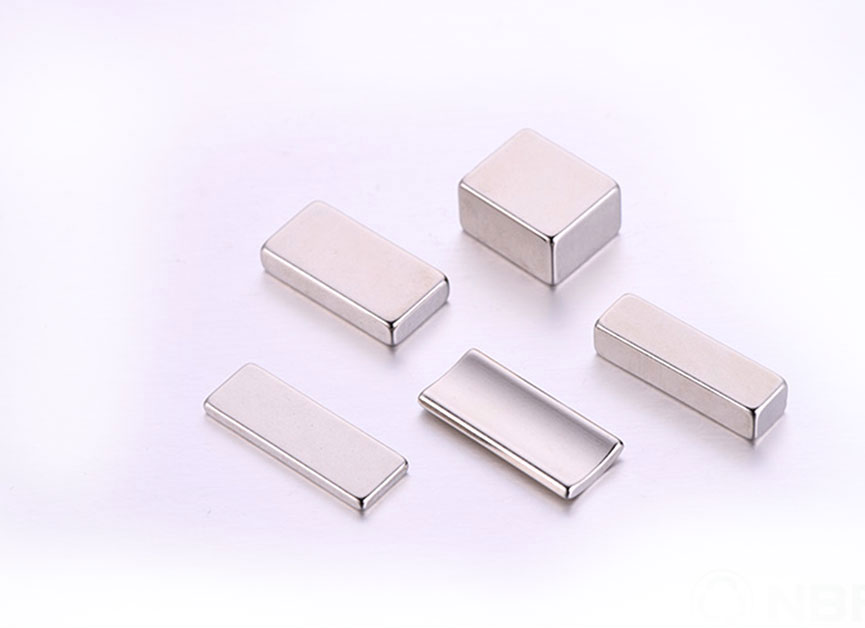
Click to visit our products:Sintered NdFeB Magnet
How Are Neodymium Magnets Made?
Neodymium magnets are manufactured through a precise powder metallurgy process that determines their final magnetic strength and performance. The production process involves the following key steps:
- Alloying: Neodymium, iron, and boron are melted together at high temperatures in precise ratios — typically around 26–30% neodymium by weight.
- Milling: The alloy is ground into a fine powder with particle sizes of 3–5 micrometers to maximize magnetic domain alignment.
- Pressing and sintering: The powder is compacted in a magnetic field to align the particles, then sintered (heated just below melting point) to bond the structure.
- Magnetizing: The sintered block is exposed to a powerful external magnetic field — usually exceeding 30 kOe — to fully magnetize it.
- Coating: Because neodymium alloy corrodes easily, magnets are coated with nickel, zinc, epoxy, or gold to protect the surface.
Key Magnetic Properties of Neodymium Magnets
Neodymium magnets outperform all other permanent magnet types across the most critical magnetic performance metrics. The three most important properties are:
- Remanence (Br): The residual magnetic flux density after the external field is removed. Neodymium magnets achieve up to 1.4–1.5 Tesla — far exceeding ferrite magnets at 0.2–0.4 Tesla.
- Coercivity (Hci): Resistance to demagnetization. High-grade neodymium magnets maintain coercivity above 30 kOe, making them highly stable in demanding environments.
- Maximum Energy Product (BHmax): The overall measure of magnetic energy stored per unit volume. Standard neodymium grades reach 35–52 MGOe, compared to just 1–4 MGOe for ceramic magnets.
Neodymium Magnet Grades Explained
Neodymium magnets are classified by grades that directly indicate their maximum energy product and temperature resistance. Higher numbers mean stronger magnets; letter suffixes indicate heat tolerance.
| Grade | BHmax (MGOe) | Max Operating Temp | Typical Application |
|---|---|---|---|
| N35 | 33–36 | 80°C (176°F) | Craft projects, sensors |
| N42 | 40–43 | 80°C (176°F) | Motors, speakers, closures |
| N52 | 50–53 | 80°C (176°F) | High-performance engineering |
| N42H | 40–43 | 120°C (248°F) | Automotive, industrial motors |
| N38SH | 36–39 | 150°C (302°F) | EV motors, aerospace |
| N35EH / N35AH | 33–36 | 200°C / 230°C | High-heat industrial systems |
Table 1: Common neodymium magnet grades with energy product values, temperature ratings, and typical use cases.
Neodymium Magnets vs. Other Magnet Types
Neodymium magnets are dramatically stronger than other common permanent magnet materials, though each type has trade-offs in cost, temperature resistance, and corrosion behavior.
| Magnet Type | BHmax (MGOe) | Max Temp | Corrosion Resistance | Relative Cost |
|---|---|---|---|---|
| Neodymium (NdFeB) | 35–52 | 80–230°C | Poor (needs coating) | Medium–High |
| Samarium Cobalt (SmCo) | 16–32 | 250–350°C | Excellent | Very High |
| Alnico | 1–10 | 540°C | Good | Medium |
| Ceramic / Ferrite | 1–4 | 250°C | Excellent | Very Low |
Table 2: Performance comparison of neodymium magnets against other permanent magnet types.
What Are Neodymium Magnets Used For?
Neodymium magnets power a remarkably wide range of modern technologies due to their unmatched strength-to-size ratio. Key application areas include:
Electric Vehicles and Clean Energy
Neodymium magnets are the foundation of the global EV transition. A single electric vehicle traction motor contains approximately 1–2 kg of neodymium magnets, enabling compact, high-efficiency motors. Offshore wind turbines using direct-drive generators each require up to 600 kg of rare-earth magnets, with neodymium as the primary component.
Consumer Electronics
Nearly every modern electronic device relies on neodymium magnets. Smartphone speakers, laptop hard drives, wireless earbuds, and vibration motors all use miniature neodymium magnets. A single smartphone typically contains 4–8 individual neodymium magnet components across its speaker, microphone, camera stabilizer, and magnetic charging system.
Medical Equipment
MRI machines use superconducting magnets rather than neodymium, but neodymium magnets are critical in surgical tools, cochlear implants, magnetic dentures, and drug delivery microdevices. Their biocompatibility (when coated) and precise field control make them ideal for minimally invasive applications.
Industrial and Manufacturing
In manufacturing, neodymium magnets are used in magnetic separators that remove ferrous contaminants from food processing lines, lifting equipment that handles steel plates, and servo motors controlling precision CNC machines. Magnetic lifters using neodymium magnets can hold loads exceeding 2,000 kg with a device weighing under 5 kg.
Limitations and Safety Considerations
Despite their impressive performance, neodymium magnets have important limitations that must be understood before use:
- Temperature sensitivity: Standard grades lose magnetism permanently above 80°C. Even below this threshold, neodymium magnets lose approximately 0.1% of their magnetism per °C of temperature increase.
- Brittleness: The sintered NdFeB alloy is mechanically brittle and can crack or shatter under impact or when two magnets snap together. This makes them unsuitable for applications involving mechanical shock without encasing.
- Corrosion: Bare neodymium magnets corrode rapidly in humid environments. Always use coated versions for any exposed or outdoor application.
- Injury risk: Large neodymium magnets above N42 grade and 1 inch in diameter can snap together with enough force to crush fingers. They must be handled with extreme caution and kept away from children.
- Interference with electronics: Strong neodymium magnets can damage credit cards, pacemakers, hard drives, and other magnetically sensitive devices if placed within a few centimeters.
Supply Chain and Environmental Considerations
Neodymium is classified as a critical mineral by the US, EU, and multiple other governments due to significant supply concentration risks. As of recent years, over 85% of global neodymium processing occurs in China, creating geopolitical supply chain vulnerabilities for industries dependent on these magnets. Rare-earth mining also carries environmental challenges including radioactive byproduct management and significant land disruption. Recycling programs for neodymium from end-of-life motors and electronics are expanding but currently recover less than 1% of available rare-earth content globally.
Frequently Asked Questions About Neodymium Magnets
Are neodymium magnets permanent?
Yes. Neodymium magnets are permanent magnets, meaning they retain their magnetism indefinitely under normal conditions. They will only demagnetize if exposed to temperatures above their rated limit, placed in a strong opposing magnetic field, or subjected to physical damage such as cracking or shattering.
How strong is a neodymium magnet compared to a regular fridge magnet?
A typical refrigerator magnet uses a flexible ferrite material with a BHmax of around 1 MGOe. An N42 neodymium magnet of the same physical size has a BHmax of 40+ MGOe — making it roughly 40 times more powerful. A 1-inch diameter N42 disc magnet can hold over 25 lbs (11 kg), while a fridge magnet of the same size holds a few ounces.
Can neodymium magnets lose their magnetism over time?
Under stable room-temperature conditions, a neodymium magnet loses less than 1% of its magnetic strength per 100 years. For practical purposes, they are considered permanent. The primary causes of actual demagnetization are heat exposure, physical damage, and proximity to strong opposing fields — not time.
What does the "N" number in neodymium magnet grades mean?
The "N" stands for neodymium, and the number following it indicates the maximum energy product in megagauss-oersteds (MGOe). An N52 magnet has an energy product of approximately 52 MGOe, making it the strongest commercially available grade. Higher N-numbers mean stronger magnets at room temperature.
Are neodymium magnets safe to handle?
Small neodymium magnets are generally safe when handled carefully. However, magnets larger than about 1 inch (25mm) in diameter can snap together forcefully enough to cause bone fractures or pinching injuries. They should always be kept away from children under 14, pacemaker wearers, and any magnetically sensitive equipment. Industrial-grade neodymium magnets should always be handled with protective gloves and separation tools.
What coating is best for neodymium magnets?
The most common and cost-effective coating is nickel-copper-nickel (Ni-Cu-Ni), offering good corrosion resistance for indoor applications. For outdoor, marine, or high-humidity environments, epoxy or parylene coatings provide superior protection. Gold-plated neodymium magnets are available for decorative or biocompatible medical applications but at a significantly higher cost.
Conclusion
Neodymium magnets are the most powerful permanent magnets available, combining extraordinary magnetic energy density with compact size. Made from neodymium, iron, and boron, they range from tiny consumer-grade discs to large industrial blocks — all sharing the same fundamental Nd₂Fe₁₄B crystal structure that gives them their exceptional properties. Whether powering an EV motor, driving the speaker in your earbuds, or holding a surgical tool in place, neodymium magnets are at the core of modern technological infrastructure. Understanding their grades, limitations, and safe handling practices ensures you can select and use them effectively for any application.

Jinlun Magnet specialized in the research and development, production, and sales of high-performance rare-earth permanent magnet materials.
Quick Links
Contact Info.
-
 Sales00@jlmagnet.com
-
 +86-574-6321 2222
-
 No. 330 Xinxing 1st Road, Xinxing Industrial Park, Zonghan Street, Cixi City, Zhejiang Province, China
Mobile QR Code
Copyright © Ningbo Jinlun Magnet Technology Co., Ltd. All Rights Reserved.
China sintered NdFeB magnet manufacturer wholesale sintered NdFeB magnet factory

TOP

