EN
EN English
 中文简体
中文简体 русский
 Deutsch
 日本語
日本語 한국어
한국어

Neodymium magnets are made through a powder metallurgy process that converts a precise alloy of neodymium, iron, and boron (Nd₂Fe₁₄B) into densely sintered magnetic blocks, which are then machined, coated, and magnetized. The entire process — from raw ore to finished magnet — involves eight distinct manufacturing stages, each requiring tight temperature and atmospheric controls to achieve the world's strongest permanent magnet performance.
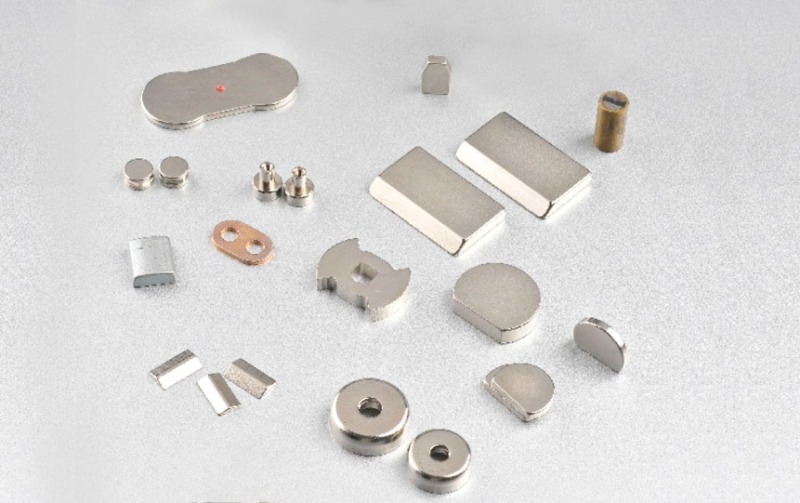
Click to visit our products:Sintered NdFeB Magnet
This guide explains every step of how neodymium magnets are made, why each stage matters, how different grades compare, and what engineers and buyers need to know when sourcing these critical components for motors, sensors, speakers, wind turbines, and medical devices.
What Raw Materials Are Used to Make Neodymium Magnets?
Three primary elements form the foundation of every neodymium magnet: neodymium (a rare-earth metal), iron, and boron — combined in the intermetallic compound Nd₂Fe₁₄B. Getting the elemental ratio precisely right is non-negotiable; even a 1% deviation in neodymium content can shift the magnet's maximum energy product (BHmax) by 5–10%.
Core Alloying Elements
- Neodymium (Nd) — typically 29–32% by weight; sourced primarily from bastnäsite and monazite ores; provides the hard magnetic phase
- Iron (Fe) — 64–66% by weight; provides high saturation magnetization and forms the structural matrix of the alloy
- Boron (B) — approximately 1% by weight; stabilizes the tetragonal crystal structure essential for high coercivity
Performance-Enhancing Additives
Higher-grade neodymium magnets incorporate additional rare-earth elements and transition metals to improve high-temperature coercivity and corrosion resistance:
- Dysprosium (Dy) / Terbium (Tb) — added at 0.5–5% to boost coercivity at elevated temperatures; critical for EV motor magnets operating above 120°C
- Cobalt (Co) — improves Curie temperature and reduces temperature sensitivity of magnetic output
- Aluminum (Al), Copper (Cu), Gallium (Ga) — grain boundary engineering additives that reduce sintering porosity and improve corrosion resistance
- Praseodymium (Pr) — often substituted for part of the neodymium content (forming "NdPr alloys") to reduce cost without sacrificing significant performance
How Are Neodymium Magnets Made? The 8-Stage Manufacturing Process
Neodymium magnet manufacturing follows a sintered powder metallurgy route consisting of eight controlled stages: alloy melting, strip casting, hydrogen decrepitation, jet milling, pressing, sintering, machining, and surface coating — followed by final magnetization.
Stage 1 — Alloy Melting and Strip Casting
Precisely weighed raw materials are melted together in a vacuum induction furnace at temperatures between 1,350°C and 1,450°C. The vacuum environment (pressure below 0.1 Pa) prevents oxidation of the reactive neodymium content. The molten alloy is then rapidly solidified using the strip casting technique: the melt is poured onto a water-cooled rotating copper roller, producing thin flakes (0.2–0.4 mm thick) with a fine, homogeneous microstructure.
Strip casting replaced conventional book mold casting because it reduces alpha-iron (α-Fe) free phase formation by over 80%, directly translating to higher remanence in the finished magnet. Cooling rates of 10³–10⁴ °C/second are achieved, locking in the desired Nd₂Fe₁₄B grain structure.
Stage 2 — Hydrogen Decrepitation (HD)
The cast alloy flakes are exposed to hydrogen gas at 200–300°C, causing the material to absorb hydrogen and spontaneously fracture into a coarse powder — a process called hydrogen decrepitation. The Nd-rich grain boundary phase absorbs hydrogen preferentially, causing selective brittle cracking along grain boundaries.
This step is critical because it safely breaks up the brittle alloy without introducing the contamination or heat that mechanical crushing would cause. The resulting HD powder has particle sizes of 100–500 µm, ready for fine milling.
Stage 3 — Jet Milling
The HD powder is fed into a jet mill where high-velocity nitrogen or argon gas streams accelerate particles to supersonic speeds, causing inter-particle collisions that grind material down to a mean particle size of 3–5 µm.
Particle size distribution is tightly controlled because it determines the number of single-domain grains in the final magnet — and coercivity (Hcj) scales directly with single-domain grain density. Oversized particles (>10 µm) contain multiple magnetic domains and reduce coercivity; undersized particles (<1 µm) are too reactive and oxidize readily. Oxygen content in the milling atmosphere is held below 50 ppm to prevent surface oxidation of the neodymium-rich powder.
Stage 4 — Magnetic Field Pressing (Orientation and Compaction)
The fine powder is pressed into green compacts inside a strong applied magnetic field of 1.5–2.5 Tesla, which aligns the c-axis of each powder particle parallel to the field direction — locking in the anisotropic orientation that gives neodymium magnets their exceptional performance.
Two pressing methods are used:
- Die pressing in a magnetic field (axial or transverse) — most common; applies 100–200 MPa compaction pressure; produces near-net-shape blocks or discs
- Isostatic pressing (wet-bag CIP) — powder suspended in slurry is isostatically pressed at 200–300 MPa; achieves higher green density and better orientation uniformity for complex shapes
The green compact at this stage has a density of approximately 3.5–4.0 g/cm³ — far below the theoretical density of 7.5 g/cm³ — and is mechanically fragile. It must be handled in inert atmosphere to avoid oxidation before sintering.
Stage 5 — Vacuum Sintering and Annealing
Sintering is the most critical thermal step: green compacts are heated in a vacuum furnace to 1,050–1,100°C for 2–5 hours, causing liquid-phase sintering that densifies the compact to over 99% of theoretical density.
During sintering, a Nd-rich liquid phase (melting point ~665°C) wets the grain boundaries and draws particles together by capillary action. This densification eliminates inter-particle porosity and produces a microstructure of Nd₂Fe₁₄B grains (5–10 µm average diameter) surrounded by a thin, continuous Nd-rich grain boundary phase — the structure that enables high coercivity.
After sintering, the part undergoes a two-stage annealing treatment: first at 900°C for 1–2 hours, then at 500–600°C for 1–3 hours. The lower-temperature anneal optimizes the grain boundary composition, increasing coercivity by 10–20% compared to as-sintered parts.
Stage 6 — Machining and Slicing
Sintered neodymium magnet blocks are extremely hard (Vickers hardness ~570 HV) and brittle, so all shaping is performed by diamond grinding, wire EDM, or multi-wire slicing rather than conventional machining.
Diamond-coated slicing wheels running in coolant cut blocks into discs, segments, arcs, or custom profiles with tolerances of ±0.05 mm on precision grades. Cutting generates fine magnetic dust, which is collected and recycled. Edges are chamfered to reduce chipping risk during coating and assembly.
Stage 7 — Surface Coating and Corrosion Protection
Bare neodymium magnets corrode rapidly in ambient conditions — the Nd-rich grain boundary phase reacts with moisture and oxygen, causing surface spalling within days — so every finished magnet receives at least one protective coating.
| Coating Type | Thickness (µm) | Salt Spray Resistance | Operating Temp | Typical Use Case |
| Nickel-Copper-Nickel (NiCuNi) | 15–25 | 24–96 h | Up to 200°C | General industrial, sensors |
| Zinc (Zn) | 8–15 | 12–48 h | Up to 150°C | Cost-sensitive applications |
| Epoxy Resin | 15–25 | 48–240 h | Up to 150°C | High humidity environments |
| Phosphate + Epoxy | 10–20 | 24–72 h | Up to 120°C | Bonded magnet assemblies |
| Gold / Silver (precious metal) | 1–5 | >500 h | Up to 250°C | Medical implants, aerospace |
Table 1: Comparison of neodymium magnet surface coatings by thickness, corrosion resistance, operating temperature, and application suitability.
Stage 8 — Magnetization
Neodymium magnets are magnetized as the final manufacturing step by subjecting the coated part to a pulsed magnetic field of 3–5 Tesla — well above the magnet's coercive field — which aligns all magnetic domains parallel to the intended direction.
Magnetization is performed last (after machining and coating) because strongly magnetized parts attract ferrous debris and are hazardous to handle in production environments. A capacitor-discharge magnetizer delivers a millisecond-duration pulse through a custom-wound coil fixture designed for the specific magnet shape. Partial magnetization (e.g., multipole patterns in ring magnets) is achieved using segmented coil arrays.
Which Neodymium Magnet Grades Are Available and How Do They Differ?
Neodymium magnet grades are designated by their maximum energy product (BHmax in MGOe) followed by a letter suffix indicating their high-temperature coercivity capability — ranging from standard (no suffix) through H, SH, UH, EH, to AH for the most thermally stable grades.
| Grade | BHmax (MGOe) | Remanence Br (T) | Max Operating Temp | Dy/Tb Content | Typical Application |
| N35–N52 (Standard) | 35–52 | 1.17–1.48 | 80°C | None | Speakers, consumer electronics |
| N35H–N50H | 35–50 | 1.17–1.43 | 120°C | Low | BLDC motors, pumps |
| N35SH–N45SH | 35–45 | 1.17–1.35 | 150°C | Medium | Servo motors, robotics |
| N28UH–N40UH | 28–40 | 1.04–1.26 | 180°C | High (Dy-heavy) | EV traction motors |
| N28EH–N38EH | 28–38 | 1.04–1.22 | 200°C | Very High (Dy + Tb) | Aerospace actuators |
| N28AH–N33AH | 28–33 | 1.04–1.15 | 220°C | Maximum (Tb-rich) | High-performance geothermal, downhole |
Table 2: Neodymium magnet grade comparison by energy product, remanence, maximum operating temperature, heavy rare-earth content, and application.
How Do Sintered Neodymium Magnets Compare to Bonded Neodymium Magnets?
Sintered neodymium magnets offer up to three times the magnetic energy product of bonded grades but are limited to simpler geometries; bonded magnets sacrifice magnetic performance in exchange for complex net-shape parts with no machining waste.
Bonded neodymium magnets are produced by blending rapidly quenched NdFeB powder (particle size 50–200 µm) with a polymer binder (typically nylon, PPS, or epoxy) and compression-molding or injection-molding the mixture into the final shape. Because the powder is randomly oriented (isotropic), BHmax values reach only 8–12 MGOe — compared to 35–52+ MGOe for anisotropic sintered grades.
| Property | Sintered NdFeB | Bonded NdFeB |
| BHmax (MGOe) | 35–55 | 5–12 |
| Density (g/cm³) | 7.4–7.6 | 5.0–6.2 |
| Shape complexity | Low (requires machining) | High (net-shape molding) |
| Corrosion resistance (bare) | Poor (requires coating) | Moderate (polymer binder helps) |
| Dimensional tolerance | ±0.05 mm (ground) | ±0.03 mm (molded) |
| Relative cost per unit | Higher | Lower (at scale) |
| Typical applications | EV motors, wind turbines, MRI | Hard disk drives, stepper motors, sensors |
Table 3: Direct comparison of sintered versus bonded neodymium magnets across key performance and manufacturing characteristics.
Why Is Quality Control So Critical in Neodymium Magnet Production?
A single out-of-spec batch of neodymium magnets can cause motor demagnetization in the field, costing 10–100× more than the magnet itself in warranty claims and assembly rework — making rigorous quality control the most commercially important aspect of the manufacturing process.
Standard quality control tests performed on every production lot include:
- Magnetic property testing (BH curve) — hysteresisgraph measurement of Br, Hcb, Hcj, and BHmax per IEC 60404-5 / MMPA standards
- Dimensional inspection — CMM or optical comparator verification to drawing tolerances (typically ±0.05 mm for sintered grades)
- Salt spray testing (ASTM B117) — corrosion resistance of coating verified at 35°C, 5% NaCl atmosphere
- Coating adhesion (cross-cut test, ISO 2409) — ensures coating integrity under mechanical stress
- High-temperature aging test — magnets held at rated maximum temperature for 100 hours; flux loss must remain below 5%
- XRF / ICP chemical analysis — confirms alloy composition within ±0.5% of specified rare-earth content
- Density measurement — Archimedes method; density below 7.40 g/cm³ indicates unacceptable porosity in sintered grades
What Innovations Are Shaping How Neodymium Magnets Are Made Today?
Three major innovations are redefining neodymium magnet manufacturing: grain boundary diffusion (GBD) technology, heavy rare-earth reduction strategies, and additive manufacturing of magnet assemblies.
Grain Boundary Diffusion (GBD)
GBD is the most commercially significant recent innovation. Instead of mixing dysprosium or terbium uniformly throughout the alloy, a Dy/Tb fluoride or oxide coating is applied to the magnet surface, then diffused along grain boundaries at 800–950°C. The heavy rare-earth concentrates exactly where it is needed — at grain surfaces — raising coercivity by 30–50% while using 50–70% less dysprosium than conventional blending methods. For EV manufacturers facing dysprosium supply constraints, this improvement is transformative.
Low or Zero Heavy Rare-Earth Formulations
Research programs targeting net-zero dysprosium magnets are advancing through grain refinement to sub-3 µm particle sizes. Finer single-domain grains can achieve Hcj values above 25 kOe without dysprosium at temperatures up to 120°C — sufficient for many EV motor designs. Hot-deformation processing, an alternative to sintering, produces nanocrystalline microstructures with grain sizes of 200–400 nm, enabling coercivity values impossible with conventional sintering.
Additive Manufacturing and Bonded Complex Geometries
Binder jetting and extrusion-based 3D printing of NdFeB-polymer composites now produce complex magnet shapes — including Halbach arrays, segmented rings, and topology-optimized motor rotors — that are impossible to manufacture by conventional machining. While magnetic energy products currently reach only 8–15 MGOe, continued development of anisotropic printed magnets (aligning particles during printing with an applied field) is expected to push values above 20 MGOe within the next five years.
FAQ: How Neodymium Magnets Are Made
Q1: How long does it take to manufacture a neodymium magnet from raw materials?
A typical production cycle from alloy melting to finished, coated, and magnetized magnet takes 7–14 working days in a standard production facility. Sintering and annealing alone consume 12–20 hours of furnace time; coating and curing add another 1–3 days depending on the coating system selected.
Q2: Can neodymium magnets lose their magnetism during manufacturing?
Yes — exposure to temperatures above the Curie point (310–340°C for standard NdFeB) permanently destroys magnetism. This is why magnetization is the final step. During sintering at 1,050–1,100°C, the material is above its Curie temperature and is non-magnetic; the magnetic orientation set during pressing is preserved in the crystal structure (anisotropy), not the magnetic domains, and is restored when the magnet is magnetized at the end of the process.
Q3: Why are most neodymium magnets manufactured in China?
China controls approximately 85–90% of global rare-earth processing capacity and around 70% of sintered NdFeB magnet production. This dominance reflects decades of investment in rare-earth mining infrastructure (particularly in Inner Mongolia and Jiangxi Province), vertical integration from ore to finished magnet, and economies of scale built on large domestic demand from consumer electronics, wind energy, and EV industries. Manufacturing facilities in Japan, Germany, and the United States exist but operate at significantly smaller scale.
Q4: What is the difference between N52 and N35 in manufacturing terms?
N52 magnets require higher purity neodymium (>99.5% Nd purity), tighter particle size control (<3.5 µm average) during jet milling, and more precise sintering temperature management to achieve the maximum theoretical density and grain alignment. N35 grades tolerate broader process windows. As a result, N52 yields per furnace run are typically 15–25% lower than N35 grades, making them proportionally more expensive than the energy product difference alone would suggest.
Q5: Are neodymium magnets recyclable?
Yes, but commercial-scale recycling infrastructure remains limited. Hydrogen decrepitation can be applied to end-of-life magnets to recover NdFeB powder, which is then reprocessed into new magnets or rare-earth oxides. Recovery rates for neodymium from magnet scrap reach 95%+ using hydrometallurgical routes. Growing legislative pressure — particularly in the EU Critical Raw Materials Act — is accelerating investment in closed-loop recycling systems for EV and wind turbine magnets.
Q6: What safety precautions are required in neodymium magnet manufacturing?
NdFeB powder is pyrophoric — it can spontaneously ignite in air when particle sizes fall below 10 µm. All milling, pressing, and powder-handling operations are conducted under inert atmosphere (nitrogen or argon) with oxygen levels below 100 ppm. Magnetized finished parts above N42 grade exert forces exceeding 100 N between adjacent pieces and can cause severe pinch injuries; handling protocols require non-ferrous tools, spacers, and two-person procedures for magnets above 50 mm diameter.
Conclusion
Understanding how neodymium magnets are made — from the precise alloy chemistry through strip casting, hydrogen decrepitation, jet milling, magnetic field pressing, vacuum sintering, machining, coating, and final magnetization — equips engineers, procurement teams, and product designers to make smarter sourcing decisions, write better specifications, and troubleshoot performance failures with confidence.
The manufacturing process is unforgiving: oxygen contamination at the milling stage, a 10°C deviation during sintering, or an undersized coating thickness can translate directly into field failures worth multiples of the magnet's purchase price. Equally, innovations like grain boundary diffusion and Dy-lean formulations are rapidly shifting what is achievable — reducing supply chain risk while maintaining or improving performance.
As demand from electric vehicles, wind turbines, robotics, and medical devices continues to outpace supply of heavy rare-earth elements, both the manufacturing process and the material science behind neodymium magnets will remain among the most strategically important topics in advanced manufacturing for the foreseeable future.