 EN
EN English
 中文简体
中文简体 русский
 Deutsch
 日本語
日本語 한국어
한국어

Home / News / Industry News / When Was Neodymium Discovered? The Complete Guide to Neodymium and Neodymium Magnets
Industry News
Mar 18,2026
When Was Neodymium Discovered? The Complete Guide to Neodymium and Neodymium Magnets
Quick Answer: Neodymium was discovered in 1885 by Austrian chemist Carl Auer von Welsbach, who separated it from the element didymium. Today, neodymium is best known as the core material in neodymium magnets — the strongest type of permanent magnet in the world.
From powering electric vehicles to revolutionizing consumer electronics, neodymium and its magnets have quietly become one of the most important materials of the modern age. This comprehensive guide covers the discovery of neodymium, its chemical properties, and everything you need to know about neodymium magnets — including how they work, how strong they are, and where they are used.
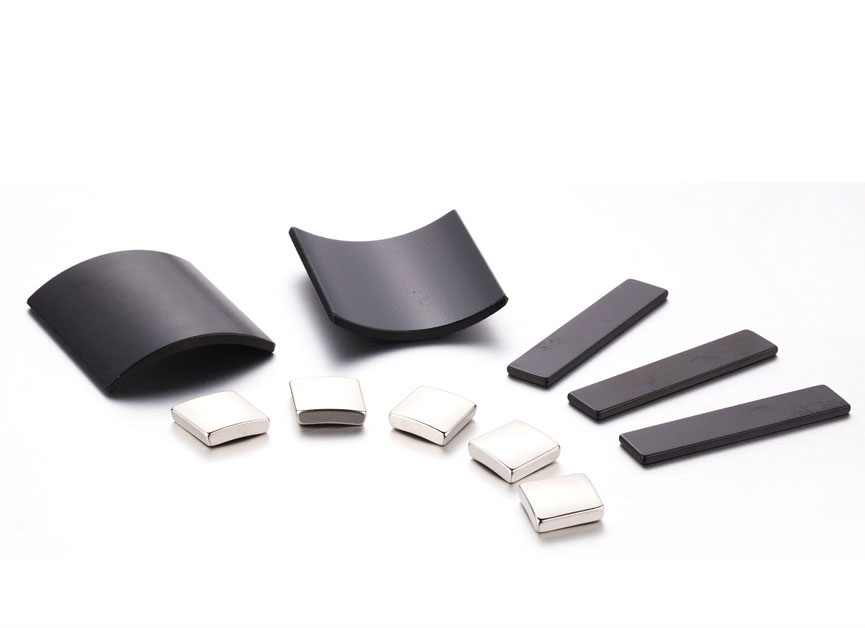
Click to visit our products:Sintered NdFeB Magnet
The Discovery of Neodymium: 1885 and Beyond
The story of when neodymium was discovered begins in the mid-19th century, when scientists were puzzling over a mysterious substance called didymium. In 1841, Swedish chemist Carl Gustaf Mosander identified didymium as what he believed to be a new element, separating it from lanthanum. For decades, the scientific community accepted didymium as a single element — until a sharp-eyed Austrian chemist proved otherwise.
Carl Auer von Welsbach: The Man Who Found Neodymium
In 1885, Carl Auer von Welsbach used advanced fractional crystallization techniques to split didymium into two distinct elements: neodymium and praseodymium. He named the new element from the Greek words neos (new) and didymos (twin) — literally meaning "new twin." The discovery was a landmark moment in the history of rare earth chemistry and marked the beginning of neodymium's long journey from obscure laboratory element to global industrial powerhouse.
Key Milestones in Neodymium History
| Year | Milestone |
| 1841 | Carl Gustaf Mosander identifies didymium (later found to be a mixture) |
| 1885 | Carl Auer von Welsbach discovers neodymium by separating it from praseodymium |
| 1925 | Pure neodymium metal is first isolated in a laboratory |
| 1982 | General Motors and Sumitomo Special Metals independently develop Nd-Fe-B neodymium magnets |
| 1990s–present | Neodymium magnets become essential in electronics, EVs, wind turbines, and medical devices |
What Is Neodymium? Chemical Properties and Classification
Neodymium (Nd) is a soft, silvery metal belonging to the lanthanide series of the periodic table, classified as a rare earth element. Despite the name "rare earth," neodymium is not particularly scarce — it is the fourth most abundant rare earth element and more common in the Earth's crust than gold or platinum.
Neodymium at a Glance
| Property | Value |
| Atomic Number | 60 |
| Symbol | Nd |
| Atomic Mass | 144.24 u |
| Category | Rare earth element / Lanthanide |
| Melting Point | 1,024 °C (1,875 °F) |
| Discovery Year | 1885 |
| Discovered By | Carl Auer von Welsbach |
| Main Sources | China, USA, Australia, India |
What Are Neodymium Magnets?
Neodymium magnets, also known as NdFeB magnets or Neo magnets, are a type of permanent magnet made from an alloy of neodymium, iron, and boron (Nd₂Fe₁₄B). First developed in 1982, they are the strongest type of permanent magnet commercially available, offering an extraordinary magnetic field for their small size and weight.
The chemical compound that gives neodymium magnets their exceptional strength is the tetragonal crystal structure of Nd₂Fe₁₄B, which has a uniquely high magnetocrystalline anisotropy — meaning the magnetic moments of individual atoms are strongly aligned in one direction, creating an extraordinarily powerful combined magnetic field.
How Are Neodymium Magnets Made?
There are two primary manufacturing methods:
- Sintered NdFeB magnets: Produced by melting the alloy, grinding it into a fine powder, pressing it in a magnetic field, and then sintering (heating) it. This method yields the highest magnetic performance and is the most widely used industrial process.
- Bonded NdFeB magnets: Made by mixing neodymium powder with a polymer binder and molding it into shape. Bonded magnets are less powerful but can be formed into complex shapes and are more resistant to corrosion.
Neodymium Magnet Grades: Understanding the N-Grade System
Neodymium magnets are classified by a standardized N-grade system, which reflects the magnet's maximum energy product — a measure of its overall magnetic strength. The grade ranges from N35 to N52, where higher numbers indicate stronger magnets. Additional letter suffixes indicate temperature resistance.
| Grade | Max Energy Product (MGOe) | Max Operating Temp | Typical Application |
| N35 | 33–36 | 80 °C | Craft, hobby projects |
| N42 | 40–43 | 80 °C | General industrial use, sensors |
| N52 | 50–53 | 80 °C | High-performance motors, MRI |
| N42SH | 40–43 | 150 °C | Automotive, high-temp environments |
| N38UH | 36–39 | 180 °C | EV motors, wind generators |
The letter suffixes stand for: H (High temp, 120°C), SH (Super High, 150°C), UH (Ultra High, 180°C), and EH (Extremely High, 200°C). Choosing the right grade depends on your application's magnetic strength requirements and operating temperature.
Neodymium Magnets vs. Other Permanent Magnets: A Detailed Comparison
To appreciate just how remarkable neodymium magnets are, it helps to compare them with the other main types of permanent magnets: ferrite (ceramic) magnets, alnico magnets, and samarium cobalt (SmCo) magnets.
| Property | Neodymium (NdFeB) | Samarium Cobalt (SmCo) | Alnico | Ferrite (Ceramic) |
| Max Temp Resistance | 80–200 °C | Up to 350 °C | Up to 540 °C | Up to 250 °C |
| Corrosion Resistance | Low (needs coating) | High | High | Very High |
| Cost | Moderate | High | Moderate–High | Very Low |
| Brittleness | High | High | Low | High |
| Best For | EVs, electronics, motors | Aerospace, defense | Guitar pickups, sensors | Refrigerator magnets, speakers |
The clear takeaway: neodymium magnets outperform all other magnet types in raw magnetic strength, making them the default choice for most modern high-performance applications where size and power are critical factors.
Where Are Neodymium Magnets Used? Key Applications
The applications of neodymium magnets span virtually every sector of modern industry and technology:
Electric Vehicles and Green Energy
One of the most significant uses of neodymium magnets today is in electric vehicle (EV) motors. The traction motors in most EVs rely on neodymium magnets to convert electrical energy into motion with maximum efficiency in a compact form. Similarly, wind turbines use large neodymium-based generators to capture wind energy and convert it into electricity.
Consumer Electronics
Neodymium magnets are found in nearly every electronic device in your home:
- Headphones and earbuds — neodymium drivers produce clearer, more powerful sound in a smaller housing
- Smartphone speakers and vibration motors
- Hard disk drives (HDDs) — read/write heads use neodymium magnets for precise positioning
- Laptop magnetic clasps and connectors
- Wireless charging systems
Medical Technology
In healthcare, neodymium magnets are critical components of MRI (Magnetic Resonance Imaging) machines. The powerful, stable magnetic fields generated by neodymium-based systems allow physicians to capture detailed images of internal organs and tissues without radiation. They are also used in hearing aids, dental tools, and magnetic therapy devices.
Industrial and Engineering Uses
- Industrial motors and generators
- Magnetic separators for mining and recycling
- Magnetic couplings and clutches in machinery
- Lifting and holding devices for manufacturing
- Linear motors in high-speed rail systems
Advantages and Disadvantages of Neodymium Magnets
Advantages
- Exceptional magnetic strength — the highest energy density of any permanent magnet material available
- Compact and lightweight — achieve powerful fields in a fraction of the size of other magnet types
- Long-lasting — lose less than 1% of magnetism per century under normal conditions
- Cost-effective — more affordable than samarium cobalt magnets for equivalent strength
- Versatile shapes and sizes — available as discs, rings, blocks, spheres, and custom forms
Disadvantages
- Brittle and fragile — prone to chipping and cracking under mechanical stress
- Corrosion-prone — must be coated (typically with nickel, zinc, or epoxy) to prevent rust
- Temperature sensitivity — standard grades lose magnetism above 80°C (176°F)
- Safety hazards — large neodymium magnets can pinch severely and damage electronics or credit cards nearby
- Supply chain concerns — neodymium production is concentrated primarily in China, creating geopolitical supply risks
Neodymium Magnet Safety: What You Must Know
Because neodymium magnets are extraordinarily powerful relative to their size, they require careful handling. Here are the most important safety rules:
- Keep away from pacemakers and implanted medical devices — the strong magnetic fields can interfere with or disable them.
- Keep away from children — small magnets are a swallowing hazard and can cause serious internal injury.
- Do not machine without proper precautions — neodymium dust is highly flammable.
- Handle large magnets with gloves — two magnets snapping together can crush fingers.
- Keep away from credit cards, hard drives, and magnetic storage media — the field can erase or corrupt data.
Frequently Asked Questions (FAQ)
Q: When was neodymium discovered?
A: Neodymium was discovered in 1885 by Austrian chemist Carl Auer von Welsbach, who separated it from the element didymium using fractional crystallization.
Q: How strong are neodymium magnets?
A: Neodymium magnets are the strongest permanent magnets known. A small N52 neodymium magnet the size of a coin can hold over 100 pounds (45 kg) of weight. They are up to 10 times stronger than conventional ferrite (ceramic) magnets of the same size.
Q: Do neodymium magnets lose their magnetism over time?
A: Under normal conditions, neodymium magnets are extremely stable and lose less than 1% of their magnetism per 100 years. However, exposure to high temperatures (above the rated maximum), strong opposing magnetic fields, or physical shock can cause demagnetization.
Q: What is neodymium used for besides magnets?
Beyond neodymium magnets, neodymium is used in neodymium-doped YAG lasers (used in surgery and industry), purple/violet glass coloring, and as a catalyst in polymerization reactions.
Q: Why are neodymium magnets coated?
The Nd₂Fe₁₄B alloy is prone to oxidation and corrosion. Most neodymium magnets are coated with layers of nickel-copper-nickel, zinc, epoxy, or other materials to protect them from moisture and extend their service life.
Q: Are neodymium magnets dangerous?
They can be hazardous if mishandled. Large neodymium magnets can snap together with enough force to crush fingers. Small magnets are a swallowing danger for children. They can also interfere with medical implants and erase magnetic storage devices. Proper care and storage are essential.
Q: Which country produces the most neodymium?
China dominates global neodymium production, accounting for over 80% of the world's supply. Other producers include the United States, Australia, and India, though at much smaller scales.
Conclusion
The question of when neodymium was discovered has a clear answer: 1885, thanks to the meticulous work of Carl Auer von Welsbach. But the element's true significance only became apparent nearly a century later, when the development of neodymium magnets in 1982 triggered a quiet revolution across technology, industry, and clean energy.
Today, neodymium magnets are indispensable to the modern world. They sit inside your earbuds, spin the motors in electric vehicles, power MRI machines that save lives, and enable wind turbines that generate renewable energy. As demand for clean technology continues to grow, neodymium — and the magnets made from it — will only become more critical to our future.

Jinlun Magnet specialized in the research and development, production, and sales of high-performance rare-earth permanent magnet materials.
Quick Links
Contact Info.
-
 Sales00@jlmagnet.com
-
 +86-574-6321 2222
-
 No. 330 Xinxing 1st Road, Xinxing Industrial Park, Zonghan Street, Cixi City, Zhejiang Province, China
Mobile QR Code
Copyright © Ningbo Jinlun Magnet Technology Co., Ltd. All Rights Reserved.
China sintered NdFeB magnet manufacturer wholesale sintered NdFeB magnet factory

TOP

