 EN
EN English
 中文简体
中文简体 русский
 Deutsch
 日本語
日本語 한국어
한국어

Industry News
Mar 24,2026
What Is a Neodymium Horseshoe Magnet and Why Is It So Powerful?
A neodymium horseshoe magnet is a U-shaped permanent magnet made from a neodymium-iron-boron (NdFeB) alloy — the strongest class of permanent magnet commercially available. Its distinctive horseshoe shape concentrates both magnetic poles at the open ends, dramatically boosting usable pull force. Whether you are an engineer, educator, hobbyist, or industrial buyer, understanding this magnet type can save you time, money, and effort.
The Science Behind Neodymium Horseshoe Magnets
Neodymium magnets belong to the rare-earth magnet family. They are composed of an alloy abbreviated as NdFeB — neodymium, iron, and boron. First developed in the early 1980s, these magnets revolutionized industries that depend on compact, high-strength magnetic solutions.
The horseshoe shape — sometimes called a U-magnet — is one of the oldest magnet forms in history, traditionally associated with ceramic or alnico magnets. Applying that geometry to neodymium material produces a tool of remarkable capability: both the north and south poles are positioned side by side at the open tips of the "U," meaning any ferromagnetic object placed across the gap completes a magnetic circuit and experiences the force of both poles simultaneously.
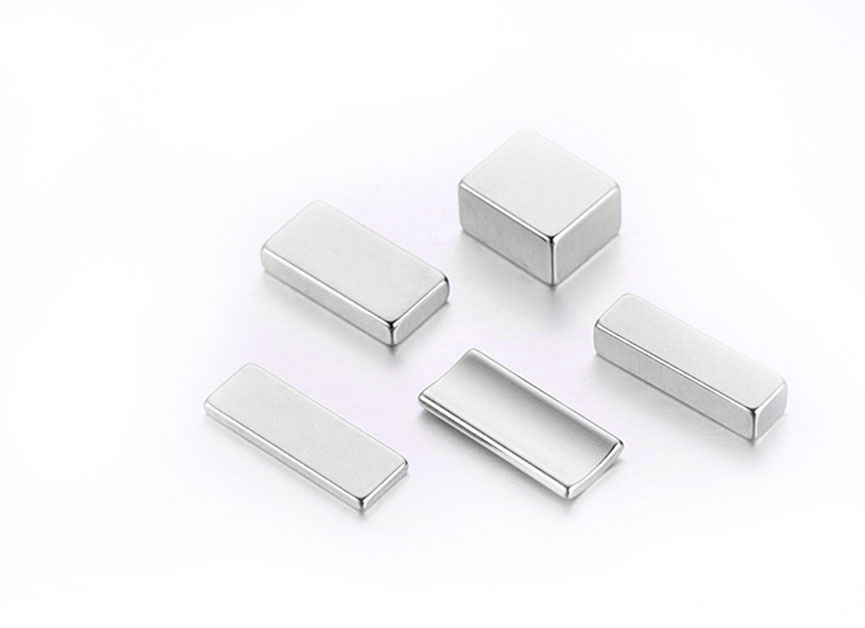
Click to visit our products:Sintered NdFeB Magnet
Why the Horseshoe Shape Matters
In a standard bar or disc magnet, the magnetic field lines travel through open air from one pole to the other, losing energy quickly with distance. A horseshoe configuration bends the magnet so both poles face the same direction. This means:
- The external magnetic circuit is shorter and more concentrated, minimizing flux leakage.
- Grip strength on flat ferromagnetic surfaces is substantially higher than an equivalent bar magnet of the same mass.
- The open-gap design allows the magnet to be used as a pickup tool, clamp, or teaching prop with immediate visual clarity.
- It is easier to safely store — a simple iron keeper bar placed across the poles maintains the magnetic charge over time.
Neodymium Horseshoe Magnet vs. Other Magnet Types
To appreciate the value of a neodymium horseshoe magnet, it helps to compare it directly with common alternatives.
| Property | Neodymium (NdFeB) | Alnico | Ceramic (Ferrite) | Samarium Cobalt |
| Max Energy Product (MGOe) | Up to 52 | Up to 9 | Up to 3.5 | Up to 32 |
| Relative Strength | Highest | Medium | Low | High |
| Temperature Resistance | Up to ~80–200°C (grade-dependent) | Up to 540°C | Up to 250°C | Up to 350°C |
| Corrosion Resistance | Low (needs coating) | Medium | High | Medium-High |
| Cost | Moderate | High | Very Low | Very High |
| Best Use Case | General industrial, DIY, science | Sensors, high-temp motors | Speakers, low-cost toys | Aerospace, extreme environments |
Understanding Neodymium Magnet Grades
Neodymium magnets are sold by grade, most commonly ranging from N35 to N52. The number indicates the maximum energy product in megagauss-oersteds (MGOe). A higher number means stronger magnetic output per unit volume.
Grade Comparison Table
| Grade | Max Energy (MGOe) | Max Operating Temp | Typical Application |
| N35 | 33–36 | 80°C | Hobbyist projects, educational |
| N42 | 40–43 | 80°C | DIY, light industrial pickup |
| N48 | 46–49 | 80°C | Industrial clamping, robotics |
| N52 | 50–53 | 80°C | High-performance engineering |
| N35H / N42H | 33–43 | 120°C | Motors, warm environments |
| N35SH / N42SH | 33–43 | 150°C | Automotive, industrial machinery |
Suffix letters after the grade number indicate enhanced coercivity: H = High, SH = Super High, UH = Ultra High, EH = Extremely High. For most horseshoe magnet applications where heat is not a concern, an N42 or N45 grade offers the best balance of cost and performance.
Top Applications of Neodymium Horseshoe Magnets
1. Education and STEM Demonstrations
The iconic horseshoe shape makes magnetic field lines easy to visualize with iron filings. Science teachers and professors worldwide use neodymium horseshoe magnets to demonstrate pole attraction, field mapping, electromagnetic induction, and Lenz's Law. The neodymium version produces far more dramatic results than traditional ceramic horseshoe magnets used in classrooms for decades.
2. Metal Detection and Magnet Fishing
Attached to a rope or cord and lowered into water, a neodymium horseshoe magnet becomes a powerful retrieval tool. Hobbyists recover lost tools, coins, keys, and even historical artifacts from rivers, lakes, and harbors. The two-pole design concentrates grip force, improving retrieval success on irregular surfaces.
3. Industrial Clamping and Holding
In manufacturing environments, horseshoe-shaped neodymium assemblies are used to hold steel workpieces during machining, welding, or assembly. Their high pull force — often exceeding tens of kilograms in even mid-sized units — means fewer mechanical clamps are needed, speeding up production.
4. DIY and Maker Projects
Electronics enthusiasts and makers use neodymium horseshoe magnets in generators, magnetic levitation experiments, motor prototypes, and art installations. The open-gap design makes it straightforward to insert and remove conductive coils for induction experiments.
5. Sensor and Actuator Systems
Precision horseshoe neodymium magnets are integrated into Hall-effect sensors, reed switch systems, and magnetic encoders. Their stable, strong field in a defined spatial region makes them ideal for contactless position detection.
6. Magnetic Therapy and Wellness Devices
Some wellness product manufacturers incorporate small neodymium horseshoe magnets into wearables and therapeutic pads. The horseshoe geometry allows both poles to engage simultaneously, which is cited as a key design advantage in bipolar magnetic therapy products.
How to Choose the Right Neodymium Horseshoe Magnet
Selecting the correct magnet involves evaluating several key parameters:
- Pull Force Required: Calculate the minimum holding or lifting force needed. Always choose a magnet rated at 2–3× your actual load to account for real-world surface contact inefficiency.
- Gap Distance: The gap between the two poles determines the effective range. Narrower gaps produce higher, more concentrated field strength; wider gaps suit larger ferrous workpieces.
- Operating Temperature: If the magnet will be exposed to heat above 80°C, select an H, SH, or UH grade to avoid irreversible demagnetization.
- Coating: Bare neodymium corrodes rapidly. Common coatings include nickel-copper-nickel (Ni-Cu-Ni), zinc, epoxy, gold, or rubber. For outdoor or wet environments, choose epoxy or rubber-coated models.
- Physical Size: Larger horseshoe magnets offer more pole surface area and higher pull force, but they can be dangerous if handled incorrectly. Match the size to your application's spatial constraints.
- Grade: N42 is the sweet spot for most applications. Upgrade to N48 or N52 only if space is extremely limited and maximum strength is essential.
Safety Considerations When Handling Neodymium Horseshoe Magnets
The extraordinary strength of neodymium horseshoe magnets demands respect. Even mid-sized examples can snap together with enough force to crush fingers or shatter on impact. Follow these safety rules:
- Keep away from pacemakers and implantable medical devices — neodymium fields can interfere with electronics within 30 cm or more.
- Never allow two large magnets to snap together freely — the impact can cause the brittle NdFeB material to shatter into sharp fragments.
- Store with a keeper bar (a soft iron bar across the poles) to prevent the magnet from attracting nearby ferrous objects and to preserve magnetization.
- Keep away from credit cards, hard drives, and electronic displays — strong magnetic fields can erase magnetic stripes and damage sensitive electronics.
- Use gloves when handling large horseshoe magnets to reduce pinch injury risk.
- Children should not handle powerful neodymium magnets without adult supervision.
Coating Options for Neodymium Horseshoe Magnets
| Coating Type | Corrosion Resistance | Durability | Best For |
| Ni-Cu-Ni (Nickel) | Good | High | General indoor/outdoor use |
| Zinc | Moderate | Medium | Budget applications |
| Epoxy | Excellent | High | Wet/humid environments |
| Rubber | Excellent | Medium | Outdoor retrieval, water use |
| Gold | Excellent | Very High | Laboratory, precision instruments |
Horseshoe vs. Bar vs. Disc: Which Shape Should You Choose?
Shape affects not just aesthetics but the actual magnetic performance profile. Here's how the horseshoe compares to other common geometries:
- Horseshoe: Both poles accessible from the same side. Maximum usable pull when target bridges the gap. Ideal for gripping, clamping, retrieval, and demonstrations.
- Bar Magnet: Poles at opposite ends. Better for linear motor applications or when only one pole interacts with a target.
- Disc/Cylinder: Compact and versatile. Useful for mounting, closures, and sensors. Less suited to bridging-type grip applications.
- Ring Magnet: Axially or diametrically magnetized. Used in speakers, sensors, and rotor assemblies.
For applications where the magnetic target will bridge or sit across both poles — such as picking up bolts, coins, or flat steel plates — the neodymium horseshoe magnet configuration is definitively superior.
Frequently Asked Questions About Neodymium Horseshoe Magnets
Q: How strong is a neodymium horseshoe magnet compared to a regular horseshoe magnet?
A neodymium horseshoe magnet can be 10 to 15 times stronger than a ceramic (ferrite) horseshoe magnet of the same physical size. A small N42-grade neodymium horseshoe measuring 5 cm across can hold several kilograms, while an equivalently sized ceramic magnet might hold only a few hundred grams.
Q: Will a neodymium horseshoe magnet lose its magnetism over time?
Under normal conditions (room temperature, no mechanical shock, stored with a keeper bar), a neodymium horseshoe magnet loses less than 1% of its magnetization per decade. The primary causes of demagnetization are exposure to temperatures above the rated maximum, strong opposing magnetic fields, and physical impact.
Q: Can I use a neodymium horseshoe magnet underwater?
Yes, but only with an appropriate coating. Bare or nickel-plated neodymium magnets will corrode rapidly in water. For underwater use, choose a rubber-coated or epoxy-coated neodymium horseshoe magnet. These are commonly used in magnet fishing and are designed for extended submersion.
Q: What grade of neodymium horseshoe magnet is best for beginners?
N35 or N42 are the recommended grades for hobbyists, students, and beginners. They provide impressive strength while being slightly more forgiving than higher grades. Avoid N52 magnets without experience, as their extreme pull force increases the risk of injury from pinching or snapping.
Q: Can neodymium horseshoe magnets be custom-made?
Yes. Many manufacturers offer custom neodymium horseshoe magnets with specific pole gap widths, arm lengths, coating specifications, and grades. Minimum order quantities apply, but for industrial buyers requiring a precise magnetic geometry, custom options are widely available.
Q: Is it safe to use neodymium horseshoe magnets near electronics?
Exercise caution. Strong neodymium fields can disrupt or permanently damage hard disk drives, credit cards, and some electronic sensors. Modern smartphones are generally tolerant of brief magnetic exposure at moderate distances, but do not place powerful neodymium horseshoe magnets directly on any electronic device.
Q: How do I separate two neodymium horseshoe magnets that have snapped together?
Slide them apart laterally rather than pulling directly against the attraction force. Use a flat, non-ferrous surface and push one magnet sideways off the edge. Never try to pry magnets apart — the sudden release can cause them to snap back and injure you or shatter.
Conclusion: Is a Neodymium Horseshoe Magnet Right for You?
If your project demands maximum magnetic force in a recognizable, easy-to-use form factor, the answer is almost certainly yes. The neodymium horseshoe magnet combines the oldest and most intuitive magnet shape with the most powerful permanent magnet material on Earth. Whether you are lifting scrap metal, demonstrating induction in a classroom, fishing for lost tools in a river, or building an electromagnetic generator, this magnet form delivers reliably.
The key is matching the right grade, size, coating, and pole gap to your specific use case. Start with an N42-grade nickel-coated neodymium horseshoe magnet for general use, upgrade to epoxy or rubber for outdoor environments, and step up to N48 or N52 only when application constraints demand it.
Handle with care, store properly with a keeper bar, and this magnet will retain its remarkable performance for decades to come.

Jinlun Magnet specialized in the research and development, production, and sales of high-performance rare-earth permanent magnet materials.
Quick Links
Contact Info.
-
 Sales00@jlmagnet.com
-
 +86-574-6321 2222
-
 No. 330 Xinxing 1st Road, Xinxing Industrial Park, Zonghan Street, Cixi City, Zhejiang Province, China
Mobile QR Code
Copyright © Ningbo Jinlun Magnet Technology Co., Ltd. All Rights Reserved.
China sintered NdFeB magnet manufacturer wholesale sintered NdFeB magnet factory

TOP

