 EN
EN English
 中文简体
中文简体 русский
 Deutsch
 日本語
日本語 한국어
한국어

Industry News
Apr 08,2026
What Blocks Magnetic Fields? A Complete Guide to Magnetic Shielding
Ferromagnetic materials — such as mu-metal, soft iron, and electrical steel — are the most effective materials that block magnetic fields. These materials work by redirecting magnetic flux through themselves rather than allowing it to pass through into a protected area. This article explains exactly how magnetic shielding works, which materials perform best, when different approaches are needed, and answers the most common questions people have about blocking magnetic fields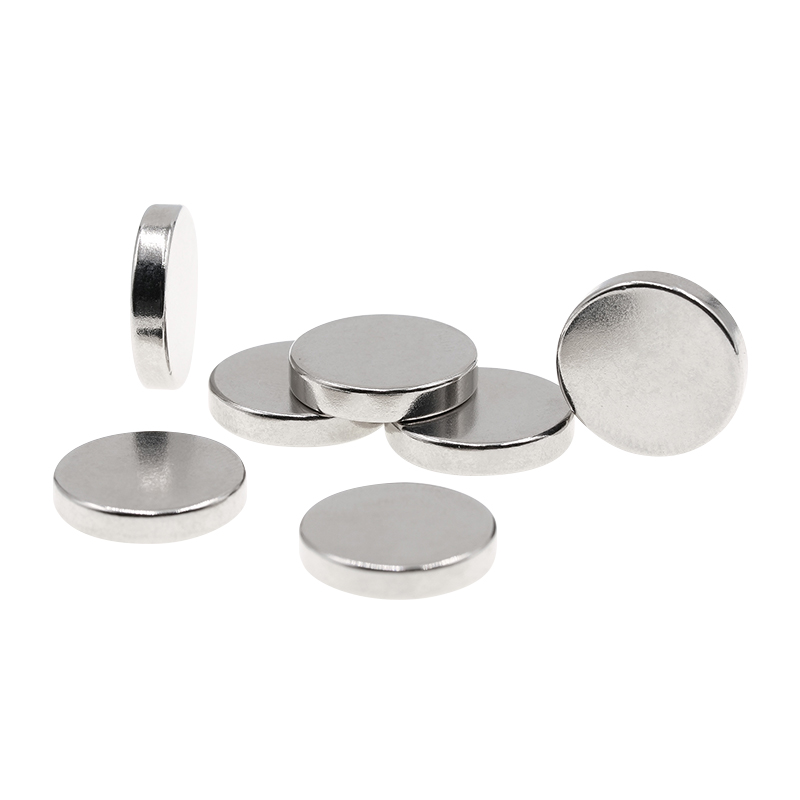
Click to visit our products:Sintered NdFeB Magnet
How Magnetic Shielding Works
Magnetic fields cannot simply be "blocked" the way light is blocked by an opaque surface. Instead, magnetic shielding works by providing a low-resistance path — known as a low magnetic reluctance path — that diverts field lines away from the protected region. The shield material absorbs and redirects the flux, reducing the strength of the field inside or behind the shield.
The effectiveness of a shielding material is measured by its magnetic permeability — how easily the material allows magnetic field lines to pass through it. The higher the permeability, the more efficiently it attracts and channels magnetic flux, and therefore the better it shields.
Two fundamentally different types of magnetic fields require different shielding strategies:
- Static (DC) magnetic fields — produced by permanent magnets and the Earth's geomagnetic field. Best shielded with high-permeability ferromagnetic metals.
- Alternating (AC) electromagnetic fields (EMF) — produced by power lines, motors, and electronics. Require conductive materials that generate eddy currents to oppose the changing field.
Materials That Block Magnetic Fields
1. Mu-Metal (Nickel-Iron Alloy)
Mu-metal is widely regarded as the best material for blocking static magnetic fields. It is a soft magnetic alloy composed of approximately 77% nickel, 15% iron, and trace amounts of copper and molybdenum. Its relative permeability can exceed 100,000 — meaning it channels magnetic flux up to 100,000 times more easily than free space.
Mu-metal is used in sensitive electronic equipment, MRI machines, scientific instruments, and audio transformers. However, it is expensive and must be carefully annealed (heat treated) after forming, as mechanical stress reduces its permeability. It is also relatively thin and lightweight, making it practical for enclosing sensitive components.
2. Soft Iron and Low-Carbon Steel
Soft iron and low-carbon steel are the most cost-effective ferromagnetic shielding materials. With relative permeabilities in the range of 1,000–5,000, they do not match mu-metal, but they are far cheaper and mechanically robust. They are commonly used in transformers, motor housings, and industrial shielding enclosures.
The thickness of the shield matters: thicker soft iron provides stronger attenuation. Steel enclosures are often used as a first line of defense, with mu-metal lining added for critical inner layers in precision applications.
3. Electrical Steel (Silicon Steel)
Electrical steel, also called silicon steel, is an iron alloy with silicon content of 1–4.5%. The silicon improves electrical resistance (reducing energy losses from eddy currents) and increases permeability in certain orientations. It is the standard material for transformer cores and electric motor laminations, where it must handle alternating magnetic fields efficiently without excessive heat generation.
4. Aluminum and Copper (for AC/EMF Shielding)
Aluminum and copper are non-magnetic but are excellent conductors of electricity. For alternating magnetic fields and electromagnetic interference (EMI), these metals provide shielding through the induction of eddy currents. When an alternating magnetic field enters a conductor, it induces circular currents that generate an opposing magnetic field, effectively attenuating the original field.
Copper is heavier and more expensive than aluminum but offers higher conductivity. Aluminum is lighter and often preferred for large shielding enclosures. Neither material is effective against static magnetic fields.
5. Ferrite Materials
Ferrite is a ceramic compound made from iron oxide combined with other metal oxides (such as manganese, zinc, or nickel). Ferrites have high electrical resistance, which makes them particularly effective at high frequencies where eddy current losses would overheat metallic shields. Ferrite beads, cores, and tiles are widely used in electronics to suppress high-frequency EMI and radio-frequency interference (RFI).
6. Superconductors
At extremely low temperatures, superconducting materials exhibit the Meissner effect — they completely expel magnetic fields from their interior, creating perfect magnetic shielding. This is used in advanced physics research and quantum computing applications. However, the requirement for cryogenic cooling makes superconductors impractical for everyday shielding.
Magnetic Shielding Material Comparison
The table below compares the most commonly used materials for blocking magnetic fields across key performance and practical criteria:
| Material | Relative Permeability | Best For | Cost | Typical Use |
| Mu-Metal | 20,000–100,000+ | Precision shielding | High | MRI, scientific instruments |
| Soft Iron | 1,000–5,000 | Industrial use | Low | Motor housings, enclosures |
| Electrical Steel | 1,500–8,000 | Transformers | Low–Medium | Transformer cores |
| Copper | ~1 (non-magnetic) | AC/EMI shielding | Medium–High | RF enclosures, Faraday cages |
| Aluminum | ~1 (non-magnetic) | AC/EMI shielding | Low–Medium | Electronic enclosures |
| Ferrite | 10–1,000 | High-frequency EMI | Low | Ferrite beads, PCB shielding |
| Superconductor | 0 (perfect exclusion) | Quantum research | Very High | Physics labs, quantum computers |
What Does NOT Block Magnetic Fields?
Many people are surprised to learn that common materials offer little or no protection against magnetic fields. Understanding these limitations is crucial for proper shielding design.
- Plastic and rubber: These non-conductive materials are completely transparent to magnetic fields of all frequencies.
- Wood: No shielding properties of any kind.
- Glass: Fully transparent to both static and alternating magnetic fields.
- Lead: Despite being associated with radiation shielding, lead has no special magnetic shielding properties.
- Stainless steel (austenitic): The common 304 and 316 grades of stainless steel are non-magnetic due to their crystal structure, providing little magnetic shielding. Only ferritic and martensitic grades are magnetically useful.
- Concrete and brick: No magnetic shielding effect.
- Water: Water is diamagnetic but only to an extremely tiny degree — essentially no practical shielding effect.
Common Applications of Magnetic Shielding
Medical Imaging (MRI)
MRI machines generate extremely powerful magnetic fields (1.5T to 7T). Shielding the room with mu-metal and other ferromagnetic materials prevents the field from interfering with nearby electronic equipment and prevents external ferromagnetic objects from being attracted into the machine — which can be life-threatening.
Consumer Electronics
Smartphones, laptops, and audio equipment include internal magnetic shielding layers — often made of thin mu-metal foil or ferrite sheets — to prevent the magnetic fields of speakers, motors, and wireless charging coils from interfering with other components such as sensors or display screens.
Power Transformers and Distribution Equipment
Transformer cores made from electrical steel efficiently guide and contain alternating magnetic flux, maximizing energy transfer efficiency and minimizing stray fields. Steel enclosures around distribution transformers further reduce the external magnetic field footprint.
Military and Defense
Naval vessels use degaussing systems and magnetic shielding to reduce their magnetic signature, making them harder to detect by magnetically triggered mines. Sensitive onboard electronics are also shielded from the ship's own large magnetic infrastructure.
Scientific Research Instruments
Electron microscopes, magnetometers, and particle accelerator components must be shielded from ambient magnetic fields (including the Earth's field) to function accurately. Multi-layered mu-metal enclosures can reduce the internal field to near zero for such applications.
Wireless Charging and Payment Cards
Thin ferrite sheets are placed behind wireless charging coils in phones and smartwatches to prevent the alternating magnetic field from heating metal device components and to improve coupling efficiency. Credit cards with magnetic stripes include similar thin shielding layers.
Static Magnetic Shielding vs. EMF Shielding: Key Differences
Choosing the right shielding approach requires understanding whether you are dealing with a static magnetic field or a time-varying electromagnetic field. The table below summarizes the key differences:
| Factor | Static (DC) Magnetic Field | Alternating (AC) / EMF |
| Source | Permanent magnets, Earth's field | Power lines, motors, electronics |
| Shielding mechanism | Flux redirection (high permeability) | Eddy current opposition |
| Best materials | Mu-metal, soft iron, steel | Copper, aluminum, ferrite |
| Thickness requirement | Thicker = better | Dependent on skin depth |
| Multi-layer benefit | Yes — significant improvement | Moderate benefit |
| Gaps/seams effect | Critical — breaks flux path | Less critical at low frequency |
The Skin Depth Concept
For AC magnetic fields, the skin depth is a critical design parameter. It describes how deeply an alternating electromagnetic field penetrates into a conductor before being attenuated to 1/e (~37%) of its surface value. At higher frequencies, the skin depth decreases — meaning thinner shields are effective. At lower frequencies (like 50–60 Hz power line frequencies), skin depth is large, requiring thicker or more conductive materials for effective shielding.
Frequently Asked Questions (FAQ)
Can you completely block a magnetic field?
No material can completely block a static magnetic field — shielding always reduces rather than eliminates field strength. However, superconductors at cryogenic temperatures achieve near-perfect exclusion of magnetic fields through the Meissner effect. For practical applications, mu-metal enclosures can reduce interior field strength by factors of 1,000 or more.
Does aluminum foil block magnetic fields?
Aluminum foil provides essentially no protection against static magnetic fields from permanent magnets. It does offer some limited attenuation of high-frequency alternating electromagnetic fields through eddy current effects, but its thinness makes it largely ineffective even for that purpose. Thick aluminum sheets are far more useful for EMI shielding.
Does the human body block magnetic fields?
No. The human body is largely transparent to magnetic fields. This is why MRI imaging works — magnetic fields penetrate the body completely to interact with hydrogen nuclei in tissue. The body contains no significant ferromagnetic material (except for trace amounts of magnetite in certain tissues) and offers no meaningful shielding effect.
Can you shield a room from magnetic fields?
Yes, but it is complex and expensive. Shielded rooms (mu-metal rooms) used in neuroscience research (such as for MEG — magnetoencephalography) can reduce ambient magnetic field levels by factors of 10,000 or more. They require multiple layered shells of mu-metal carefully welded and annealed, with special attention to every seam, penetration, and door seal to avoid flux leakage paths.
What is the difference between magnetic shielding and a Faraday cage?
A Faraday cage is a conductive enclosure — typically copper or aluminum mesh — that blocks electric fields and high-frequency electromagnetic radiation (radio waves, microwaves). It works by redistributing charges on the conductor's surface. However, a standard Faraday cage does not block static magnetic fields. Blocking static magnetic fields requires a high-permeability ferromagnetic shield, not just a conductive one.
Is stainless steel a good magnetic shield?
It depends on the grade. Austenitic stainless steels (304, 316) are non-magnetic and offer minimal shielding. Ferritic stainless steels (430 grade) are magnetic and offer moderate shielding, though far less than soft iron or mu-metal. When selecting stainless steel for magnetic shielding, the specific grade must be verified.
How thick does a magnetic shield need to be?
For static magnetic fields, greater thickness increases shielding effectiveness. Mu-metal sheets of 0.5–2 mm are common in precision electronics. For industrial enclosures using soft iron or steel, 3–12 mm thicknesses are typical. For AC electromagnetic fields, the required thickness is determined by the skin depth at the operating frequency. Multiple thin layers with gaps between them often outperform a single thick layer for static fields.
Can magnets be shielded from each other?
Yes. Placing a ferromagnetic material between two magnets will redirect the magnetic flux through the shield material, significantly reducing the field interaction between them. This is used in speaker design (to prevent neighboring speakers from interfering), in precision instruments, and in industrial magnetic assemblies. Complete isolation is not possible, but substantial reduction is achievable.
Conclusion
Understanding what blocks magnetic fields requires knowing the type of field you are dealing with. For static magnetic fields, ferromagnetic materials with high permeability — especially mu-metal, soft iron, and electrical steel — are the best choices. For alternating electromagnetic fields and EMI, conductive materials like copper and aluminum, as well as ferrite composites, provide effective shielding through eddy current mechanisms.
No single material works perfectly in all situations. The best magnetic shielding solutions are engineered for the specific field type, frequency range, field strength, and geometric requirements of the application. In demanding applications, multiple layers of different materials are combined to achieve the required attenuation across a wide range of field types and frequencies.
Key practical takeaways: use mu-metal for precision static shielding, electrical steel for transformer and motor shielding, copper or aluminum for AC and RF enclosures, and ferrite for high-frequency EMI suppression. Avoid assuming that common materials like plastic, concrete, or glass offer any protection — they do not.

Jinlun Magnet specialized in the research and development, production, and sales of high-performance rare-earth permanent magnet materials.
Quick Links
Contact Info.
-
 Sales00@jlmagnet.com
-
 +86-574-6321 2222
-
 No. 330 Xinxing 1st Road, Xinxing Industrial Park, Zonghan Street, Cixi City, Zhejiang Province, China
Mobile QR Code
Copyright © Ningbo Jinlun Magnet Technology Co., Ltd. All Rights Reserved.
China sintered NdFeB magnet manufacturer wholesale sintered NdFeB magnet factory

TOP

