EN
EN English
 中文简体
中文简体 русский
 Deutsch
 日本語
日本語 한국어
한국어

To make a magnet stronger, you can remagnetize it with a stronger external magnet, stack multiple magnets together, store it properly with a keeper, cool it down, or upgrade to a higher-grade magnetic material. These methods work because magnet strength depends on the alignment of magnetic domains inside the material — and each technique either restores, enhances, or preserves that alignment. Below is a complete guide with comparisons, data, and frequently asked questions.
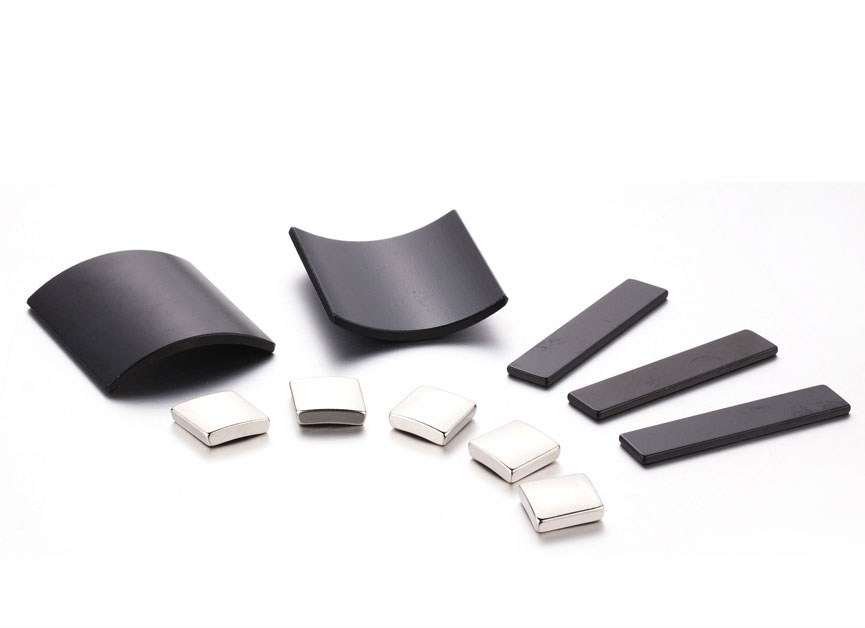
Click to visit our products:Sintered NdFeB Magnet
Why Magnets Lose Strength Over Time
Magnets weaken because their internal magnetic domains — tiny regions where atoms align in the same direction — gradually fall out of alignment. Understanding the root causes helps you choose the right method to restore or boost strength.
Common Causes of Magnetic Weakening
- Heat exposure: Most permanent magnets begin losing strength at their Curie temperature. Neodymium magnets, for example, start degrading at around 80°C (176°F), while Alnico magnets tolerate up to 860°C.
- Physical shock: Dropping or hammering a magnet disrupts domain alignment, sometimes permanently.
- Opposing magnetic fields: Placing magnets pole-to-pole (repelling) over time demagnetizes them.
- Improper storage: Storing magnets without keepers causes gradual self-demagnetization.
- Corrosion: Surface rust on uncoated magnets reduces effective flux output.
6 Proven Methods to Make a Magnet Stronger
1. Remagnetize with a Stronger Magnet
Stroking your weak magnet repeatedly with a stronger magnet is the fastest and most accessible way to restore its strength. Each stroke re-aligns magnetic domains in the same direction, effectively "recharging" the magnet without any special equipment.
How to do it correctly:
- Place the weak magnet on a flat, non-magnetic surface.
- Identify the north pole of the stronger magnet.
- Stroke from one end of the weak magnet to the other in a single direction only — never back and forth.
- Lift the strong magnet away after each stroke before returning to the start position.
- Repeat 20–50 times for best results.
Studies on ferromagnetic domain behavior show that unidirectional stroking can restore up to 70–85% of original flux density in partially demagnetized ceramic and Alnico magnets, though results on rare-earth magnets like neodymium are more limited due to their high coercivity.
2. Stack Multiple Magnets Together
Stacking two or more magnets with matching poles facing the same direction significantly increases the combined magnetic field strength. This is one of the simplest and most practical methods for boosting pulling or holding force without any special tools.
For a stack of n identical disk magnets, the surface field does not simply multiply by n, but pulling force does scale substantially. Empirical tests with neodymium N42 disk magnets (20mm diameter, 5mm thick) showed:
- 1 magnet: ~5.8 lbs (2.6 kg) pull force
- 2 stacked: ~9.1 lbs (4.1 kg) — roughly 57% increase
- 3 stacked: ~11.5 lbs (5.2 kg) — nearly 100% increase over single
Always ensure poles are aligned correctly (N to S) when stacking to attract and combine fields rather than cancel them.
3. Use a Magnetic Coil (Electromagnet Pulse)
Exposing a magnet to a powerful DC electromagnetic pulse — a process used industrially called "impulse magnetization" — forces nearly all magnetic domains into perfect alignment, maximizing residual flux density (Br). This is the same technique manufacturers use when producing new magnets.
For DIY purposes, winding a coil of insulated copper wire around a soft iron core and briefly passing high direct current (from a capacitor bank) through it can remagnetize small Alnico or ceramic magnets. Key parameters:
- Coil: 200–500 turns of 18-gauge magnet wire
- Pulse duration: 5–20 milliseconds
- Field strength needed: at least 3× the magnet's coercive force (Hc)
Caution: This method involves high currents and should only be attempted by those with electronics experience. It is not suitable for neodymium magnets without professional-grade equipment producing fields above 3 Tesla.
4. Cool the Magnet (Cryogenic Enhancement)
Lowering a magnet's temperature increases its coercivity and flux density. At colder temperatures, thermal agitation decreases, allowing magnetic domains to stay better aligned. Neodymium magnets, for instance, show measurably higher surface fields at −40°C compared to room temperature (approximately 5–8% improvement in Br).
In practical applications such as MRI machines and particle accelerators, superconducting magnets are cooled with liquid helium (−269°C / 4 K), achieving magnetic fields of 10–20 Tesla — far beyond what room-temperature permanent magnets can achieve. For everyday use, cooling a magnet in a freezer can give a small but real boost, especially in cold-environment applications.
5. Add a Soft Iron Yoke or Back Plate
Attaching a soft iron plate to one face of a magnet dramatically concentrates and redirects magnetic flux. Because soft iron has high permeability, it acts as a flux conductor — channeling field lines toward the working face and increasing effective pull force by 30–200% depending on geometry.
This principle is used in pot magnets (also called cup magnets), where a neodymium disk is seated inside a steel cup. The cup focuses nearly all the flux out of the flat face, making these among the strongest holding magnets by volume available commercially.
For a DIY approach, simply placing a magnet on a 3–5mm thick mild steel plate before mounting increases its holding strength considerably, without modifying the magnet itself.
6. Upgrade to a Higher-Grade or Larger Magnet
Sometimes the most effective answer to how to make a magnet stronger is choosing a fundamentally more powerful magnetic material or a higher grade. Rare-earth magnets (neodymium, samarium cobalt) outperform ferrite and Alnico magnets by enormous margins.
Within neodymium magnets alone, grades range from N35 to N55. Each increment in grade number corresponds to a higher maximum energy product (BHmax) measured in MGOe (Megagauss-Oersteds). An N52 magnet produces roughly 45% more flux density than an N35 of the same physical dimensions.
Method Comparison Table
The table below compares all six methods across key practical dimensions to help you choose the best approach for your situation.
| Method | Strength Gain | Cost | Difficulty | Best For |
|---|---|---|---|---|
| Stroking with Stronger Magnet | Up to 85% restoration | Low | Easy | Partially demagnetized magnets |
| Stacking Magnets | Up to ~100% pull force increase | Low–Medium | Easy | Holding/lifting applications |
| Electromagnetic Pulse | Near-full remagnetization | Medium–High | Advanced | Alnico / ceramic magnets |
| Cooling (Cryogenic) | 5–8% flux increase | Low (freezer) / Very High (cryo) | Easy–Complex | Cold-environment, precision use |
| Iron Yoke / Back Plate | 30–200% effective pull increase | Low | Easy | Mounted / surface-holding use |
| Upgrade Magnet Grade | Up to 45% more flux (N35→N52) | Medium | Easy | New projects, replacements |
Choosing the Right Magnetic Material
The type of magnetic material is the single biggest determinant of how strong a magnet can be. Different materials suit different applications, temperatures, and budgets.
| Material | Max BHmax (MGOe) | Max Temp (°C) | Corrosion Resistance | Relative Cost |
|---|---|---|---|---|
| Neodymium (NdFeB) | 52 | 80–200 (grade-dependent) | Poor (needs coating) | Medium |
| Samarium Cobalt (SmCo) | 32 | 350 | Excellent | High |
| Alnico | 9 | 860 | Good | Medium |
| Ceramic (Ferrite) | 4.5 | 300 | Excellent | Low |
Key takeaway: If raw strength is the priority, neodymium is unmatched. If you need performance in a high-temperature or corrosive environment, samarium cobalt is worth the premium. Ferrite magnets are ideal for large-volume, low-cost applications where extreme field strength is not critical.
How Proper Storage Preserves and Maintains Magnet Strength
Proper storage is one of the most overlooked aspects of keeping a magnet strong. Even a freshly remagnetized magnet will weaken prematurely if stored incorrectly.
Use Keeper Bars for Horseshoe Magnets
Traditional horseshoe and bar magnets should always be stored with a soft iron "keeper" bar bridging the two poles. This creates a closed magnetic circuit, dramatically reducing flux leakage and self-demagnetization. Without a keeper, a horseshoe magnet stored for 6–12 months can lose 10–25% of its original strength.
Store Magnets Away from Heat and Electronics
Keep magnets away from heat sources, direct sunlight, and electronic devices. Even moderate heat (above 60°C for some neodymium grades) accelerates domain disorder. Additionally, magnets stored near each other should always be oriented with matching poles facing the same direction — not opposing — to prevent mutual demagnetization.
Avoid Physical Shock
Store magnets in padded containers or wrapped in foam to protect against drops and impacts. Even a single hard drop on a concrete floor can measurably reduce the strength of a brittle neodymium magnet — and it may also cause chipping or cracking, exposing uncoated iron to corrosion.
Frequently Asked Questions
Can you make a magnet stronger by heating it?
No — heat weakens magnets, not strengthens them. Heating a magnet above its Curie temperature causes complete and permanent demagnetization. Even temperatures below the Curie point can cause partial, irreversible loss of strength. Always keep magnets cool if you want to preserve or enhance their performance.
Does rubbing a magnet on iron make it stronger?
Rubbing a magnet on soft iron (like a nail) magnetizes the iron, but does not make the original magnet stronger. The process transfers some magnetic influence to the iron by aligning its domains, creating a temporary magnet. Your original magnet remains the same strength. To strengthen the magnet itself, stroke it with a stronger magnet or use an electromagnetic pulse.
Can you make a neodymium magnet stronger at home?
Partially, yes. You can stack multiple neodymium magnets to increase combined pull force, or add a steel back plate to concentrate flux. However, fully remagnetizing a neodymium magnet at home is impractical because it requires magnetic fields in excess of 3 Tesla — far beyond what DIY coils can generate. For true remagnetization, you would need to send the magnet to a professional magnetizing service.
How do I know if my magnet has been demagnetized?
The simplest test is to compare its holding or lifting ability against a known weight or against a fresh reference magnet of the same type. A gaussmeter (magnetic field meter) gives a precise measurement of surface flux density in Gauss or Tesla and is the gold standard for quantifying magnet strength. Consumer gaussmeters are available for under $30 and are accurate enough for most hobbyist and industrial needs.
Is there a limit to how strong a magnet can be made?
Yes. Every magnetic material has a theoretical maximum energy product (BHmax) determined by its atomic structure. For neodymium, this ceiling is around 64 MGOe; current commercial grades reach N55 (~55 MGOe). Beyond material limits, the only way to produce stronger fields is through electromagnets or superconducting magnets, which can achieve fields of 20–45 Tesla in research settings — thousands of times stronger than the best permanent magnets.
Does the shape of a magnet affect its strength?
Yes, significantly. Shape affects the demagnetization factor — how much a magnet's own field works against its magnetization. Long, thin bar magnets along the magnetization axis have a lower demagnetization factor and maintain their strength better than flat, wide disks. Spherical magnets have a demagnetization factor of exactly 1/3, making them relatively stable. For maximum holding strength in a given volume, cup/pot magnet geometries with steel enclosures are typically optimal.
Can electricity make a magnet permanently stronger?
Electricity is used to create electromagnets, which are only magnetic when current flows. However, passing a strong DC pulse through a coil surrounding a permanent magnet can remagnetize it — restoring lost strength permanently, provided the applied field exceeds the magnet's coercive force. This is the foundation of all commercial magnet manufacturing. AC current, however, progressively demagnetizes magnets rather than strengthening them.
Conclusion
Making a magnet stronger is achievable through several well-established methods — from the simple (stroking with a stronger magnet, stacking, adding a steel plate) to the technical (electromagnetic pulse remagnetization, cryogenic cooling). The best approach depends on your magnet type, available tools, and the application at hand.
For most practical purposes, stacking magnets or fitting them in a steel cup assembly delivers the biggest immediate gain with minimal effort. For long-term strength preservation, proper storage — using keepers, avoiding heat and shock, and correct pole orientation — is equally important as any active enhancement method.
If you need maximum strength for a new project, upgrading from a ceramic or Alnico magnet to a high-grade neodymium (N45–N52) with a steel backing offers transformative improvement in both pull force and energy density.