EN
EN English
 中文简体
中文简体 русский
 Deutsch
 日本語
日本語 한국어
한국어

Temperature has a direct and significant effect on the magnetism of neodymium (NdFeB) magnets — as temperature rises, magnetic strength gradually weakens in a reversible way up to a certain point, then drops permanently and irreversibly if the magnet exceeds its specific maximum operating temperature or reaches its Curie temperature, where magnetism is lost almost entirely. Understanding this temperature-magnetism relationship is essential for anyone specifying neodymium magnets for industrial motors, sensors, or consumer products, since choosing the wrong magnet grade for a given operating temperature is one of the most common causes of premature magnetic performance loss in real-world applications.
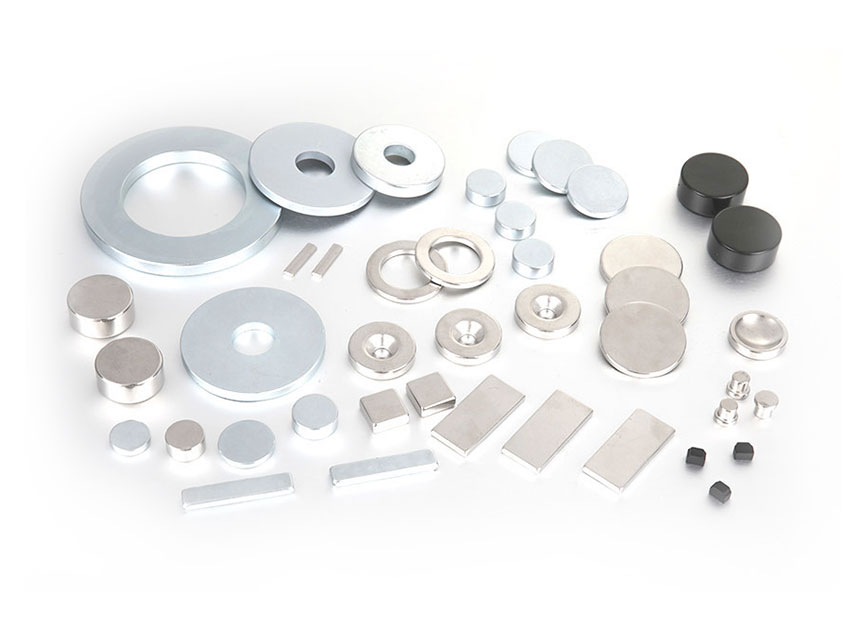
Click to visit our products:Sintered NdFeB Magnet
Why Neodymium Magnets Are More Temperature-Sensitive Than Other Magnet Types
Neodymium magnets are more sensitive to temperature than ferrite or samarium cobalt magnets because their magnetic properties depend on a specific crystalline microstructure that becomes increasingly disordered as thermal energy increases, gradually disrupting the alignment of magnetic domains that gives the material its strength. This sensitivity is a direct trade-off for neodymium's main advantage: it offers the highest magnetic strength per unit of volume of any commercially available permanent magnet material, but that strength comes at the cost of a comparatively lower thermal tolerance than some alternative magnet chemistries.
Research published by the National Institute of Standards and Technology (NIST) on rare-earth permanent magnet materials has documented how the magnetic anisotropy of neodymium-iron-boron compounds — the property that keeps magnetic domains aligned in a preferred direction — diminishes progressively with rising temperature, which is the underlying physical mechanism behind the reversible strength loss seen in everyday use.
Reversible vs. Irreversible Magnetic Loss
Reversible loss occurs when a magnet temporarily weakens at elevated temperature but fully recovers its original strength once cooled back to room temperature, while irreversible loss is permanent and occurs when the magnet exceeds its maximum operating temperature or undergoes repeated thermal cycling beyond safe limits. This distinction matters enormously in practical applications: an engineer designing a motor that briefly exceeds a magnet's rated temperature during a power surge faces a very different risk profile than one operating consistently within the magnet's safe thermal range.
What Is the Curie Temperature, and Why Does It Matter?
The Curie temperature is the specific temperature at which a magnetic material loses its permanent magnetism entirely, since thermal energy at this point overcomes the magnetic ordering that aligns atomic magnetic moments — for standard neodymium magnets, the Curie temperature is approximately 310°C to 400°C depending on the specific alloy composition. Above the Curie temperature, the material becomes paramagnetic rather than ferromagnetic, meaning it no longer retains magnetism on its own even though it may still respond weakly to an external magnetic field.
It's important to understand that the Curie temperature is not the same as a magnet's practical maximum operating temperature. Magnets begin to suffer meaningful, sometimes irreversible, performance degradation well before reaching the Curie point — which is why manufacturers specify a separate, much lower maximum operating temperature for each magnet grade rather than relying on the Curie temperature as a practical design limit.
Which Neodymium Magnet Grades Handle Heat Best?
Neodymium magnet grades are classified by both magnetic strength (such as N35, N42, N52) and temperature rating (such as M, H, SH, UH, EH), and grades with added heavy rare-earth elements like dysprosium and terbium offer significantly higher maximum operating temperatures at the cost of slightly reduced peak magnetic strength.
| Temperature Grade | Max Operating Temperature | Typical Application |
| N (standard) | Up to 80°C | Consumer electronics, low-heat applications |
| M | Up to 100°C | General industrial use, mild thermal exposure |
| H | Up to 120°C | Standard motors, moderate-heat equipment |
| SH | Up to 150°C | Automotive components, industrial motors |
| UH | Up to 180°C | High-performance motors, aerospace components |
| EH | Up to 200°C–230°C | Extreme-heat industrial and specialty applications |
Caption: Neodymium magnet temperature grade classifications, their maximum operating temperatures, and typical application areas.
The Trade-Off Between Strength and Heat Resistance
Adding heavy rare-earth elements like dysprosium improves a magnet's resistance to thermal demagnetization, but this same addition typically reduces the magnet's maximum achievable remanence (residual magnetic strength) by a measurable amount compared to a standard, lower-temperature-rated grade of the same base composition. This is why magnet specification is rarely just about picking the strongest available grade — the actual operating temperature of the application has to be weighed against the desired magnetic output from the very beginning of the design process.
How Cold Temperatures Affect Neodymium Magnet Performance
Unlike heat, cold temperatures generally increase the magnetic strength of neodymium magnets up to a point, since lower thermal energy allows magnetic domains to remain more rigidly aligned — but neodymium magnets can become more brittle at extremely low temperatures, introducing a separate mechanical risk rather than a magnetic one.
This means a neodymium magnet operating in a freezer or in cryogenic research equipment will typically exhibit slightly higher magnetic field strength than the same magnet at room temperature, all else being equal. However, design engineers working in extreme cold environments still need to account for increased brittleness and potential cracking risk under mechanical stress or vibration, since the magnet's improved magnetic performance does not offset this separate structural consideration.
Neodymium vs. Samarium Cobalt vs. Ferrite: A Temperature Comparison
Samarium cobalt magnets generally outperform neodymium in high-temperature stability despite having lower peak magnetic strength, while ferrite magnets offer the most modest performance overall but remain remarkably stable and inexpensive across a wide temperature range.
| Magnet Type | Curie Temperature | Max Practical Operating Temp | Relative Magnetic Strength |
| Neodymium (NdFeB) | ~310–400°C | 80–230°C (grade dependent) | Highest |
| Samarium cobalt (SmCo) | ~700–800°C | 250–350°C | High |
| Ferrite (ceramic) | ~450°C | 250°C | Low to moderate |
| Alnico | ~800–860°C | 525–550°C | Moderate |
Caption: Comparison of common permanent magnet types by Curie temperature, practical maximum operating temperature, and relative magnetic strength.
This comparison explains why samarium cobalt, despite costing more and offering somewhat lower peak strength than neodymium, remains the preferred choice in aerospace and high-temperature industrial applications where consistent magnetic performance at elevated temperatures is non-negotiable. Ferrite, meanwhile, continues to dominate cost-sensitive, moderate-temperature applications like basic motors and refrigerator magnets, where its lower magnetic strength is an acceptable trade-off for stability and low cost.
How Engineers Select the Right Magnet Grade for Thermal Conditions
Selecting the right neodymium magnet grade requires evaluating the maximum expected operating temperature, the working air gap and magnetic circuit design, and the demagnetization curve of candidate grades at that specific temperature, rather than relying solely on a magnet's room-temperature strength rating.
- Determine the actual peak operating temperature — This should include worst-case scenarios such as motor overload conditions, not just typical steady-state operating temperature, since brief thermal spikes can still cause irreversible loss if they exceed the magnet's rated limit.
- Review the demagnetization curve at temperature — Manufacturers typically publish B-H curves at multiple temperatures, allowing engineers to confirm a magnet retains sufficient performance at the actual operating point rather than just at 20°C room temperature.
- Account for the magnetic circuit's working point — The geometry of the magnetic circuit, including air gaps and surrounding materials, affects how close a magnet operates to its demagnetization knee at a given temperature, which can shift the effective safety margin significantly.
- Balance cost against thermal margin — Higher temperature grades cost more, so engineers typically select the lowest-cost grade that still provides an adequate safety margin above the maximum expected operating temperature, rather than automatically defaulting to the highest available temperature rating.
Common Industries Where Magnet Temperature Rating Is Critical
Electric motor design, automotive systems, and aerospace components are among the industries where magnet temperature rating most directly determines product reliability, since these applications routinely expose magnets to sustained or cyclical heat far beyond typical room-temperature conditions.
- Electric vehicle traction motors — Motors operate under sustained high current and resulting heat, making higher-grade temperature-rated magnets (often SH or UH) standard rather than optional in most modern EV drivetrain designs.
- Industrial servo motors and pumps — Continuous-duty equipment generates internal heat over long operating cycles, requiring magnet grades matched to realistic sustained operating temperatures rather than brief peak loads alone.
- Aerospace and defense actuators — Extreme environmental temperature swings and stringent reliability requirements often push designers toward samarium cobalt or the highest available neodymium temperature grades.
- Wind turbine generators — Generator nacelles can experience significant internal heat buildup during sustained operation, making thermal magnet performance a key consideration in long-term generator reliability and maintenance planning.
Frequently Asked Questions About Magnetism and Temperature
Can a neodymium magnet regain its strength after losing it to heat?
If the strength loss was reversible — meaning the magnet did not exceed its rated maximum operating temperature — it will fully recover its original strength once cooled back to room temperature. If the loss was irreversible, due to exceeding the maximum operating temperature or experiencing repeated excessive thermal cycling, the magnet generally needs to be re-magnetized using specialized equipment to restore close to its original strength, and in severe cases full recovery may not be possible.
What happens if a neodymium magnet is heated above its Curie temperature?
Above the Curie temperature, a neodymium magnet loses essentially all of its permanent magnetism, becoming paramagnetic rather than ferromagnetic. If the magnet is then cooled back down without being re-exposed to a strong external magnetic field during the cooling process, it will generally not regain its original magnetization on its own and will require deliberate re-magnetization to function as a permanent magnet again.
Do all neodymium magnets have the same Curie temperature?
No — the exact Curie temperature varies somewhat depending on the specific alloy composition and the presence of heavy rare-earth additives like dysprosium, generally falling within a range of roughly 310°C to 400°C for standard neodymium-iron-boron formulations. This variation is part of why checking a specific grade's published technical data sheet is important rather than assuming a single universal value applies to all neodymium magnets.
Why do electric motors often specify high-temperature-grade magnets even if they rarely overheat?
Motor designers typically build in a thermal safety margin to account for worst-case operating scenarios, ambient temperature variation, and gradual performance degradation over the product's expected service life, rather than designing strictly to typical or average operating conditions. This conservative approach helps ensure consistent magnetic performance throughout the motor's intended lifespan, even under occasional stress conditions that exceed normal operation.
Is it true that magnets always get weaker in heat and stronger in cold?
This is generally true within a magnet's normal operating range — heat reduces magnetic strength (reversibly, up to the maximum operating temperature) while cold tends to increase it slightly. However, this relationship breaks down entirely once a magnet exceeds its maximum operating temperature or Curie point, where the loss becomes irreversible rather than simply temperature-dependent in the predictable, recoverable way seen at lower temperatures.
How do manufacturers test a magnet's temperature performance before specifying it for a product?
Manufacturers typically measure magnetic output across a range of temperatures using specialized equipment that generates demagnetization (B-H) curves at each test temperature, allowing engineers to see precisely how much magnetic strength remains at any given thermal condition. This data is published in technical data sheets for each magnet grade, giving design engineers the specific information needed to confirm a magnet will perform adequately throughout its intended application's full thermal range.
Conclusion
The relationship between temperature and magnetism in neodymium magnets is predictable but unforgiving if ignored — magnetic strength declines reversibly with heat up to a defined limit, then irreversibly and permanently beyond it, while cold temperatures offer a modest strength benefit at the cost of increased material brittleness. Selecting the correct temperature-rated grade, understanding the difference between Curie temperature and practical maximum operating temperature, and accounting for worst-case thermal conditions during design are the keys to getting reliable, long-term magnetic performance out of any neodymium-based application.
Whether designing an electric motor, a sensor assembly, or a simple consumer product, treating magnet temperature rating as a core design specification — rather than an afterthought layered on top of a strength-only selection — is what separates magnetic components that perform reliably for years from those that fail prematurely under real-world thermal stress.