EN
EN English
 中文简体
中文简体 русский
 Deutsch
 日本語
日本語 한국어
한국어

Magnets in speakers convert electrical energy into mechanical motion by interacting with a current-carrying voice coil, which then pushes and pulls the speaker cone to produce sound waves. Without a magnet, no conventional dynamic speaker can function. The type, size, and grade of magnet used directly influence sensitivity, frequency response, distortion levels, and overall audio fidelity. This article explains how speaker magnets work, compares the main types, and helps you understand what to look for when evaluating speaker quality.
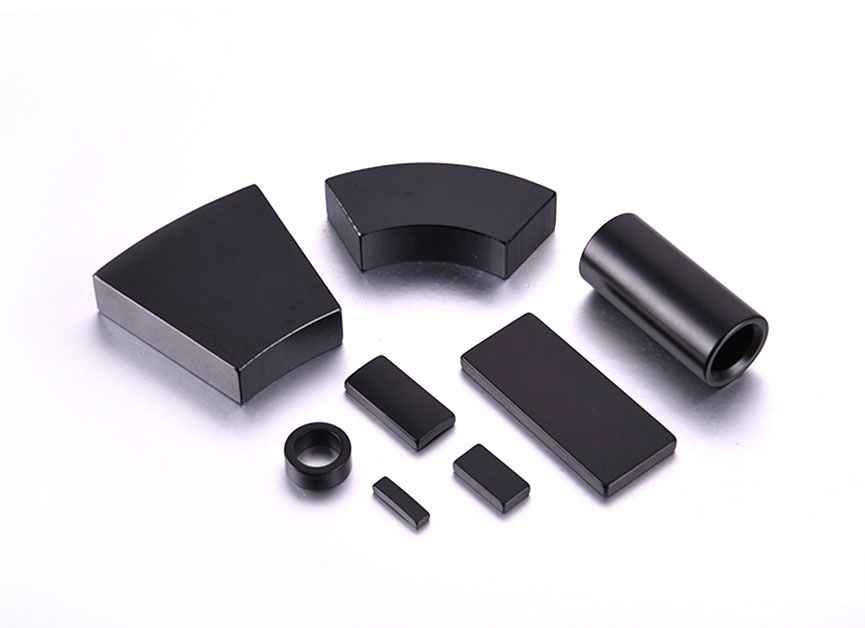
Click to visit our products:Sintered NdFeB Magnet
Why Are Magnets Essential in Speakers?
Magnets are the core energy-conversion element in every dynamic loudspeaker — without them, audio reproduction is impossible. The operating principle is based on Faraday's law of electromagnetic induction and the Lorentz force: when an alternating electrical current (the audio signal) flows through the voice coil suspended in a magnetic field, the coil experiences a force proportional to the current magnitude and direction. This force drives the attached cone back and forth, displacing air and creating audible sound pressure waves.
The global loudspeaker market was valued at approximately USD 12.5 billion in 2023 and is forecast to grow to over USD 20 billion by 2031. Across virtually every segment — from consumer earbuds to professional concert arrays — the magnet assembly remains the single most performance-defining component inside the driver. A stronger, more precisely engineered magnet means a higher flux density in the gap, lower distortion, better transient response, and higher efficiency.
How Do Magnets in Speakers Actually Work?
The magnet in a speaker creates a static magnetic field inside a narrow cylindrical gap, and the voice coil — carrying the amplified audio signal — moves linearly within that field to produce sound. The key components involved are:
- Permanent magnet: Generates a fixed, high-flux-density field concentrated in the voice coil gap. Typical flux density in the gap ranges from 0.8 Tesla (entry-level) to over 1.5 Tesla (high-performance drivers).
- Pole piece and top plate: Soft iron components that channel and concentrate the magnetic flux from the permanent magnet into the narrow gap where the voice coil sits.
- Voice coil: A lightweight coil of wire (typically aluminum or copper) wound around a former. When audio current passes through it, the interaction with the magnet field produces motion.
- Spider and surround: Flexible suspension elements that keep the voice coil centered and allow axial movement while resisting lateral displacement.
- Cone or diaphragm: Attached to the voice coil, it translates the mechanical movement into air pressure variations — the actual sound we hear.
The force on the voice coil is described by the equation F = BIL, where B is the magnetic flux density (Tesla), I is the current (Amperes), and L is the length of wire in the magnetic field (meters). Increasing B — achieved with stronger or larger magnets — directly increases the driving force for a given input power, which translates to higher sensitivity and lower distortion.
What Are the Main Types of Magnets Used in Speakers?
There are four primary types of magnets used in speakers, each with distinct magnetic properties, cost profiles, temperature behavior, and acoustic implications. Understanding these differences is critical for engineers, audiophiles, and buyers alike.
1. Ferrite (Ceramic) Magnets
Ferrite magnets are the most widely used type of magnet in speakers worldwide, found in the majority of mid-range and budget loudspeakers due to their low cost and good corrosion resistance. Made from iron oxide combined with strontium or barium carbonate, ferrite magnets offer a maximum energy product (BHmax) of approximately 3–5 MGOe (megagauss-oersteds).
- Energy product (BHmax): 3–5 MGOe
- Flux density: 0.2–0.4 Tesla (remanence)
- Temperature stability: Good up to 250°C
- Weight: Heavy — ferrite magnets must be large to achieve the same flux as rare-earth alternatives
- Cost: Very low — approximately USD 1–5 per kg for raw ferrite material
- Typical applications: Home theater subwoofers, budget bookshelf speakers, car audio woofers, PA system drivers
- Key limitation: Lower energy density requires large magnet assemblies; adds significant weight to the speaker basket
2. Alnico Magnets
Alnico magnets — an alloy of aluminum, nickel, and cobalt — were the original magnet material used in early loudspeakers and remain highly prized in guitar amplifier speakers and vintage-style audiophile drivers for their distinctive warm sonic character. Alnico has a BHmax of 5–10 MGOe and an exceptionally high remanence (Br) of 0.7–1.35 Tesla.
- Energy product (BHmax): 5–10 MGOe
- Remanence (Br): 0.7–1.35 Tesla
- Temperature stability: Excellent — stable up to 540°C, making it ideal for high-power guitar speakers
- Cost: High — USD 30–80 per kg due to cobalt content
- Typical applications: Guitar amp drivers, vintage audiophile speakers, instrument microphones
- Sonic reputation: Many engineers and musicians describe alnico-equipped speakers as having a softer, more musical "sag" that compresses naturally at high volumes — a characteristic preferred in blues and classic rock contexts
- Key limitation: Low coercivity — alnico can be partially demagnetized by strong external fields or mechanical shock
3. Neodymium (NdFeB) Magnets
Neodymium magnets are the most powerful permanent magnet material available and have revolutionized compact, lightweight speaker design — especially for professional audio, headphones, portable speakers, and tweeters. With a BHmax of 35–55 MGOe (up to 10 times stronger than ferrite), neodymium allows manufacturers to achieve high flux densities in very small, lightweight magnet assemblies.
- Energy product (BHmax): 35–55 MGOe
- Remanence (Br): 1.0–1.4 Tesla
- Temperature limit: Standard grades rated to 80°C; high-temperature grades (SH, UH, EH) rated to 150°C–200°C
- Cost: Medium-high — prices fluctuate with rare-earth supply chain; approximately USD 60–120 per kg
- Weight advantage: A neodymium magnet can be 6–10 times lighter than a ferrite magnet delivering equivalent flux
- Typical applications: In-ear monitors (IEMs), headphone drivers, professional line-array speakers, tweeters, portable Bluetooth speakers
- Key limitation: Susceptible to corrosion (requires coating); lower temperature tolerance in standard grades; brittle and prone to chipping
4. Samarium Cobalt (SmCo) Magnets
Samarium cobalt magnets offer a superior combination of high energy product and exceptional temperature stability, making them the preferred choice for professional speakers operating in extreme environments. With a BHmax of 16–32 MGOe and a maximum operating temperature of 300°C–350°C, SmCo outperforms neodymium in high-heat or corrosive conditions.
- Energy product (BHmax): 16–32 MGOe
- Temperature limit: Up to 350°C continuous
- Corrosion resistance: Excellent — does not require protective coating
- Cost: Very high — USD 100–250 per kg due to cobalt and samarium raw material costs
- Typical applications: Military-grade audio equipment, aerospace intercom systems, high-end measurement microphones, motorsport intercoms
- Key limitation: Very expensive and brittle; rarely justified for consumer audio applications
How Do the Four Speaker Magnet Types Compare?
The following table provides a side-by-side comparison of the four primary magnet types used in speakers across the most critical performance and practical dimensions.
| Magnet Type | BHmax (MGOe) | Max Temp (°C) | Weight | Cost | Corrosion Resistance | Primary Use |
| Ferrite | 3–5 | 250 | Heavy | Very Low | Excellent | Budget/Mid consumer |
| Alnico | 5–10 | 540 | Medium | High | Good | Guitar amps, vintage hi-fi |
| Neodymium | 35–55 | 80–200 | Very Light | Medium–High | Poor (needs coating) | Pro audio, headphones, portable |
| Samarium Cobalt | 16–32 | 350 | Light | Very High | Excellent | Aerospace, military, specialist |
Table 1: Side-by-side performance and cost comparison of the four main magnet types used in loudspeakers.
Why Does Magnet Size Matter in Speaker Performance?
A larger or stronger magnet increases the total magnetic flux available to drive the voice coil, which directly raises speaker sensitivity, improves control over cone movement, and reduces distortion at high output levels. Speaker sensitivity is measured in dB SPL per 1 watt at 1 meter (dB/W/m). A driver with a larger magnet assembly might achieve 92–96 dB/W/m, while an underpowered equivalent could measure as low as 84–86 dB/W/m — a difference of 6–10 dB that requires 4–10 times more amplifier power to overcome.
The concept of the BL product (B = flux density in the gap, L = voice coil wire length in the field) quantifies the motor strength of a speaker. A high BL value — achieved through stronger magnets and longer voice coil windings — produces tighter bass, faster transient response, and lower THD (total harmonic distortion). Professional subwoofers often specify BL values of 20–40 T·m, while entry-level drivers may have BL values below 10 T·m.
However, simply making a magnet larger does not automatically improve all aspects of sound quality. An oversized magnet with insufficient gap geometry can saturate the pole piece, creating flux non-linearities and distortion. Proper magnetic circuit design — including gap width, voice coil overhang, and underhung vs. overhung alignment — is as important as raw magnet mass.
Which Is Better in Speakers: Ferrite or Neodymium Magnets?
Neither ferrite nor neodymium is universally "better" — each excels in different use cases, and the optimal choice depends on the design priorities of the speaker. Here is a practical head-to-head analysis:
| Criterion | Ferrite Magnet | Neodymium Magnet |
| Weight for equivalent flux | 6–10x heavier | Very light |
| Material cost | Very low | Medium to high |
| Temperature stability | Excellent to 250°C | Standard: 80°C; High-grade: 200°C |
| Corrosion resistance | Excellent — no coating required | Poor — requires Ni or epoxy coating |
| High-power subwoofers | Preferred — heavy mass aids stability | Viable with proper heat management |
| Portable/lightweight speakers | Not ideal — too heavy | Excellent — enables compact design |
| Supply chain risk | Low — abundant material | Higher — rare-earth supply concentration |
Table 2: Head-to-head comparison of ferrite vs. neodymium magnets for use in loudspeaker applications.
How Do Magnets in Speakers Affect Sound Quality?
The magnet assembly directly affects sensitivity, bass control, distortion, and transient accuracy — four of the most perceptible dimensions of loudspeaker sound quality.
Sensitivity and Efficiency
A stronger magnetic circuit produces more mechanical force per watt of input power. This is why professional PA speakers rated at 100–105 dB/W/m can fill a stadium with a few hundred watts, while a poorly designed driver rated at 84 dB/W/m requires over 1,000 watts to match the same output. For home audio systems, every 3 dB increase in sensitivity halves the amplifier power required to reach a given loudness level.
Bass Control and Damping
A high BL product (strong magnet) increases the electromagnetic damping on the voice coil, which helps the cone stop moving precisely when the signal stops. This results in tighter, more defined bass reproduction. Speakers with weak magnet assemblies often sound "boomy" or "one-note" in the low frequencies because the cone continues to resonate after the signal has ended — a phenomenon known as ringing.
Distortion Reduction
Nonlinearity in the magnetic field within the gap is one of the primary sources of THD (total harmonic distortion) in loudspeakers. When the voice coil moves outside the region of uniform flux (common in high-excursion drivers with small magnets), distortion rises sharply. Well-designed magnets maintain consistent flux density across the full voice coil excursion range, keeping THD below 0.5–1% at rated power.
Transient Response
Musical transients — the sharp attack of a snare drum, the pluck of a guitar string, the click of a piano key — require the cone to accelerate and decelerate extremely rapidly. A powerful, linear magnet motor gives the voice coil the force authority needed to track these fast signal changes accurately, resulting in speakers that sound "fast," "detailed," and "articulate" in audiophile terms.
Frequently Asked Questions About Magnets in Speakers
Q: Does a bigger magnet always mean better sound?
Not necessarily — a larger magnet improves performance only when the entire magnetic circuit is properly designed to use the additional flux effectively. A very large magnet paired with a poorly engineered pole piece or an oversized gap can produce worse results than a smaller, well-optimized assembly. That said, in otherwise equivalent designs, a larger ferrite magnet or a higher-grade neodymium magnet generally delivers measurably higher sensitivity and lower distortion.
Q: Can magnets in speakers demagnetize over time?
Modern ferrite and neodymium speaker magnets are extremely resistant to demagnetization under normal operating conditions and will retain over 99% of their original flux for decades. Alnico magnets are the exception — their low coercivity makes them vulnerable to partial demagnetization from mechanical shock or exposure to a strong external magnetic field. Operating a speaker at extremely high temperatures above the magnet's rated maximum is the most realistic cause of flux loss in real-world use.
Q: Are neodymium speaker magnets better than ferrite for audiophile use?
Neodymium magnets enable more compact and lightweight driver designs with equivalent or superior flux density, but audible sound quality differences between neodymium and ferrite drivers in well-engineered designs are minimal when properly equalized and measured. The perception that neodymium sounds "brighter" or "harder" is more often a function of the overall driver design (cone material, suspension, crossover) than the magnet type itself. For audiophile applications, the implementation quality matters far more than the magnet material alone.
Q: Why do some subwoofers have very large magnets?
Large subwoofer magnets are needed to generate the enormous driving force required to move a heavy, large-diameter cone at low frequencies with sufficient excursion and low distortion. A 15-inch (38 cm) subwoofer cone may weigh 80–150 grams and need to travel 20–30 mm peak-to-peak at high power levels. Achieving this with low distortion requires a very high BL product, which in ferrite designs means a correspondingly large and heavy magnet — some professional subwoofer magnets weigh 3–8 kg.
Q: Do speaker magnets interfere with other electronics?
Unshielded speaker magnets can interfere with nearby CRT displays, magnetic storage media, and sensitive compasses, but the stray field from modern shielded speaker designs is negligible at distances beyond 10–15 cm. Most modern speakers intended for desktop or home theater use are magnetically shielded by adding a second, opposing "bucking" magnet or a mu-metal enclosure around the main magnet assembly. Flat-panel displays and solid-state storage devices (SSDs, flash memory) are not affected by speaker magnets.
Q: What happens if a speaker magnet loses strength?
A weakened magnet reduces the BL product of the driver, resulting in lower sensitivity, reduced bass control, increased distortion, and a shift in resonant frequency. In practical terms, the speaker will sound quieter, less controlled in the low frequencies, and may exhibit audible "looseness" or "muddiness." In professional installations, periodic measurement of driver Thiele-Small parameters (particularly Bl) can detect magnet degradation before it causes audible problems. For consumer speakers in typical use, this scenario is extremely rare.
Summary: What to Know About Magnets in Speakers
Magnets in speakers are far more than passive components — they are the motor at the heart of every dynamic loudspeaker, determining how efficiently, accurately, and powerfully the driver converts electricity into sound. The choice between ferrite, alnico, neodymium, and samarium cobalt magnets reflects a deliberate engineering trade-off between cost, weight, thermal performance, and acoustic priorities.
- Use ferrite magnets for cost-effective, thermally stable, corrosion-proof speaker designs where weight is not a constraint.
- Use alnico magnets where vintage tonal character and extreme temperature stability are priorities — especially in guitar amplification.
- Use neodymium magnets where compact size, light weight, and high power density are essential — professional, portable, and headphone applications.
- Use samarium cobalt magnets in extreme-environment specialist applications where no other magnet meets both the thermal and corrosion requirements.
Whether you are a speaker designer, an audio engineer specifying components, or a consumer evaluating product quality, understanding the role and type of magnets in speakers gives you a concrete, measurable basis for comparing performance — beyond subjective listening impressions alone.