EN
EN English
 中文简体
中文简体 русский
 Deutsch
 日本語
日本語 한국어
한국어

A motor magnet is a permanent magnet or electromagnet embedded in an electric motor that generates the magnetic field necessary to produce rotational force (torque). Without a motor magnet, there is no magnetic flux, no interaction with the current-carrying conductors, and therefore no mechanical motion. The type, grade, shape, and placement of the motor magnet directly determine how powerful, efficient, compact, and thermally stable a motor will be in any given application.
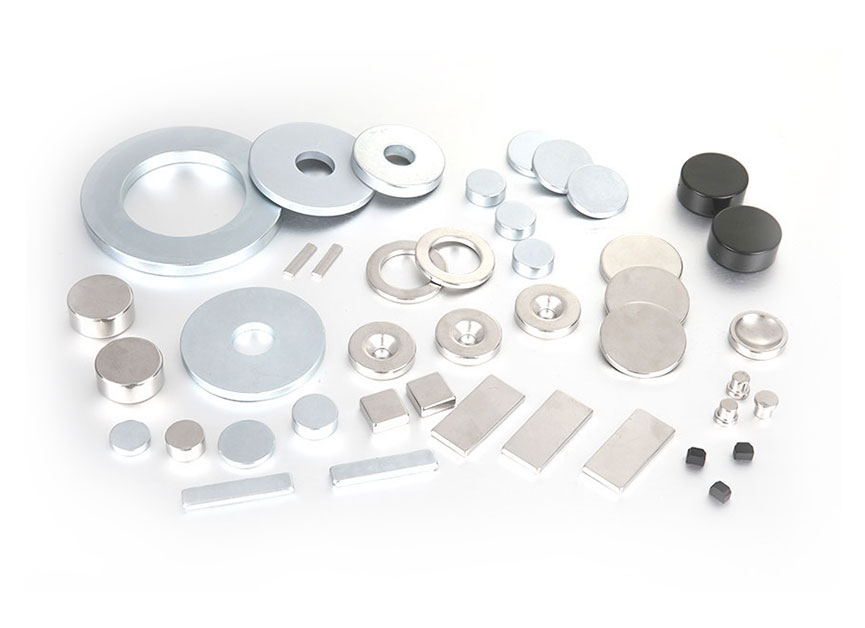
Click to visit our products:Sintered NdFeB Magnet
Motor magnets are used across virtually every industry — from sub-gram micro motors in hearing aids to multi-megawatt permanent magnet generators in offshore wind turbines. According to industry data, the global permanent magnet motor market was valued at over $42 billion in 2023 and is projected to exceed $72 billion by 2030, driven largely by electrification in automotive, industrial automation, and clean energy sectors. Understanding what a motor magnet is, which types exist, and how to select the right one is critical for engineers, product designers, and procurement professionals alike.
How Does a Motor Magnet Work Inside an Electric Motor?
A motor magnet works by creating a stationary or rotating magnetic field that interacts with current-flowing conductors in the motor winding, producing a force — described by the Lorentz force law — that drives the motor's rotor to spin.
The fundamental operating principle of every permanent magnet motor rests on two physical laws:
- Ampere's Law: Current flowing through a conductor generates a surrounding magnetic field.
- Lorentz Force Law: A current-carrying conductor placed within a magnetic field experiences a mechanical force perpendicular to both the current direction and the field direction.
In a permanent magnet DC motor (PMDC), for example, the motor magnets are fixed to the stator (outer shell), creating a static magnetic field. When current flows through the rotor windings, the interaction between the stator field and the rotor's electromagnetic field produces torque, causing the rotor to turn. The commutator and brushes (or, in brushless designs, the electronic controller) continuously switch current direction to maintain unidirectional rotation.
In a brushless permanent magnet motor (BLDC/PMSM), the permanent magnets are mounted on the rotor instead. The stator windings are electronically commutated to create a rotating magnetic field that the rotor's permanent magnets chase, producing smooth, highly efficient rotation with minimal wear.
What Types of Motor Magnets Are Used in Electric Motors?
The four main types of motor magnets are neodymium iron boron (NdFeB), samarium cobalt (SmCo), alnico, and ferrite (ceramic) magnets — each with distinct magnetic strength, temperature tolerance, cost, and corrosion resistance profiles.
1. Neodymium Iron Boron (NdFeB) Motor Magnets
NdFeB magnets are the strongest permanent magnets commercially available and are the dominant choice in modern high-performance motor applications including EV traction motors, servo motors, and industrial BLDC motors.
NdFeB motor magnets offer energy products (BHmax) ranging from 35 MGOe to over 55 MGOe in sintered form — roughly 5 to 15 times the magnetic energy of ferrite magnets. This extraordinary field density enables motors to be significantly smaller and lighter for the same torque output. The trade-off is relatively poor corrosion resistance (requiring surface coatings such as nickel, zinc, or epoxy) and a maximum operating temperature typically between 80°C and 220°C depending on the grade (standard N-grade to AH-grade).
2. Samarium Cobalt (SmCo) Motor Magnets
SmCo motor magnets are the preferred choice for high-temperature and corrosive-environment applications, offering excellent magnetic stability from cryogenic temperatures up to 350°C with no surface coating required.
SmCo magnets achieve BHmax values of 16 to 32 MGOe, somewhat lower than top-grade NdFeB but with far superior thermal stability and inherent corrosion resistance. They are widely used in aerospace actuators, downhole oil and gas motors, and military-grade applications where thermal extremes make NdFeB unsuitable. The main limitation is cost — SmCo magnets typically cost 3 to 5 times more per kilogram than equivalent NdFeB grades.
3. Alnico Motor Magnets
Alnico motor magnets — composed of aluminum, nickel, and cobalt — were the dominant motor magnet type before rare-earth magnets emerged in the 1970s and are still used in applications requiring very high temperature resistance combined with excellent corrosion resistance.
Alnico magnets can operate continuously above 450°C — far exceeding any rare-earth or ferrite alternative. However, their energy product is low (1–10 MGOe) and their coercivity is extremely poor, meaning they demagnetize easily from opposing magnetic fields or physical shock. Modern applications are niche: guitar pickups, certain sensors, high-temperature meters, and legacy motor replacements.
4. Ferrite (Ceramic) Motor Magnets
Ferrite motor magnets are the most widely produced magnet type in the world by volume, dominating cost-sensitive mass-market applications such as household appliance motors, automotive auxiliary motors, and small power tools.
Ferrite magnets offer modest energy products of 1 to 5 MGOe but are extremely inexpensive (often under $1 per piece), inherently corrosion-resistant, and capable of operating up to 250°C. Their low cost and good coercivity (resistance to demagnetization) make them ideal for high-volume, price-competitive motor segments where maximum power density is not the primary design driver.
Motor Magnet Types: Performance Comparison
Selecting the right motor magnet material requires balancing magnetic strength, operating temperature, corrosion resistance, and cost. The table below summarizes the key performance parameters of the four main motor magnet types.
| Magnet Type | BHmax (MGOe) | Max Operating Temp. | Corrosion Resistance | Relative Cost | Typical Motor Applications |
| NdFeB | 35 - 55+ | 80 - 220 deg C | Poor (needs coating) | Medium | EV motors, servo, BLDC, drones |
| SmCo | 16 - 32 | Up to 350 deg C | Excellent | High | Aerospace, military, oil and gas |
| Alnico | 1 - 10 | Up to 450 deg C+ | Very Good | Medium | High-temp sensors, legacy motors |
| Ferrite | 1 - 5 | Up to 250 deg C | Excellent | Very Low | Appliances, toys, auto auxiliaries |
Which Motor Magnet Shape Is Right for Your Application?
The shape of a motor magnet is not merely a geometric detail — it directly controls how magnetic flux is concentrated, distributed, and coupled to the motor's air gap, affecting torque density, cogging torque, and back-EMF waveform.
The most common motor magnet shapes include:
Arc Segment (Tile) Magnets
Arc segment motor magnets are the most widely used shape in cylindrical brushed and brushless motors, conforming to the curved inner surface of the stator to maximize the air gap flux density and minimize flux leakage.
These curved magnets are bonded or press-fit around the rotor or inside the stator bore. The arc geometry ensures a consistent, narrow air gap (typically 0.5 mm to 2 mm in precision motors), which is directly related to torque output — a 10% reduction in air gap can increase torque density by approximately 15–20% in comparable motors.
Block and Bar Magnets
Rectangular block or bar motor magnets are used in linear motors, voice coil actuators, and flat-pack motor configurations where a planar rather than cylindrical field geometry is required.
Block magnets are also common in axial flux motor designs, where multiple flat magnets are arranged in a Halbach array pattern on a disc-shaped rotor to concentrate flux on one side and cancel it on the other — improving usable flux density by up to 40% compared to a simple alternating pole arrangement of the same magnet mass.
Ring and Disc Magnets
Ring and disc motor magnets are used in small axial-field motors, stepper motors, and sensors, where a centrally magnetized disc provides a simple, compact magnetic circuit with minimal assembly steps.
Multi-pole ring magnets — a single ring magnetized with alternating north and south poles around its circumference — are particularly valuable in miniature BLDC motors (camera autofocus, medical pumps, drone pitch control) because they eliminate the need for multiple individual magnet pieces, reducing assembly cost and improving balance.
Halbach Array Configurations
A Halbach array is a spatial arrangement of motor magnets with progressively rotated magnetization directions that concentrates the magnetic field on one side of the array while nearly eliminating it on the other — enabling lighter, more flux-efficient motor designs.
Halbach arrays are increasingly used in high-efficiency EV motors and maglev systems. The one-sided flux concentration allows rotor back-iron (the structural steel that normally completes the magnetic circuit) to be removed or thinned, reducing rotor mass by up to 30% and improving power-to-weight ratio significantly.
How Motor Magnet Placement Affects Motor Design
The placement of motor magnets — whether surface-mounted, interior-embedded, or spoke-arranged on the rotor — has a fundamental impact on the motor's torque characteristics, speed range, and suitability for different drive cycles.
Surface-Mounted Permanent Magnet (SPM) Motors
In SPM motors, magnets are bonded or retained on the outer surface of the rotor, providing simple construction, low cogging torque, and excellent high-speed performance — making them ideal for constant-speed and high-speed applications.
Because the magnets are exposed on the rotor surface, high centrifugal forces at elevated speeds (above 10,000 RPM in many designs) require a carbon fiber or stainless steel retention sleeve to prevent magnet detachment. SPM motors exhibit relatively low saliency (Ld ≈ Lq), meaning reluctance torque contribution is minimal, and torque production relies almost entirely on the permanent magnet flux interaction.
Interior Permanent Magnet (IPM) Motors
IPM motors embed the motor magnets inside the rotor laminations, enabling both permanent magnet torque and reluctance torque to contribute to output — producing higher torque density and a wider constant-power speed range (field weakening range) than SPM designs.
IPM motors are the dominant architecture in modern electric vehicle traction motors because their buried magnet configuration provides inherent protection against centrifugal forces, allows aggressive field weakening for high-speed highway driving, and can achieve efficiencies above 96% at peak operating points. The V-shaped and delta-shaped magnet pocket configurations common in IPM rotors are specifically designed to maximize reluctance torque contribution.
What Key Parameters Define Motor Magnet Quality?
The four most critical parameters that define motor magnet quality are remanence (Br), coercivity (Hc), energy product (BHmax), and maximum operating temperature (Tmax) — together these determine how strong, demagnetization-resistant, thermally stable, and size-efficient the magnet will be in service.
| Parameter | Symbol | Unit | What It Measures | Why It Matters for Motors |
| Remanence | Br | Tesla (T) | Residual flux density after full magnetization | Higher Br = stronger air gap field = more torque per unit volume |
| Coercivity | Hc | kA/m | Resistance to demagnetization | High Hc resists demagnetization from opposing fields or heat |
| Energy Product | BHmax | MGOe or kJ/m3 | Overall magnetic energy stored per unit volume | Determines how small/light a magnet can be for a given motor output |
| Max Operating Temp. | Tmax | deg C | Temperature limit before irreversible flux loss | Determines suitability for high-load, thermally demanding motors |
| Temp. Coefficient of Br | alpha Br | %/deg C | Rate of flux loss per degree of temperature rise | Lower coefficient means more thermally stable torque output |
Where Are Motor Magnets Used? Key Application Sectors
Motor magnets are found in virtually every electromechanical system in modern industry — from milligram-scale medical micro-actuators to megawatt-scale wind turbine generators. Understanding the application requirements of each sector clarifies why different magnet types dominate in different markets.
Electric Vehicles (EV) and Hybrid Vehicles
High-grade sintered NdFeB motor magnets (typically N45H to N52H grades with dysprosium addition for high-coercivity at elevated temperatures) dominate EV traction motor applications due to their unmatched power density requirements.
A typical mid-size passenger EV traction motor contains 1 to 3 kg of NdFeB magnets. As global EV production is projected to reach 40+ million units annually by 2030, the demand for high-performance NdFeB motor magnets is expected to grow at a compound annual rate exceeding 14% through the decade.
Industrial Automation and Servo Motors
Precision servo motors used in CNC machining, robotics, and automated manufacturing lines rely on high-grade NdFeB or SmCo motor magnets for their combination of high torque density, precise position control, and thermal stability under continuous duty cycles.
In robotic joint actuators, where the motor must fit inside the joint envelope while delivering peak torques of 10–200 Nm, the energy product of the motor magnet is often the primary limiting factor on motor miniaturization. SmCo is preferred in servo applications above 150°C where consistent torque output across wide temperature swings is critical to positioning accuracy.
Consumer Electronics and Home Appliances
Ferrite motor magnets overwhelmingly dominate consumer appliance motors — including washing machine drum motors, refrigerator compressor motors, vacuum cleaner motors, and blender motors — due to their low cost and adequate performance for these duty cycles.
In miniature consumer applications like smartphone vibration motors, camera optical image stabilization (OIS) actuators, and laptop cooling fans, bonded NdFeB magnets (injection-molded or compression-molded) are preferred because they can be formed into complex shapes impossible to achieve with sintered magnets, enabling very compact motor geometries.
Wind Energy and Power Generation
Large direct-drive wind turbine generators use multi-ton quantities of NdFeB motor magnets per unit, and this sector is one of the fastest-growing demand drivers for high-performance motor magnets globally.
A single 5 MW direct-drive offshore wind turbine generator may contain 2,000 to 4,000 kg of NdFeB permanent magnets. The elimination of a gearbox in direct-drive designs — enabled by the high torque density of permanent magnet generators — reduces maintenance requirements significantly, a critical consideration for offshore installations where access is costly and difficult.
How to Select the Right Motor Magnet for Your Application
Selecting the correct motor magnet requires evaluating five key criteria: required magnetic energy product, maximum operating temperature, environmental exposure, physical size constraints, and unit cost targets.
- Step 1 — Define the operating temperature range: If the motor will reach above 150°C in normal operation, standard N-grade NdFeB is disqualified. Choose SH, UH, or EH grades with enhanced dysprosium content, or switch to SmCo for temperatures above 200°C.
- Step 2 — Determine the required BHmax: Calculate the required air gap flux density from your torque and motor geometry targets. Use this to work backward to the minimum BHmax required. If ferrite achieves the target, use ferrite — there is no reason to pay for rare-earth performance you do not need.
- Step 3 — Assess the environment: Humid, saline, or chemically aggressive environments favor ferrite or SmCo for their intrinsic corrosion resistance. If NdFeB is necessary, specify the appropriate protective coating (nickel, epoxy, parylene) for the exposure level.
- Step 4 — Evaluate magnet shape feasibility: Complex curves and thin-wall geometries are achievable in sintered NdFeB but may require tight machining tolerances and add cost. Bonded NdFeB or injection-molded ferrite are better choices for intricate geometries at high volumes.
- Step 5 — Consider supply chain risk: NdFeB and SmCo contain rare-earth elements (primarily sourced from a geographically concentrated supply chain). For cost-sensitive or supply-chain-sensitive designs, evaluating ferrite-based alternatives — even at some motor efficiency penalty — may be strategically justified.
Frequently Asked Questions About Motor Magnets
Can a motor magnet lose its magnetism over time?
Yes, but with well-designed motors using modern high-coercivity magnets, the rate of demagnetization is extremely low under normal operating conditions. NdFeB magnets experience a typical irreversible flux loss of less than 1% over 10 years at rated temperature. The primary causes of significant demagnetization are sustained exposure to temperatures above the magnet's rated maximum, strong opposing magnetic fields (as in short-circuit fault conditions), and physical shock or vibration that disrupts domain alignment in low-coercivity materials like alnico.
What is the difference between a sintered and a bonded motor magnet?
Sintered motor magnets are produced by compacting and heat-sintering magnetic powder under high pressure, resulting in a dense, fully crystallized material with maximum magnetic properties — but limited shape complexity and brittleness. Bonded motor magnets mix magnetic powder with a polymer binder and are injection-molded or compression-molded into near-net-shape geometries with tighter dimensional tolerances and better mechanical toughness. Bonded NdFeB has roughly 50–70% of the energy product of sintered NdFeB but offers far greater design flexibility and is preferred in miniature, complex-geometry motor applications.
Why do some motor magnets contain dysprosium?
Dysprosium (Dy) is added to NdFeB motor magnets to increase coercivity — the resistance to demagnetization at elevated temperatures. As temperature rises, the coercive field of NdFeB decreases; without dysprosium addition, standard grades would suffer irreversible partial demagnetization in thermally demanding motor environments. Dysprosium additions of 2–10 wt% in high-temperature NdFeB grades (SH, UH, EH) allow these magnets to maintain adequate coercivity up to 200–220°C, enabling use in EV traction motors, servo drives, and other demanding applications.
What coating should be used on NdFeB motor magnets?
The most common coating for NdFeB motor magnets is nickel-copper-nickel (Ni-Cu-Ni), which provides excellent adhesion, reasonable corrosion resistance, and a hard wear-resistant surface. For applications with higher moisture or chemical exposure, epoxy resin coating provides a thicker, more impermeable barrier but with lower mechanical hardness. Zinc coatings offer cost efficiency for indoor applications with moderate humidity. For the most demanding marine or chemical environments, parylene (vapor-deposited conformal coating) provides the best corrosion barrier but at the highest cost per piece.
How many poles should a motor magnet arrangement have?
The optimal number of poles in a motor magnet arrangement depends on the target speed, torque density, and efficiency requirements. More poles at the same speed increase the electrical frequency, which increases iron losses in the stator but allows shorter end-turn lengths (reducing copper losses and motor axial length). Low-speed, high-torque direct-drive motors (such as wind generators or hub motors) typically use 20–100+ poles to generate the required torque at low RPM without a gearbox. High-speed motors (20,000+ RPM) typically use fewer poles (4–8) to keep electrical frequency within manageable limits for the switching electronics.
Are motor magnets recyclable?
Yes, NdFeB motor magnets are recyclable, and rare-earth recovery from end-of-life motors is an active area of industrial development. Hydrometallurgical, pyrometallurgical, and direct recycling processes can recover 90%+ of the rare-earth content from NdFeB scrap. However, as of 2024, less than 5% of rare-earth elements in end-of-life motors are actually recycled globally — primarily due to the complexity of disassembling bonded or encapsulated motor magnets at industrial scale. Regulatory pressure in Europe and North America is accelerating investment in motor magnet recycling infrastructure as part of the critical materials supply security agenda.
Conclusion: The Motor Magnet Is the Heart of Every Permanent Magnet Motor
The motor magnet is far more than a passive component — it is the primary energy-conversion element that defines the power density, efficiency, thermal limits, and service life of any permanent magnet electric motor. Choosing the right motor magnet material, grade, shape, and configuration is one of the most consequential engineering decisions in motor design.
For most modern high-performance applications — EV traction, servo robotics, wind generation, and precision medical devices — sintered NdFeB motor magnets at appropriate temperature grades remain the benchmark choice, delivering unmatched energy product in a compact, increasingly cost-competitive package. For thermally extreme or corrosive environments, SmCo provides unrivaled stability. For cost-sensitive, high-volume mass-market motors, ferrite continues to dominate by volume.
As electrification accelerates across transportation, industry, and energy generation, the strategic and technical importance of the motor magnet will only grow. Engineers who deeply understand motor magnet selection — from remanence and coercivity to coating chemistry and Halbach array geometry — will be best positioned to design the next generation of efficient, reliable, and compact electric motors.