EN
EN English
 中文简体
中文简体 русский
 Deutsch
 日本語
日本語 한국어
한국어

Speaker magnets are the core energy-conversion components that transform electrical signals into physical sound waves. Without a magnet, a speaker driver cannot move air, and no sound is produced. The type, size, and material of the magnet directly determine a speaker's efficiency, frequency response, distortion levels, and thermal stability. Whether you are an audio engineer specifying drivers for a professional loudspeaker cabinet, a consumer evaluating headphones, or a product designer selecting components for a portable Bluetooth device, understanding speaker magnets is fundamental to achieving the acoustic performance you need.
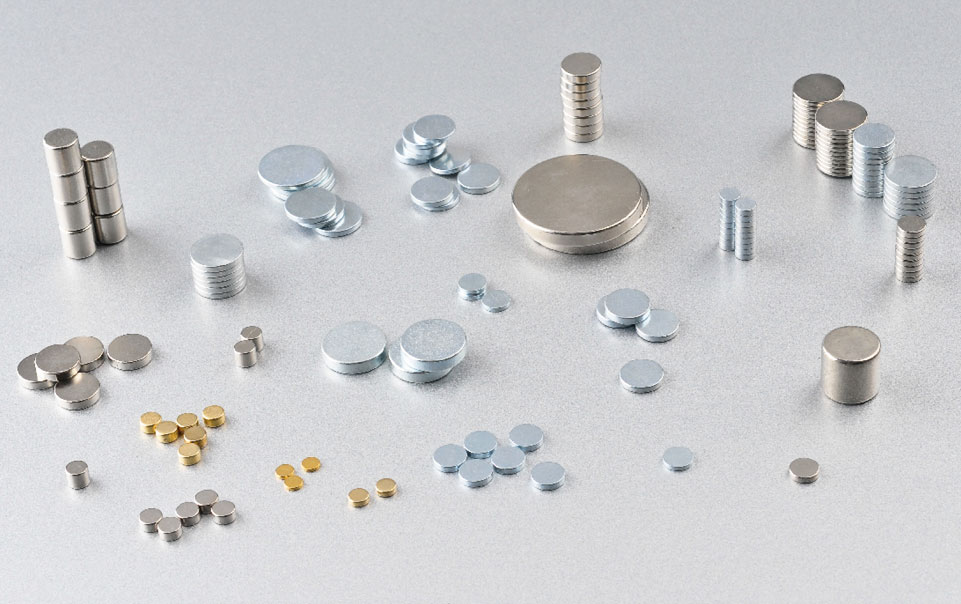
Click to visit our products:Sintered NdFeB Magnet
1. How Speaker Magnets Work
Speaker magnets work by creating a static magnetic field in which a voice coil carrying an alternating audio current generates a fluctuating force, driving the cone or diaphragm to reproduce sound. This operating principle — known as the electrodynamic or moving-coil principle — was first commercialized in 1925 and remains the dominant speaker technology today.
The fundamental sequence of events in every dynamic speaker is:
- An audio amplifier delivers an alternating electrical signal to the voice coil, a cylindrical coil of wire wound around a former.
- The voice coil sits inside a narrow gap in the magnetic circuit, precisely positioned in the region of highest magnetic flux density (measured in Tesla or Gauss).
- According to Fleming's left-hand rule, the interaction between the current in the coil and the magnetic field produces a force along the speaker's axis — the Lorentz force.
- As the audio signal alternates in polarity and amplitude, the coil and attached cone move back and forth, compressing and rarefying the surrounding air to produce sound pressure waves.
The permanent magnet's role is to maintain a strong, stable, and uniform field in the voice coil gap. A stronger field means more force per unit current, which translates directly to higher sensitivity (measured in dB SPL per 1 watt at 1 meter). A typical high-quality neodymium speaker magnet system achieves a gap flux density of 1.2 to 2.0 Tesla, compared to 0.8–1.2 Tesla for a conventional ferrite system of similar physical size.
2. What Types of Speaker Magnets Are Available?
There are four primary speaker magnet materials in commercial use: ferrite (ceramic), neodymium (NdFeB), alnico, and samarium cobalt (SmCo). Each has distinct magnetic, thermal, and economic properties that make it suitable for different speaker designs and market segments.
2.1 Ferrite (Ceramic) Speaker Magnets
Ferrite magnets are the most widely used speaker magnet type globally, accounting for an estimated 60–65% of all speaker drivers produced by volume. Made from strontium or barium ferrite, these magnets are brittle, heavy, and produce moderate flux density (0.35–0.43 Tesla remanence), but their extremely low cost — typically less than one-fifth the price of equivalent neodymium magnets — makes them the default choice for home audio, automotive, and consumer electronics speakers where weight is not a critical constraint.
- Remanence (Br): 0.35–0.43 T
- Coercivity (Hcj): 150–280 kA/m
- Maximum operating temperature: 250 °C
- Relative cost index: 1x (baseline)
- Corrosion resistance: Excellent (no coating required)
2.2 Neodymium (NdFeB) Speaker Magnets
Neodymium speaker magnets deliver the highest energy density of any permanent magnet material, enabling dramatically smaller and lighter speaker designs at equivalent or superior acoustic output. An NdFeB magnet can produce the same voice coil gap flux as a ferrite magnet at roughly one-fifth the weight and one-third the volume. This property has made neodymium the dominant choice for professional audio drivers, headphones, earphones, portable speakers, and any application where weight or size is constrained.
- Remanence (Br): 1.0–1.45 T (depending on grade)
- Coercivity (Hcj): 875–2,400 kA/m
- Maximum operating temperature: 80–200 °C (depending on grade; standard N35 to N52, and high-temp grades SH, UH, EH, AH)
- Relative cost index: 5–10x ferrite
- Corrosion resistance: Poor without coating; typically Ni-Cu-Ni or epoxy coated
A critical limitation of neodymium speaker magnets is temperature sensitivity: their coercivity drops significantly above 80 °C, and sustained high-power operation can cause irreversible demagnetization in standard grades. High-temperature neodymium grades (SH, UH, EH) incorporate dysprosium or terbium additions to extend thermal stability to 150–200 °C, but at additional cost.
2.3 Alnico Speaker Magnets
Alnico (aluminum-nickel-cobalt) speaker magnets are prized in the audio community for their distinctive sonic character, particularly in guitar speakers and vintage hi-fi drivers, though they have largely been displaced by ferrite and neodymium in modern production. Alnico magnets have a relatively low coercivity, meaning they can be partially demagnetized by strong external fields or by the speaker's own voice coil field during high-power operation — a phenomenon known as "flux modulation." Many audiophiles argue this characteristic contributes to a warm, compressed sound quality that is musically pleasing, particularly in guitar amplifier applications.
- Remanence (Br): 0.7–1.35 T
- Coercivity (Hcj): 50–160 kA/m (very low)
- Maximum operating temperature: 450–540 °C
- Relative cost index: 3–6x ferrite
- Corrosion resistance: Excellent
2.4 Samarium Cobalt (SmCo) Speaker Magnets
Samarium cobalt speaker magnets offer the best combination of high magnetic energy, temperature stability, and corrosion resistance of any magnet type, but at a cost premium that restricts their use to specialized professional and military audio applications. SmCo magnets maintain their magnetic properties up to 300–350 °C and are intrinsically corrosion-resistant without surface coatings, making them the choice for speakers used in extreme environments such as marine acoustic systems, aerospace intercom drivers, and high-power professional monitors operating in hot stage conditions.
- Remanence (Br): 0.85–1.15 T
- Coercivity (Hcj): 1,200–3,200 kA/m
- Maximum operating temperature: 300–350 °C
- Relative cost index: 15–25x ferrite
- Corrosion resistance: Excellent (no coating required)
3. Which Speaker Magnet Material Performs Best?
No single speaker magnet material is universally best — performance leadership depends on the specific criteria being prioritized. Neodymium leads on energy density and weight efficiency; ferrite leads on cost and thermal reliability; alnico leads on vintage sonic character; samarium cobalt leads on extreme-environment durability. The table below provides a side-by-side comparison of all four materials across the parameters most relevant to speaker design.
| Property | Ferrite | Neodymium (NdFeB) | Alnico | Samarium Cobalt |
| Energy Density (MGOe) | 3–4.5 | 33–52 | 5–10 | 16–32 |
| Max. Operating Temp. | 250 °C | 80–200 °C | 450–540 °C | 300–350 °C |
| Weight (relative) | High | Very Low | Moderate | Low |
| Corrosion Resistance | Excellent | Poor (coating needed) | Good | Excellent |
| Relative Cost | 1x (lowest) | 5–10x | 3–6x | 15–25x |
| Typical Speaker Use | Home audio, automotive, PA | Headphones, pro audio, portable | Guitar amps, vintage hi-fi | Aerospace, marine, military |
| Sonic Character | Neutral, controlled | Fast, detailed, extended highs | Warm, compressed, musical | Neutral, stable, accurate |
Table 1: Side-by-side comparison of the four principal speaker magnet materials across energy density, thermal performance, corrosion resistance, cost, and typical audio application.
4. Why Magnet Size and Strength Matter for Audio Quality
A stronger speaker magnet directly raises sensitivity, lowers distortion at high power, and improves bass transient control — all measurable, audible improvements in speaker performance. The relationship between magnet performance and acoustic output is governed by the Bl product (the product of magnetic flux density B in Tesla and the length of voice coil wire l in the magnetic field, in meters). A higher Bl means more force per ampere, which translates into:
- Higher sensitivity: A speaker with Bl = 12 T·m will produce approximately 3 dB more output than one with Bl = 6 T·m at the same input power, all other things equal. In practical terms, 3 dB means the same perceived loudness with half the amplifier power.
- Lower harmonic distortion: A stronger magnet keeps the voice coil more firmly controlled within the linear portion of its travel, reducing the nonlinear excursion that generates harmonic distortion. Professional woofers targeting THD below 0.5% at rated power typically require Bl values of 15–22 T·m.
- Better transient response: The magnet's electromagnetic damping (measured by the Q factor, specifically Qes) controls how quickly the cone stops moving after a transient impulse. Higher Bl reduces Qes, which tightens the bass and improves the reproduction of percussive, fast-attack sounds.
- Improved power handling: A stronger magnet field allows more current to flow through the voice coil before flux saturation occurs, increasing the speaker's thermal and mechanical power limits.
4.1 The Magnetic Circuit and Gap Design
The magnet alone does not determine gap flux density — the design of the entire magnetic circuit (pole plate, top plate, and gap geometry) is equally important. Speaker manufacturers use finite element analysis (FEA) magnetic simulation software to optimize the circuit geometry, ensuring maximum flux is channeled into the voice coil gap with minimal leakage into surrounding structures. A well-designed ferrite magnetic circuit can outperform a poorly designed neodymium system, underlining the importance of total system design over magnet material selection alone.
Vented pole pieces (a central hole through the pole piece and magnet) are used in modern high-power drivers to reduce air compression behind the voice coil and to lower the thermal resistance of the magnetic assembly. This design feature, combined with copper shorting rings (Faraday rings) positioned in the gap, further reduces inductance nonlinearity and intermodulation distortion in the upper midrange and treble frequencies.
5. How Speaker Magnets Are Used Across Different Applications
Speaker magnet selection varies significantly by application category, driven by the differing priorities of weight, cost, power, and environmental conditions in each market segment.
5.1 Consumer Home Audio Speakers
Ferrite magnets dominate home audio woofers, midrange drivers, and most bookshelf and floorstanding speaker designs. A typical 6.5-inch (165 mm) home audio woofer uses a ferrite magnet weighing 450–800 grams. The magnet weight is not a concern in a stationary floor cabinet, and ferrite's cost advantage is significant at production volumes of hundreds of thousands of units per year.
5.2 Professional and Studio Monitor Speakers
Professional studio monitors and PA system drivers increasingly use neodymium speaker magnets, particularly in tweeters and high-power midrange compression drivers. A neodymium-equipped 15-inch professional woofer can weigh as little as 6 kg compared to 11–13 kg for an equivalent ferrite model — a weight reduction that matters enormously for touring engineers loading equipment trucks and rigging line arrays.
5.3 Headphones and In-Ear Monitors
Virtually all modern dynamic headphone drivers use neodymium speaker magnets. The miniaturized voice coil gap geometry in a 40 mm headphone driver requires the highest possible flux density to achieve adequate sensitivity (typically 95–110 dB SPL/mW). The total neodymium magnet used in a premium headphone driver weighs just 2–5 grams, yet generates a gap flux density of 1.5 T or higher.
Balanced armature transducers — used in in-ear monitors and hearing aids — also rely on precision neodymium magnets but in a fundamentally different operating geometry where the armature flexes within the magnetic field rather than a coil translating linearly.
5.4 Automotive Speakers
Automotive speakers historically used ferrite magnets almost exclusively, but the transition to electric vehicles has increased the adoption of neodymium speaker magnets in premium OEM audio systems. Weight reduction is a measurable contributor to electric vehicle range, and replacing ferrite door speakers with neodymium equivalents in a full 12-speaker vehicle system can reduce total audio system weight by 3–5 kg — a small but quantifiable contribution to efficiency.
5.5 Portable and Wireless Speakers
Portable Bluetooth speakers and soundbars uniformly rely on neodymium speaker magnets. The acoustic challenge in these devices is achieving meaningful bass extension and output from drivers with diameters of 40–90 mm in a cabinet volume measured in tens of cubic centimeters. Only neodymium's exceptional energy density makes it possible to achieve the Bl products necessary for usable sensitivity in such constrained physical formats.
5.6 Guitar Amplifier Speakers
Guitar speakers represent one of the few remaining high-volume applications where alnico speaker magnets retain significant market share alongside ferrite. Alnico-equipped guitar speakers are associated with a sag and compression behavior at high drive levels that many guitarists describe as "touch-responsive" — the magnet partially demagnetizes under high voice coil current, reducing flux and creating a natural dynamic compression that many consider musically expressive. Ferrite guitar speakers, by contrast, tend to remain more dynamically consistent and efficient.
| Application | Dominant Magnet Type | Primary Reason | Typical Driver Size |
| Home Audio Woofers | Ferrite | Cost, weight not critical | 130–300 mm |
| Professional PA Drivers | Neodymium | Weight reduction, high Bl | 200–460 mm |
| Headphones (dynamic) | Neodymium | Miniaturization, high sensitivity | 30–50 mm |
| Portable Bluetooth Speakers | Neodymium | Size and weight constraints | 40–90 mm |
| Guitar Amp Speakers | Alnico / Ferrite | Sonic character / cost | 200–300 mm |
| Aerospace / Marine | Samarium Cobalt | Temperature and corrosion resistance | 50–150 mm |
Table 2: Speaker magnet type selection by application category, showing the dominant magnet material, primary selection rationale, and typical driver size range for each market segment.
6. How to Select the Right Speaker Magnet for Your Design
Selecting the optimal speaker magnet requires a systematic evaluation of five design parameters: target Bl product, operating temperature range, physical envelope, regulatory environment, and budget.
Step 1 — Define the Target Bl Product
Use Thiele-Small parameter modeling to establish the minimum Bl required for your sensitivity, power handling, and frequency response targets. Entry-level consumer speakers typically target Bl of 6–9 T·m; professional drivers target 12–22 T·m. The magnetic circuit simulation should then determine the magnet geometry needed to achieve this Bl within the available physical envelope.
Step 2 — Confirm the Thermal Budget
The voice coil operating temperature in a high-power driver can exceed 200 °C during sustained use. Standard neodymium grades (N35–N52) will suffer irreversible demagnetization above 80 °C; always specify high-temperature grades (SH minimum for professional drivers, UH or EH for high-power subwoofers). Ferrite and alnico have inherently higher thermal stability and are safer choices when the thermal design of the driver cannot be rigorously validated.
Step 3 — Evaluate the Physical Envelope
If the speaker's outer diameter or total depth is constrained — as in automotive door panels, portable devices, or slim soundbars — neodymium is the only practical choice. Ferrite magnets occupying the same physical volume as a neodymium equivalent will provide roughly one-eighth the magnetic energy, making adequate sensitivity unachievable.
Step 4 — Consider Supply Chain and Regulatory Risks
Neodymium is a rare earth element, and approximately 60–70% of global neodymium production is sourced from a single country, creating supply chain concentration risk. High-volume manufacturers sourcing neodymium speaker magnets should maintain multi-supplier qualification and monitor trade policy developments. Ferrite magnets have a globally diversified supply base and significantly lower geopolitical risk.
Step 5 — Prototype and Measure
Once a magnet specification is selected, prototype drivers should be measured against the complete Thiele-Small parameter set using a laser Doppler vibrometer or impedance analyzer. Key measured parameters to validate include Bl, Qes, Qts, resonant frequency (Fs), and voice coil inductance (Le) at multiple drive levels, confirming linearity across the intended operating range.
7. FAQ: Common Questions About Speaker Magnets
Q: Does a bigger speaker magnet always mean better sound?
Not necessarily. A larger magnet increases the total magnetic energy available, but what matters acoustically is the flux density in the voice coil gap, which is determined by the complete magnetic circuit design, not magnet volume alone. A compact, well-engineered neodymium circuit will consistently outperform a large but inefficient ferrite assembly. Beyond a certain gap flux density, further increasing magnet size yields diminishing acoustic returns and adds unnecessary cost and weight.
Q: Can speaker magnets lose their strength over time?
Under normal operating conditions, permanent speaker magnets are extremely stable and will retain over 99% of their initial magnetization over the lifetime of the product. Demagnetization occurs only under specific adverse conditions: sustained exposure to temperatures above the rated maximum (most commonly neodymium grades overheating due to amplifier clipping), exposure to a strong opposing external magnetic field, or physical shock and fracture. Ferrite and alnico magnets have comparatively higher resistance to thermal demagnetization.
Q: Are neodymium speaker magnets safe near other electronic devices?
Neodymium speaker magnets produce strong localized magnetic fields that can interfere with nearby magnetic storage media, credit card strips, hearing aids, and pacemakers if in close proximity. At the distances typical in normal use, consumer speakers present no meaningful risk. However, high-power professional speaker systems using large neodymium motor assemblies should be positioned with awareness of adjacent sensitive equipment. Shielded magnetic circuit designs (using a second bucking magnet behind the primary) reduce external stray field leakage to negligible levels.
Q: What is the difference between external magnet and internal magnet (inside) speaker designs?
In a conventional (external magnet) speaker, the magnet sits outside the pole piece, forming a cup-shaped motor assembly visible at the rear of the driver. In an inside magnet (or internal magnet) design, the magnet is a ring or disc positioned inside the voice coil gap structure. Internal magnet designs are common in coaxial and automotive speakers where a flush, low-profile rear motor is advantageous. The acoustic performance of each topology depends on the magnetic circuit optimization rather than the magnet's physical position.
Q: Do ferrite speaker magnets sound different from neodymium speaker magnets?
When two speakers are designed to identical Thiele-Small parameters — same Bl, same Qes, same Fs — and measured in a double-blind ABX listening test, trained listeners cannot reliably distinguish ferrite from neodymium by sound quality alone. Perceived differences in real-world comparisons almost always trace back to differences in Bl linearity, voice coil inductance management, or thermal compression behavior rather than the magnet material itself. The measurable and audible differences between ferrite and neodymium systems are engineering differences, not material differences.
Q: How are speaker magnets manufactured?
Ferrite speaker magnets are produced by sintering a mixture of iron oxide and strontium or barium carbonate at temperatures of 1,200–1,300 °C, then grinding to final dimensions and magnetizing. Sintered neodymium magnets are produced by powder metallurgy: NdFeB alloy is jet-milled to a fine powder, pressed in a magnetic field to align crystal orientation, sintered, machined to final dimensions, surface coated (typically nickel), and finally magnetized in a pulsed electromagnet. Both processes allow tight dimensional tolerances and consistent magnetic properties at high production volumes.
Conclusion: Choosing the Right Speaker Magnet Is an Engineering Decision
Speaker magnets are not interchangeable commodities — the choice of magnet type, grade, and circuit geometry is a core engineering decision that directly defines what a speaker can and cannot do. Ferrite remains the rational choice for cost-sensitive, stationary applications where weight is not a constraint. Neodymium is essential wherever size, weight, or peak sensitivity requirements exceed what ferrite can deliver. Alnico serves a specific and valued niche in instrument amplification. Samarium cobalt addresses the demanding thermal and corrosion requirements of specialized professional and defense applications.
The global speaker magnet market reflects this diversity: neodymium magnet demand for audio applications was estimated at approximately 18,000 tonnes per year in 2024 and is growing at roughly 6% annually, driven by the expansion of wireless audio, electric vehicles, and professional live sound. Ferrite speaker magnet production remains far larger in unit volume but is growing more slowly as neodymium penetrates additional market segments.
For engineers and specifiers, the practical takeaway is consistent: start from your acoustic and physical requirements, use magnetic circuit simulation to derive the gap flux density target, and select the magnet material that meets that target within your cost, temperature, and weight envelope. The best speaker magnet is not the strongest or most expensive — it is the one correctly matched to the total system design.