 EN
EN English
 中文简体
中文简体 русский
 Deutsch
 日本語
日本語 한국어
한국어

Industry News
Nov 28,2025
What Grade Sintered NdFeB Magnets for Wind Power Are More Reliable?
What Core Performance Requirements Define Reliable Wind Power Sintered NdFeB Magnets?
Wind power applications demand sintered NdFeB magnets with performance metrics that align with long-term, high-load operational needs. High remanence (Br ≥ 1.2 T) ensures strong magnetic flux density, critical for generating sufficient torque in wind turbine generators. Coercivity (Hcj ≥ 15 kOe) is essential to resist demagnetization caused by temperature fluctuations and external magnetic fields—especially in direct-drive turbines that operate without gearboxes. Maximum energy product (BHmax ≥ 35 MGOe) balances magnetic strength and size efficiency, allowing for compact magnet designs that reduce turbine weight. Additionally, thermal stability (operating temperature range -40°C to 120°C) ensures consistent performance in diverse environmental conditions, from cold offshore locations to hot inland wind farms. These parameters collectively determine the magnet’s ability to maintain reliability over a 20-25 year turbine service life.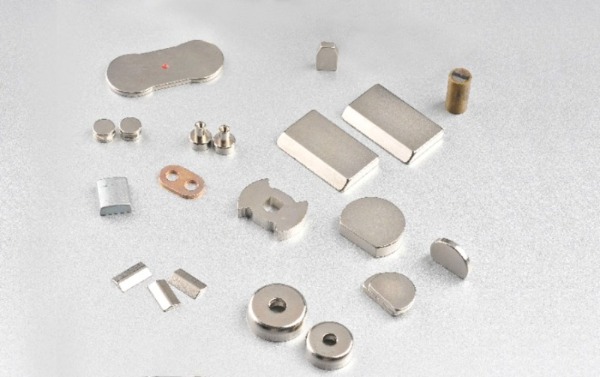 Click to visit our products: sintered NdFeB magnets
Which Sintered NdFeB Magnet Grades Meet Wind Power’s Rigorous Demands?
Reliable wind power magnets are typically classified under high-coercivity sintered NdFeB grades, with specific designations tailored to thermal and mechanical requirements. Grades with the “SH” (high temperature, high coercivity) suffix (e.g., N45SH, N50SH) are widely used for standard wind turbine applications, offering Hcj≥19KOe and temperature resistance up to 150°C. For offshore wind turbines exposed to harsh marine environments and higher operating temperatures, “UH” (ultra-high coercivity) grades (e.g., N42UH, N48UH) provide Hcj ≥ 24 kOe, minimising demagnetisation risks. “EH” (extreme high coercivity) grades (e.g., N40EH, N45EH) are reserved for large-scale direct-drive turbines, delivering Hcj ≥ 29 kOe to withstand extreme temperature cycles and high mechanical stress. The grade selection must also consider the magnet’s squareness (Hk/Hcj ≥ 0.9), ensuring stable magnetic performance under varying load conditions.
How Does Environmental Adaptability Enhance Magnet Reliability in Wind Power?
Wind power sintered NdFeB magnets must withstand extreme environmental stressors to maintain long-term reliability. Corrosion resistance is critical—especially for offshore turbines—so magnets are coated with multi-layer protective films (e.g., Ni-Cu-Ni, epoxy, or Parylene) that meet salt spray test requirements (≥1,000 hours per ASTM B117) without peeling or degradation. Humidity resistance (≤85% RH operating environment) prevents oxidation of the neodymium-iron-boron matrix, which can reduce magnetic strength. Thermal shock resistance (ability to withstand -40°C to 120°C cycles without cracking) ensures structural integrity in regions with large diurnal temperature variations. Additionally, vibration resistance (withstanding 10-2,000 Hz vibrations with acceleration ≤20 g) prevents mechanical damage in turbine nacelles, where constant rotation and wind turbulence create dynamic loads.
What Structural and Processing Optimisations Improve Magnet Reliability?
Manufacturing processes and structural design play key roles in enhancing the reliability of wind power sintered NdFeB magnets. Grain boundary diffusion (GBD) technology refines the magnet’s microstructure, increasing coercivity by 30-50% without compromising remanence—critical for high-grade magnets used in direct-drive turbines. Uniform magnetization patterns (radial or parallel magnetization) ensure consistent torque output, reducing stress on the magnet and generator components. The magnet’s shape and size are optimized to fit turbine generator designs: segmented arc-shaped magnets with rounded edges minimize stress concentration, while precise dimensional tolerances (±0.05 mm) ensure proper fit and alignment. Additionally, vacuum sintering and annealing processes eliminate internal defects (e.g., pores, inclusions) that can lead to premature failure, with non-destructive testing (ultrasonic or X-ray inspection) detecting flaws before installation.
What Quality Standards and Certifications Validate Wind Power Magnet Reliability?
Reliable sintered NdFeB magnets for wind power must comply with international standards and industry-specific certifications. Compliance with IEC 60034 (Rotating Electrical Machines) ensures magnetic performance meets generator design requirements, including demagnetization curve stability and temperature coefficient specifications (αBr ≤ -0.12%/°C, αHcj ≤ -0.6%/°C). ISO 9001 quality management system certification guarantees consistent manufacturing processes, while ISO 14001 ensures environmental sustainability in production. Wind energy-specific certifications (e.g., DNV GL, TÜV Rheinland) verify magnet performance under real-world wind turbine conditions, including long-term reliability testing (≥5,000 hours of thermal cycling) and mechanical stress testing. Additionally, traceability of raw materials (neodymium, praseodymium, iron, boron) ensures compliance with critical materials regulations, while batch testing of magnetic properties (Br, Hcj, BHmax) ensures each magnet meets grade specifications—essential for maintaining turbine efficiency and safety over decades of operation.

Jinlun Magnet specialized in the research and development, production, and sales of high-performance rare-earth permanent magnet materials.
Quick Links
Contact Info.
-
 Sales00@jlmagnet.com
-
 +86-574-6321 2222
-
 No. 330 Xinxing 1st Road, Xinxing Industrial Park, Zonghan Street, Cixi City, Zhejiang Province, China
Mobile QR Code
Copyright © Ningbo Jinlun Magnet Technology Co., Ltd. All Rights Reserved.
China sintered NdFeB magnet manufacturer wholesale sintered NdFeB magnet factory

TOP

