 EN
EN English
 中文简体
中文简体 русский
 Deutsch
 日本語
日本語 한국어
한국어

Home / News / Industry News / Most Powerful Type of Magnet: The Complete Guide to Sintered NdFeB Magnets
Industry News
Mar 04,2026
Most Powerful Type of Magnet: The Complete Guide to Sintered NdFeB Magnets
When engineers, manufacturers, and scientists need the absolute strongest magnetic force in the smallest possible footprint, one material consistently rises above all others: the Sintered NdFeB Magnet. Short for Neodymium Iron Boron, this remarkable rare-earth magnet has transformed industries from electric vehicles to medical devices since its invention in the early 1980s. Understanding why Sintered Neodymium Magnets hold this crown — and how to choose the right grade for your application — is essential knowledge for any modern engineering or procurement professional.
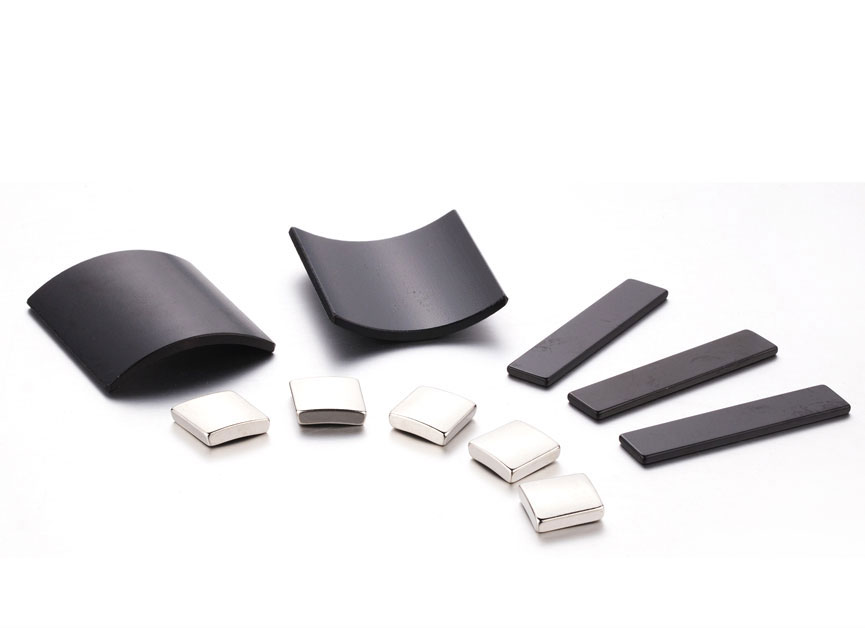
Click to visit our products:Sintered NdFeB Magnet
What Makes a Magnet "The Most Powerful"?
Magnetic strength is not a single measurement — it is a combination of several key properties that together determine how useful a magnet is in real-world applications. To understand why Sintered NdFeB Permanent Magnets dominate the market, it helps to first understand the metrics used to evaluate all magnets.
Key Magnetic Performance Metrics
- Remanence (Br): The magnetic flux density remaining after the magnetizing field is removed. Higher Br means a stronger magnet at rest.
- Coercivity (Hcj): The resistance of the magnet to demagnetization. Higher coercivity means the magnet holds its strength under heat or opposing fields.
- Maximum Energy Product (BHmax): Expressed in MGOe (Mega Gauss Oersteds) or kJ/m³, this is the single most cited figure for overall magnet strength. Sintered NdFeB Magnets achieve BHmax values of 26–54 MGOe, far surpassing all other commercial magnet types.
- Operating Temperature Range: The maximum temperature at which a magnet maintains its properties without irreversible loss.
Sintered NdFeB vs. Other Magnet Types: A Full Comparison
Not all magnets are created equal. The table below compares the most common permanent magnet materials on the market, illustrating why Sintered Neodymium Iron Boron Magnets are widely recognized as the most powerful type available.
| Magnet Type | BHmax (MGOe) | Max Temp (°C) | Corrosion Resistance | Relative Cost | Main Use Case |
| Sintered NdFeB Magnet | 26–54 | 80–220 | Poor (needs coating) | Medium–High | EV motors, MRI, sensors |
| Bonded NdFeB Magnet | 5–12 | 80–150 | Moderate | Medium | Small motors, compact devices |
| Sintered SmCo Magnet | 16–32 | 250–350 | Excellent | Very High | Aerospace, high-temp apps |
| Alnico Magnet | 1.5–9 | 500+ | Good | Low–Medium | Guitar pickups, meters |
| Ceramic / Ferrite Magnet | 1–5 | 250 | Excellent | Very Low | Speakers, refrigerator magnets |
The data is unambiguous: Sintered NdFeB Permanent Magnets offer energy densities up to 10 times greater than ferrite magnets and significantly exceed SmCo at a lower material cost, making them the default choice for high-performance applications worldwide.
How Sintered NdFeB Magnets Are Made
The term "sintered" refers to the manufacturing process that gives these magnets their exceptional density and strength. Understanding the production method helps explain both the capabilities and the limitations of Sintered Neodymium Magnets.
The Sintering Process Step by Step
- Raw Material Preparation: High-purity neodymium, iron, and boron are alloyed together with optional additives such as dysprosium (Dy) or terbium (Tb) to enhance high-temperature coercivity.
- Strip Casting & Hydrogen Decrepitation: The alloy is cast into thin strips and then exposed to hydrogen gas, causing it to fracture into fine powder at the grain boundaries.
- Jet Milling: The powder is further reduced to a particle size of 3–5 microns using high-pressure jet milling in an inert atmosphere to prevent oxidation.
- Magnetic Alignment & Pressing: The fine powder is pressed in a strong magnetic field, aligning the crystalline grains in a single direction to maximize anisotropy and therefore magnetic strength.
- Sintering & Heat Treatment: Compacts are sintered at approximately 1000–1100°C in a vacuum furnace, fusing the grains and achieving near-theoretical density. Subsequent aging heat treatments optimize the microstructure.
- Machining & Surface Coating: Because Sintered NdFeB Magnets are brittle and prone to corrosion, they are precision-machined to final dimensions and then coated (Nickel, Zinc, Epoxy, or other finishes).
- Magnetization: The finished parts are magnetized in a powerful pulsed magnetic field in the required direction.
Sintered NdFeB Magnet Grades Explained
Sintered NdFeB Magnets are classified by grade, which indicates their maximum energy product and temperature performance. The naming convention follows a standard format: a number representing BHmax, followed by letter suffixes indicating coercivity and temperature rating.
Standard Grade Reference Table
| Grade | BHmax (MGOe) | Br (kGs) | Hcj (kOe) | Max Temp (°C) | Typical Application |
| N35 | 33–36 | 11.7–12.1 | ≥12 | 80 | General purpose, holding magnets |
| N42 | 40–43 | 13.0–13.5 | ≥12 | 80 | Consumer electronics, motors |
| N52 | 50–53 | 14.2–14.8 | ≥11 | 80 | High-performance motors, MRI |
| N35H | 33–36 | 11.7–12.1 | ≥17 | 120 | Automotive sensors |
| N38SH | 36–39 | 12.2–12.7 | ≥25 | 150 | EV traction motors |
| N40UH | 38–41 | 12.6–13.2 | ≥35 | 180 | Industrial motors, wind turbines |
| N35EH | 33–36 | 11.7–12.1 | ≥30 | 200 | High-temp industrial equipment |
The letter suffixes — M (Medium), H (High), SH (Super High), UH (Ultra High), EH (Extreme High) — designate increasingly higher coercivity and maximum operating temperature, typically achieved by incorporating heavier rare-earth elements like dysprosium. Choosing the correct Sintered NdFeB Magnet grade requires balancing magnetic performance against thermal stability and cost.
Major Applications of Sintered NdFeB Magnets
Sintered Neodymium Iron Boron Magnets are embedded in virtually every sector of the modern economy. Their unmatched power-to-size ratio enables technologies that would be impossible with weaker magnet types.
Electric Vehicles (EV) and Hybrid Cars
The traction motors of most battery electric vehicles rely on High-Grade Sintered NdFeB Magnets, typically in the SH or UH grade range. A single EV motor may contain 1–3 kg of sintered neodymium magnets. The high torque density they provide is fundamental to compact, efficient motor design. As global EV adoption accelerates, demand for Sintered NdFeB Permanent Magnets is projected to grow dramatically through the 2030s.
Wind Power Generators
Direct-drive wind turbines, which eliminate the gearbox for improved reliability and efficiency, use large quantities of Sintered NdFeB Magnets in their permanent magnet generators. Offshore wind installations, in particular, favor permanent magnet generators using Sintered Neodymium Magnets because they reduce maintenance requirements in hard-to-access marine environments.
Medical Devices and MRI Systems
Magnetic Resonance Imaging (MRI) machines, hearing aids, drug delivery systems, and surgical robotic components all leverage the superior field strength of Sintered NdFeB Magnets. In hearing aids and cochlear implants, miniaturized Sintered Neodymium Magnets deliver reliable performance in an extremely compact form factor.
Consumer Electronics
Hard disk drives (HDDs), smartphone vibration motors, loudspeakers, earphones, and camera autofocus mechanisms all contain Sintered NdFeB Magnets. The push for thinner, lighter devices makes the high energy density of Sintered Neodymium Iron Boron Magnets indispensable in this sector.
Industrial Automation and Robotics
Servo motors, linear actuators, magnetic couplings, and lifting systems in factories and warehouses depend on the predictable, powerful performance of Sintered NdFeB Permanent Magnets. As Industry 4.0 and robotic automation expand globally, so does the role of these magnets in precision motion control.
Surface Coatings for Sintered NdFeB Magnets
One of the primary limitations of Sintered NdFeB Magnets is their susceptibility to corrosion. The neodymium-rich grain boundary phase oxidizes rapidly in humid or saline environments. Protective coatings are therefore essential for most applications.
| Coating Type | Thickness (μm) | Corrosion Resistance | Best For |
| Nickel-Copper-Nickel (Ni-Cu-Ni) | 10–20 | Good | General industrial use |
| Zinc (Zn) | 8–15 | Moderate | Cost-sensitive applications |
| Epoxy | 10–30 | Good | Outdoor or humid environments |
| Gold (Au) | 0.5–2 | Excellent | Medical, aerospace |
| Parylene | 5–25 | Excellent | Medical implants |
| Phosphate + Epoxy | 10–25 | Very Good | Automotive, marine |
Sintered NdFeB vs. Bonded NdFeB: Which Should You Choose?
Both Sintered NdFeB Magnets and bonded NdFeB magnets use the same core material, but they differ significantly in manufacturing, performance, and suitability for different applications.
- Magnetic Strength: Sintered NdFeB Magnets are 3–5x stronger than bonded NdFeB magnets of the same size. Sintering achieves near-full theoretical density, while bonding introduces a binder that dilutes magnetic performance.
- Shape Complexity: Bonded NdFeB can be molded into complex geometries (thin rings, multi-pole patterns) that are difficult or impossible to achieve through sintering and machining.
- Dimensional Tolerance: Bonded magnets offer tighter as-molded tolerances; Sintered Neodymium Magnets require post-sinter machining to achieve precision.
- Corrosion Resistance: Bonded NdFeB is slightly more resistant due to the polymer binder encapsulating the magnetic powder, but neither type is inherently corrosion-proof.
- Best for High Performance: Whenever maximum magnetic force is the priority, Sintered NdFeB Permanent Magnets are the clear choice.
Handling, Storage, and Safety Considerations
Sintered NdFeB Magnets, especially larger grades, require careful handling. Their extreme attractive force can pose serious risks if managed incorrectly.
- Pinch Hazard: Two large Sintered Neodymium Magnets snapping together can fracture bones or trap skin. Always use separator boards and protective gloves.
- Brittleness: Despite their magnetic toughness, Sintered NdFeB Magnets are mechanically brittle and will chip or shatter if allowed to collide at speed.
- Pacemaker Interference: Keep strong Sintered Neodymium Iron Boron Magnets away from individuals with pacemakers or other implanted medical devices.
- Electronic Equipment: Store and transport Sintered NdFeB Magnets well away from credit cards, hard drives, and sensitive electronic instrumentation.
- Temperature: Do not expose Sintered NdFeB Magnets to temperatures above their rated maximum. Exceeding the Curie temperature causes irreversible demagnetization.
Global Market and Supply Chain for Sintered NdFeB Magnets
China currently dominates the global production of Sintered NdFeB Permanent Magnets, accounting for over 85% of world output, owing to its vast rare-earth mineral reserves and established processing infrastructure. This concentration of supply has driven strategic concerns in Western governments, leading to investments in alternative rare-earth supply chains in Australia, the United States, and Europe.
Key market drivers include:
- EV adoption: Each electric vehicle uses significantly more Sintered NdFeB Magnet material than conventional vehicles.
- Renewable energy expansion: Wind turbine installations worldwide are a growing end market.
- Consumer electronics growth: Miniaturization trends continue to demand high-efficiency magnetic materials.
- Dysprosium supply constraints: High-temperature grades of Sintered NdFeB Magnets require dysprosium, a far scarcer rare-earth element, creating price and supply volatility for premium grades.
Frequently Asked Questions About Sintered NdFeB Magnets
Q1: Are Sintered NdFeB Magnets the strongest magnets in the world?
Among commercially available permanent magnets, yes. Sintered NdFeB Magnets achieve the highest energy product (BHmax) of any permanent magnet material known, with top-grade N52 reaching over 52 MGOe. Electromagnets and superconducting magnets used in research can generate far stronger fields, but they are not permanent and require continuous power input.
Q2: What is the maximum operating temperature for Sintered NdFeB Magnets?
This depends heavily on the grade. Standard N-grade Sintered NdFeB Magnets are rated to 80°C. With the addition of dysprosium or terbium, grades such as UH and EH are rated to 180°C and 200°C respectively. The Curie temperature — the point of complete demagnetization — is approximately 310–340°C for most Sintered Neodymium Iron Boron Magnets.
Q3: Do Sintered NdFeB Magnets lose their magnetism over time?
Under normal operating conditions within their rated temperature range, Sintered NdFeB Permanent Magnets lose less than 1% of their flux over 100 years. Demagnetization is primarily caused by heat, opposing magnetic fields exceeding the coercivity threshold, or mechanical shock — not time alone.
Q4: Can Sintered NdFeB Magnets be cut or drilled?
Sintered NdFeB Magnets can be machined using diamond-tipped tools and grinding wheels, but they are brittle and require careful, slow cutting with coolant. Standard drilling or cutting tools will damage both the tool and the magnet. It is strongly recommended to specify final dimensions to the manufacturer rather than attempting machining in the field. Machining also generates fine neodymium powder, which is flammable and requires appropriate precautions.
Q5: What shapes are available for Sintered NdFeB Magnets?
Sintered NdFeB Magnets can be manufactured in a wide variety of standard shapes including blocks/rectangles, discs, rings, arcs/segments, and cylinders. Custom shapes are possible through precision machining. Arc segments are widely used in motor rotors, while disc and block geometries are most common for holding, sensor, and general-purpose applications.
Q6: How do I select the right grade of Sintered NdFeB Magnet?
Grade selection for Sintered NdFeB Permanent Magnets involves three main factors: (1) the required magnetic field strength or pull force for your application, (2) the maximum operating temperature the magnet will encounter in service, and (3) your budget, since higher-performance grades and those containing dysprosium command a significant price premium. For low-temperature applications requiring maximum strength, N52 is the premier choice. For automotive or industrial applications involving heat, SH, UH, or EH grades are more appropriate.
Q7: Are Sintered NdFeB Magnets RoHS compliant?
The base alloy of Sintered NdFeB Magnets (Nd, Fe, B, and common additives) does not inherently contain substances restricted by RoHS. However, certain surface coating processes may involve restricted substances. Nickel plating, for example, can be RoHS-compliant with proper process controls. Always confirm RoHS compliance documentation with your specific supplier when sourcing Sintered Neodymium Magnets for consumer electronics or EU-market products.
Conclusion: Why Sintered NdFeB Magnets Remain the Industry Standard
Decades after their commercial introduction, Sintered NdFeB Magnets remain the undisputed benchmark for permanent magnet performance. No other commercially viable material comes close to matching their combination of energy density, coercivity, and relatively affordable cost. From the motors driving global EV fleets to the miniature actuators inside medical devices, Sintered Neodymium Iron Boron Magnets quietly power the modern world.
Choosing the correct grade — whether standard N-series for room-temperature applications or high-coercivity UH and EH grades for demanding thermal environments — is the key decision for engineers and procurement teams. With the right grade, coating, and dimensional specification, Sintered NdFeB Permanent Magnets deliver decades of reliable, maintenance-free performance.
As the world accelerates its transition to clean energy and electrified transportation, the importance of Sintered NdFeB Magnets in the global supply chain will only grow. Understanding this technology today is essential preparation for the engineering and sourcing challenges of tomorrow.

Jinlun Magnet specialized in the research and development, production, and sales of high-performance rare-earth permanent magnet materials.
Quick Links
Contact Info.
-
 Sales00@jlmagnet.com
-
 +86-574-6321 2222
-
 No. 330 Xinxing 1st Road, Xinxing Industrial Park, Zonghan Street, Cixi City, Zhejiang Province, China
Mobile QR Code
Copyright © Ningbo Jinlun Magnet Technology Co., Ltd. All Rights Reserved.
China sintered NdFeB magnet manufacturer wholesale sintered NdFeB magnet factory

TOP

