 EN
EN English
 中文简体
中文简体 русский
 Deutsch
 日本語
日本語 한국어
한국어

Industry News
Jan 16,2026
How Is a Sintered NdFeB Magnet Manufactured Step by Step?
Sintered NdFeB Magnet products are widely recognized for their exceptional magnetic strength and are essential components in industries such as electric vehicles, wind power, consumer electronics, medical devices, and industrial automation. The manufacturing process behind these high-performance magnets is complex, precise, and highly controlled, involving multiple stages from raw material preparation to final surface treatment.
The following sections explain each step of the production process in detail, highlighting key technologies, quality control points, and comparisons with other magnet types.
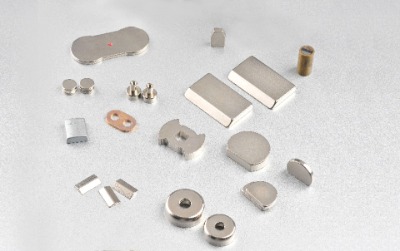
Click to visit our products:Sintered NdFeB Magnet
Step 1: Selection and Preparation of Raw Materials
The foundation of a Sintered NdFeB Magnet lies in its raw materials. The main elements include:
- Neodymium (Nd) – Provides high magnetic strength
- Iron (Fe) – Forms the main magnetic matrix
- Boron (B) – Enhances coercivity and structural stability
Additional elements such as dysprosium (Dy) or terbium (Tb) may be introduced to improve high-temperature performance. Raw materials must meet strict purity standards to ensure stable magnetic properties and long-term reliability.
Step 2: Alloy Melting and Strip Casting
Vacuum Induction Melting
The selected metals are melted together in a vacuum induction furnace. This oxygen-free environment prevents oxidation and ensures uniform alloy composition. Precise temperature control is critical at this stage.
Strip Casting Technology
The molten alloy is rapidly cooled using strip casting, forming thin flakes or strips. This rapid solidification creates a fine-grained microstructure, which is essential for achieving high magnetic performance in the final Sintered NdFeB Magnet.
Step 3: Hydrogen Decrepitation (HD)
Hydrogen decrepitation is a unique process in NdFeB magnet manufacturing. The alloy strips absorb hydrogen gas, causing them to fracture into coarse powder.
Benefits of hydrogen decrepitation include:
- Reduced mechanical stress during grinding
- Improved powder uniformity
- Enhanced magnetic alignment potential
Step 4: Jet Milling to Fine Powder
The coarse powder is further refined using jet milling, producing ultra-fine particles typically ranging from 3 to 5 microns. Particle size control is essential, as it directly influences coercivity and remanence.
At this stage, the powder is extremely reactive and must be handled in a controlled atmosphere to avoid oxidation.
Step 5: Magnetic Field Alignment and Pressing
Magnetic Orientation
To achieve maximum magnetic performance, the fine powder is aligned under a strong external magnetic field. This process orients the crystal grains along a preferred direction, creating anisotropic properties.
Compaction Methods
- Die Pressing – Suitable for simple shapes and high-volume production
- Isostatic Pressing – Ideal for complex geometries and uniform density
The result is a compacted “green body” with sufficient strength for handling prior to sintering.
Step 6: High-Temperature Sintering
Sintering is the core step that transforms the compacted powder into a dense, solid magnet. The green bodies are heated in a vacuum or inert gas furnace at temperatures between 1,050°C and 1,100°C.
During sintering:
- Powder particles fuse together
- Density reaches over 98% of theoretical value
- Magnetic domains become more stable
This step largely determines the final mechanical strength and magnetic performance of the Sintered NdFeB Magnet.
Step 7: Heat Treatment and Aging
After sintering, controlled heat treatment is applied to optimize the microstructure. This process improves coercivity and thermal stability by adjusting grain boundary phases.
Heat treatment parameters vary depending on application requirements, especially for magnets used in high-temperature environments such as electric motors.
Step 8: Precision Machining and Shaping
Sintered NdFeB Magnet materials are extremely hard and brittle, making conventional machining difficult. Diamond tools and CNC grinding are commonly used to achieve precise dimensions and tight tolerances.
Typical shapes include:
- Blocks
- Rings
- Arcs
- Custom geometries
Step 9: Surface Coating and Corrosion Protection
NdFeB magnets are prone to corrosion due to their rare-earth content. Surface coatings are essential to extend service life.
Common Coating Options
- Nickel-Copper-Nickel (NiCuNi) – Excellent overall protection
- Epoxy – Suitable for humid environments
- Zinc – Cost-effective solution
- Parylene – High chemical resistance
The choice of coating depends on operating conditions and application requirements.
Step 10: Magnetization and Final Inspection
Once coated, the magnet is magnetized using a powerful impulse magnetic field. Specialized fixtures ensure the correct magnetization direction.
Quality inspection includes:
- Magnetic property testing
- Dimensional accuracy checks
- Surface coating thickness measurement
- Corrosion resistance evaluation
Comparison: Sintered NdFeB Magnet vs Other Magnet Types
Sintered NdFeB Magnet vs Ferrite Magnet
- Much higher magnetic energy density
- Smaller size for the same performance
- Higher cost and more complex manufacturing
Sintered NdFeB Magnet vs Bonded NdFeB Magnet
- Stronger magnetic performance
- Better thermal stability
- Lower shape flexibility compared to bonded magnets
Applications Benefiting from Sintered NdFeB Magnet Manufacturing
The advanced manufacturing process enables consistent performance across various industries:
- Electric vehicle traction motors
- Wind turbine generators
- Industrial servo motors
- Medical imaging equipment
- High-end consumer electronics
Frequently Asked Questions (FAQ)
Why is a Sintered NdFeB Magnet stronger than other magnets?
The sintering process creates a dense microstructure with aligned grains, maximizing magnetic energy product and coercivity.
Can Sintered NdFeB Magnet products operate at high temperatures?
Standard grades operate up to 80–120°C, while high-coercivity grades with heavy rare earth elements can withstand temperatures above 200°C.
Is corrosion protection mandatory?
Yes, surface coating is essential to prevent oxidation and ensure long-term reliability in most environments.
Are custom shapes possible?
Precision machining allows for customized shapes, although complex designs may increase manufacturing cost.
What factors influence production cost?
Raw material prices, magnet grade, coating type, dimensional tolerances, and order volume all affect the final cost.
Future Trends in Sintered NdFeB Magnet Manufacturing
Ongoing research focuses on reducing heavy rare earth usage, improving recycling technologies, and enhancing energy efficiency during production. These innovations aim to make the Sintered NdFeB Magnet more sustainable while maintaining its superior performance.
With continuous advancements in materials science and process control, sintered NdFeB magnets will remain a critical component in next-generation energy and motion technologies.

Jinlun Magnet specialized in the research and development, production, and sales of high-performance rare-earth permanent magnet materials.
Quick Links
Contact Info.
-
 Sales00@jlmagnet.com
-
 +86-574-6321 2222
-
 No. 330 Xinxing 1st Road, Xinxing Industrial Park, Zonghan Street, Cixi City, Zhejiang Province, China
Mobile QR Code
Copyright © Ningbo Jinlun Magnet Technology Co., Ltd. All Rights Reserved.
China sintered NdFeB magnet manufacturer wholesale sintered NdFeB magnet factory

TOP

